



One challenge molecular modelers often face is simulating complex structural changes in molecular systems while keeping control over bond interactions. Enter the Interactive Modeling Universal Force Field (IM-UFF)—an extension to the Universal Force Field (UFF)—that allows you to handle topological changes like the creation and breaking of covalent bonds in real-time during simulation. This blog post will guide you through how this powerful interaction model works and why it matters for building and editing molecular systems interactively.
Why IM-UFF is a Game Changer
Unlike static force field models, IM-UFF enables smooth handling of topological changes in molecular systems. Whether it’s forming new bonds, breaking existing ones, or modifying bond orders dynamically, IM-UFF facilitates seamless transitions in molecular structures. This ability makes it an essential tool for interactive molecular modeling, especially when working with systems that undergo significant structural changes during simulation.
Here’s why this matters: traditional force fields often have difficulty adapting to dynamic changes, which creates constraints in exploration and design processes. IM-UFF overcomes this limitation with its fluid approach to topology updates, enabling modelers to interactively build and edit molecular structures while observing realistic behavior guided by physically-based inter-atomic forces.
Getting Started with IM-UFF
To simulate systems using IM-UFF, you will first need the IM-UFF Extension installed. Here’s a quick guide to setting it up:
- Open a molecular document you want to simulate using IM-UFF.
- Add a simulator via
Edit > Simulate > Add simulatoror use the shortcut: Ctrl + Shift + M (Windows) / Cmd + Shift + M (Mac). - In the list of interaction models, select Interactive Modeling Universal Force Field.
- Choose a state updater, such as FIRE (Fast Inertial Relaxation Engine).
- Click the OK button.
You’re now ready to explore how the IM-UFF interaction model can simulate and maintain molecular topologies interactively.
What Makes IM-UFF Special?
IM-UFF includes a specific parameter window with options tailored for interactivity. A highlight of this setup is the Interactive modeling options group, which includes:
- Static topology (UFF only): Check this setting if you want to use the original UFF model. Uncheck it to engage IM-UFF’s dynamic topology features.
- Keep vdW for manipulated: Enables or disables van der Waals forces for atoms being manipulated with the mouse. Disabling this option makes it easier to connect atoms without the interference of repulsive vdW forces.
This flexibility allows you to customize how the force field behaves during manipulations, giving you greater control over molecular design workflows.
Running a Simulation
To run an IM-UFF simulation, ensure that both Static topology and Keep vdW for manipulated options are unchecked. Then, start the simulation by clicking Edit > Simulate > Start.
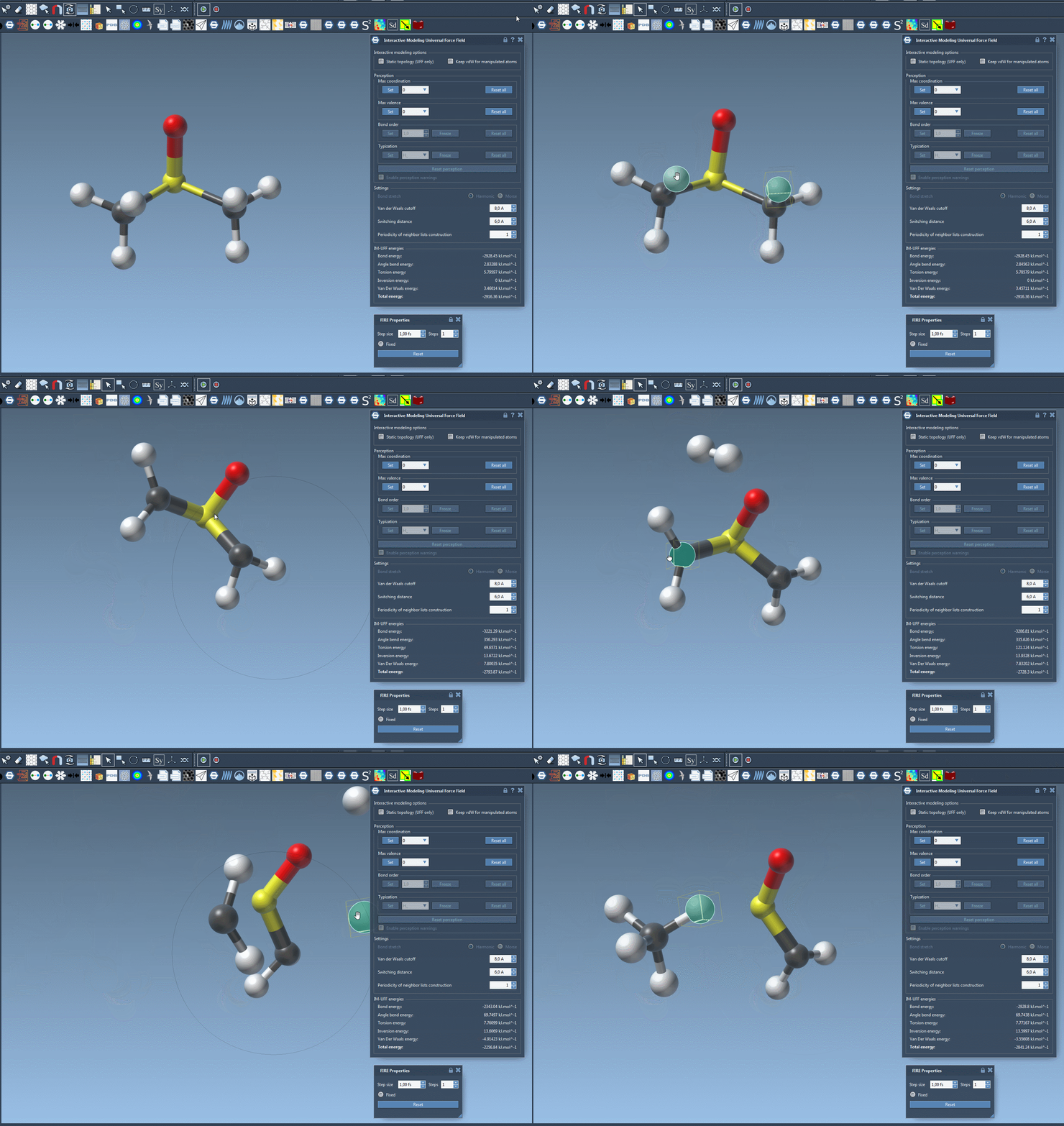
One of the most fascinating capabilities of IM-UFF is its interactive response to changes during simulation. For example, when you slightly move atoms, bonds remain intact while the system locally adjusts the structure. However, if you displace an atom significantly, it will break its bonds with neighbors, causing the molecular topology to update dynamically.
Similarly, moving an atom closer to others may result in new bonds forming, effectively enabling on-the-fly molecular design. This interactivity is exceptionally useful when creating or editing novel molecular systems, as it offers a realistic simulation of how molecules react to positional changes.
Learn More
This post only scratches the surface of what you can achieve with IM-UFF. From adjusting van der Waals cutoffs to customizing atom typization, IM-UFF provides numerous ways to simulate molecular interactions with precision. Dive deeper and explore the full documentation at https://documentation.samson-connect.net/tutorials/uff/im-uff/.
Note: SAMSON and all SAMSON Extensions are free for non-commercial use. Get SAMSON today at https://www.samson-connect.net.