



Did you know that defects in crystals can significantly influence their properties? Whether you’re refining materials for advanced technologies or striving for fundamental insights in molecular modeling, understanding defects is crucial. This post offers a practical guide to modeling and analyzing defects in diamond crystals using the Crystal Creator Extension in SAMSON.
Step 1: Preparing Your Diamond Crystal
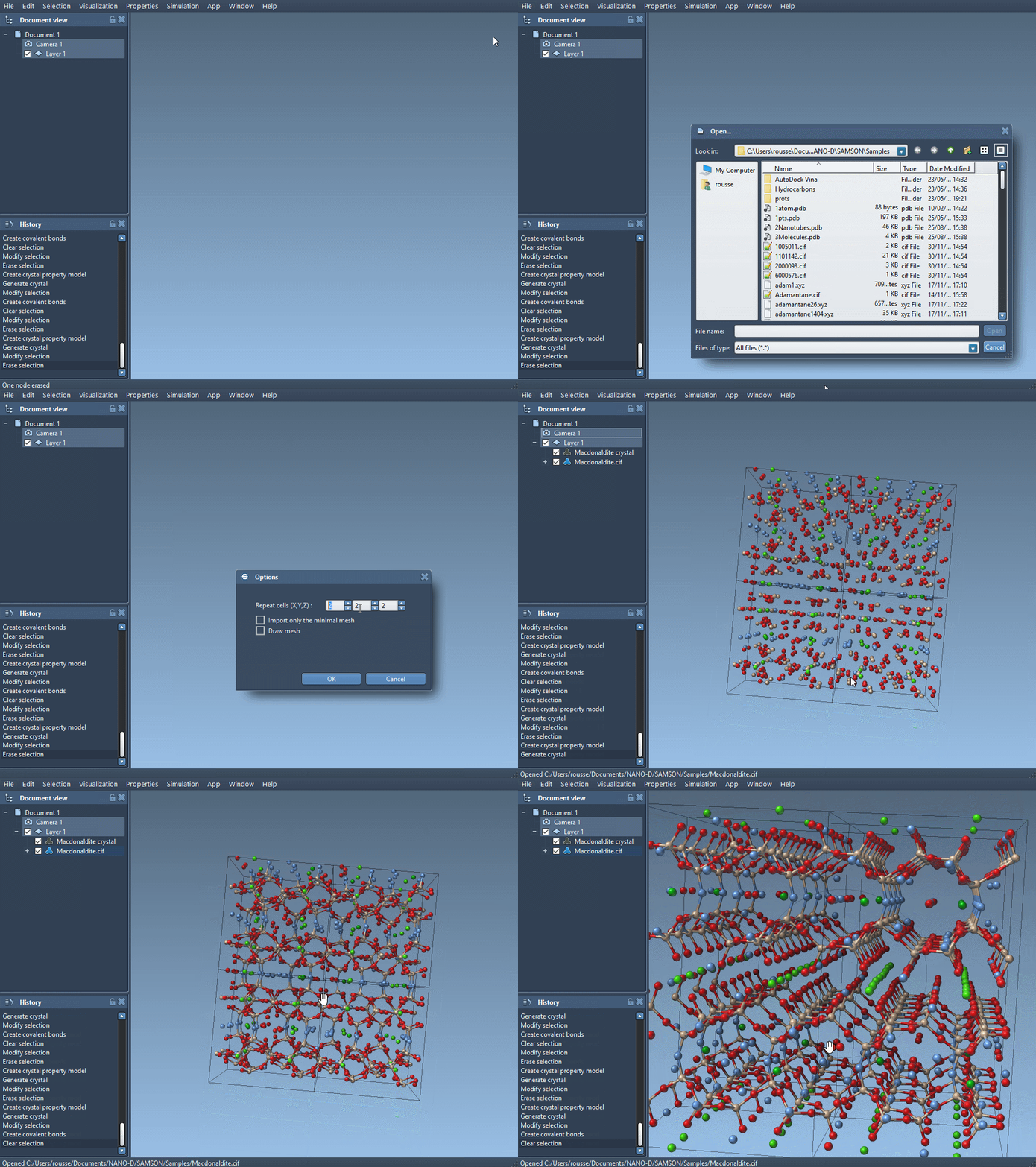
First, you’ll need a diamond crystal as your starting point. You can find CIF (Crystallographic Information File) data for diamond on platforms like the American Mineralogist Crystal Structure Database or the RRUFF Project Database. Once you download a CIF file, use the Crystal Creator App in SAMSON to import it. When you open the file, you’ll be prompted to specify options such as the number of crystal unit cells and whether to visualize the crystal mesh.
Step 2: Introducing and Visualizing Defects
Defects can simulate real-world phenomena like vacancies or atomic substitutions in materials. Here’s how you can model defects in a diamond crystal:
- Make a copy of your downloaded CIF file and open it in a text editor.
- Locate the section starting with
loop_. It will likely look like this:
|
1 2 3 4 5 6 7 |
loop_ _atom_site_label _atom_site_fract_x _atom_site_fract_y _atom_site_fract_z C 0.00000 0.00000 0.00000 |
- Modify this section to include
_atom_site_occupancy, which represents the probability of an atom’s presence. For instance:
|
1 2 3 4 5 6 7 8 |
loop_ _atom_site_label _atom_site_fract_x _atom_site_fract_y _atom_site_fract_z _atom_site_occupancy C 0.00000 0.00000 0.00000 0.95 |
Here, the occupancy value 0.95 indicates a 95% probability of the carbon atom being present at that site.
Step 3: Observing the Impact of Defects
- Load the modified CIF file into the Crystal Creator Extension in SAMSON.
- Create the bonds in your crystal to visualize its structural changes.
- You can further refine the structure by minimizing it using the Brenner interaction model. This step helps you observe how defects change the crystal’s geometry.
Once the modified crystal is loaded and visualized, you’ll notice how the defects—small as they may seem—lead to alterations in the atomic arrangement. This can open the door to further investigations into material properties or behaviors under various conditions.
Why Model Crystal Defects?
Defects are not just flaws; they’re opportunities to explore and understand material phenomena. For example, vacancies in diamond can act as color centers that make the material useful for quantum technologies. By modeling defects, researchers and engineers can tailor materials to desired applications.
To dive deeper into modeling defects, check out the full documentation here: SAMSON Crystal Creator Documentation.
Note: SAMSON and all SAMSON Extensions are free for non-commercial use. Get started by downloading SAMSON at https://www.samson-connect.net.