



If you’ve ever worked with molecular crystal models, you’ve likely encountered the intricacies of defects and their profound impact on crystal structures. This blog dives into how you can easily visualize and explore defects in diamond crystals using the Crystal Creator Extension in SAMSON. Let’s walk through the process and see the changes caused by introducing defects!
Why Study Defects?
Defects are an essential feature of real-world crystals. Whether they are vacancies, substitutions, or distribution irregularities, these defects affect physical properties such as conductivity, strength, and optical behavior. Visualizing and simulating these imperfections can unlock valuable insights for materials design.
Step-by-Step: Adding Defects to Diamonds
Follow these steps to introduce defects into a diamond structure and explore their effects:
- Start by importing a diamond crystal file (.cif): Use resources like the American Mineralogist Crystal Structure Database or the RRUFF Project Database to acquire a standard CIF file for diamond.
- Inspect and create the bonds: Once the CIF file is loaded into the Crystal Creator Extension, use SAMSON’s tools to generate and visualize bonds within the structure.
- Introduce defects: Make a copy of your diamond file and open it in a text editor. Locate the section that begins with:
12345678<span></span>loop__atom_site_label_atom_site_fract_x_atom_site_fract_y_atom_site_fract_zC 0.00000 0.00000 0.00000
- Modify it to include an occupancy parameter by appending a line like this:
- The value
0.95under_atom_site_occupancymeans the carbon atom has a 95% probability of being present. - Reload the modified file: Open this newly edited file in SAMSON, recreate the bonds, and observe the changes in the structure due to the introduced defects.
|
1 2 3 4 5 6 7 8 9 |
<span></span> loop_ _atom_site_label _atom_site_fract_x _atom_site_fract_y _atom_site_fract_z _atom_site_occupancy C 0.00000 0.00000 0.00000 0.95 |
What to Observe?
By introducing these defects, you’ll notice changes in the bonding, lattice structure, and overall distribution of atoms. These insights are invaluable for simulating materials and understanding their properties in a more realistic context.
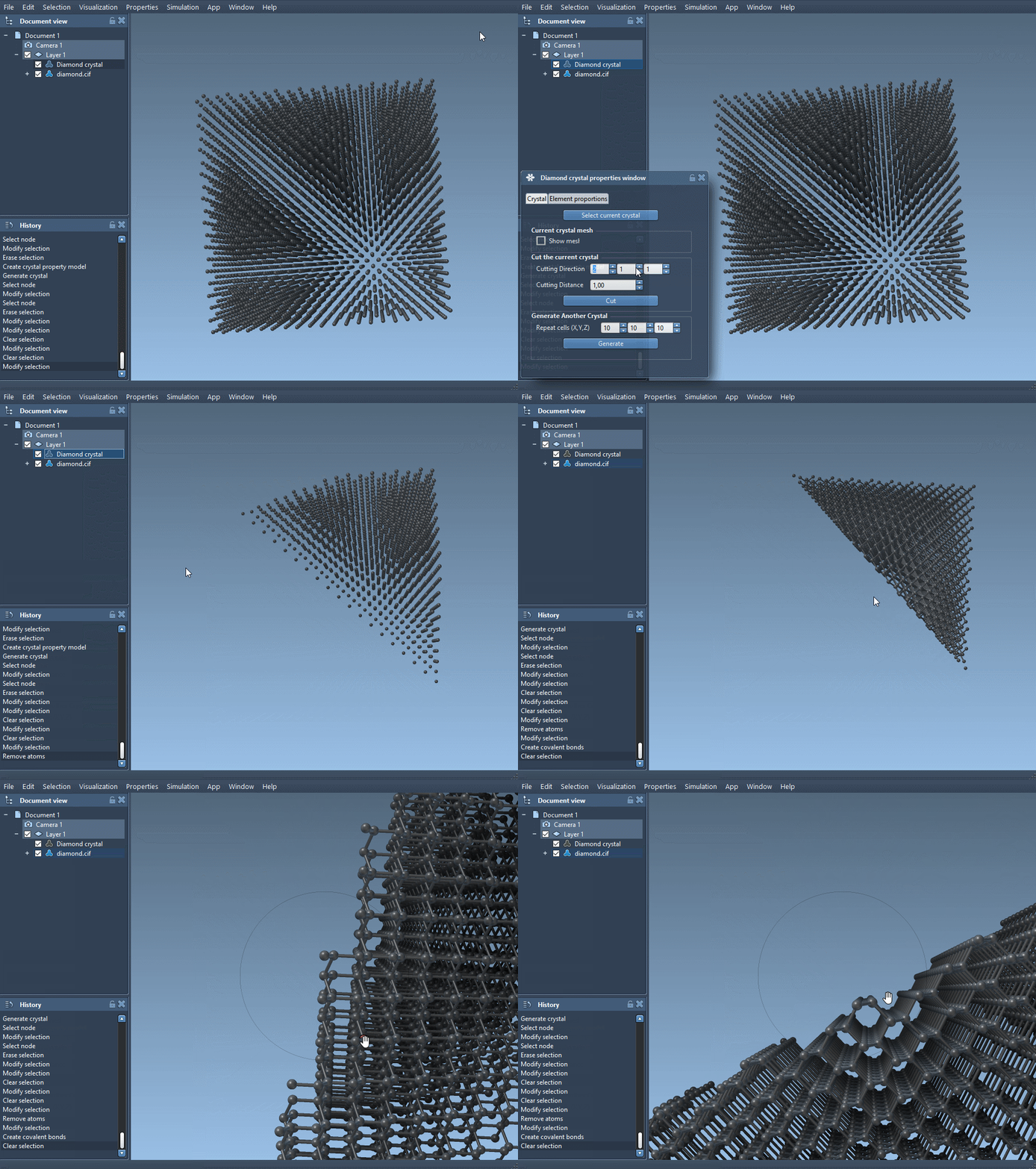
To enhance your visualization, minimize the energy of the structure using SAMSON’s tools, such as the Brenner interaction model. This lets you simulate the material’s stabilization post-defect introduction.
Conclusion
Exploring defects is crucial for advancing material science and engineering applications. With the Crystal Creator Extension, these tasks become intuitive and efficient, empowering you to create realistic models while gaining deeper insights into molecular structures.
Ready to dive deeper into crystal modeling? Access the full documentation here for more tips and workflows.
SAMSON and all SAMSON Extensions are free for non-commercial use. Download SAMSON today at https://www.samson-connect.net!