



When tackling complex molecular modeling tasks, such as analyzing protein complexes or designing symmetric nanomaterials, you may face a common question: how can I simplify my workflow while maintaining scientific rigor? The Symmetry Detection extension in SAMSON provides an elegant solution by automatically identifying and visualizing symmetry axes in biological assemblies to supercharge your research.
The Challenge Molecular Modelers Face
Biological assemblies like protein complexes and viral capsids often exhibit intricate symmetrical patterns. These symmetrical properties are more than an aesthetic feature—they hold key insights into functionality and can dramatically reduce computational requirements for simulations. However, manually identifying and verifying symmetry axes in large systems can quickly become overwhelming.
How Symmetry Detection Helps
The Symmetry Detection extension is designed to tackle that very challenge. Once you load a biological assembly into SAMSON, this tool can analyze the structure to identify potential axes of symmetry, including cyclic (Cn), dihedral (Dn), and cubic symmetries (tetrahedral, octahedral, and icosahedral). The results are presented visually, with axes displayed directly in the viewport, and users can explore the symmetries to tailor workflows specifically to their goals.
Accelerating Molecular Tasks with Symmetry Detection
Here’s how symmetry detection can benefit a variety of molecular modeling workflows:
- Identify functional interfaces: Symmetry helps reveal repeating structural features, such as interaction sites shared across copies in a biological assembly.
- Validate experimental data: Compare detected symmetry to what’s expected from experimental measurements for a quick checkpoint on model accuracy.
- Reduce computational costs: By identifying the unique asymmetric unit, researchers can focus computational resources on modeling just that, instead of the entire assembly.
- Enable innovative design: Use symmetry to guide the development of novel nanostructures or symmetric modification sites in proteins.
Examples from Real-World Systems
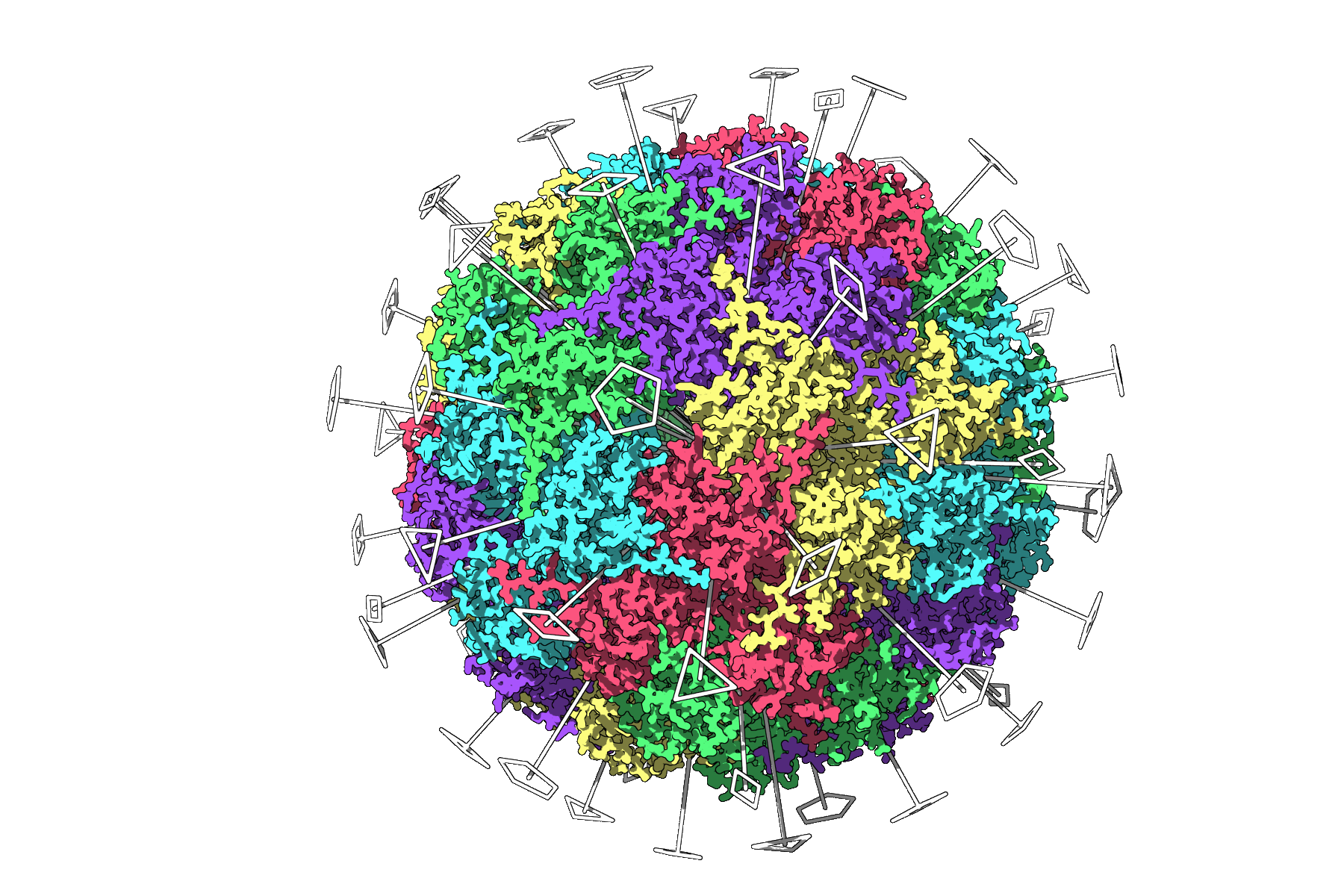
One striking example involves the icosahedral capsid of PDB structure 3NQ4. The Symmetry Detection extension automatically identifies all 2-fold, 3-fold, and 5-fold axes in the capsid, offering a clear pathway to isolate the asymmetric unit. This isolation step can significantly reduce the processing time for computational simulations. The visualized symmetries are not just data—they’re tools to guide decision-making.
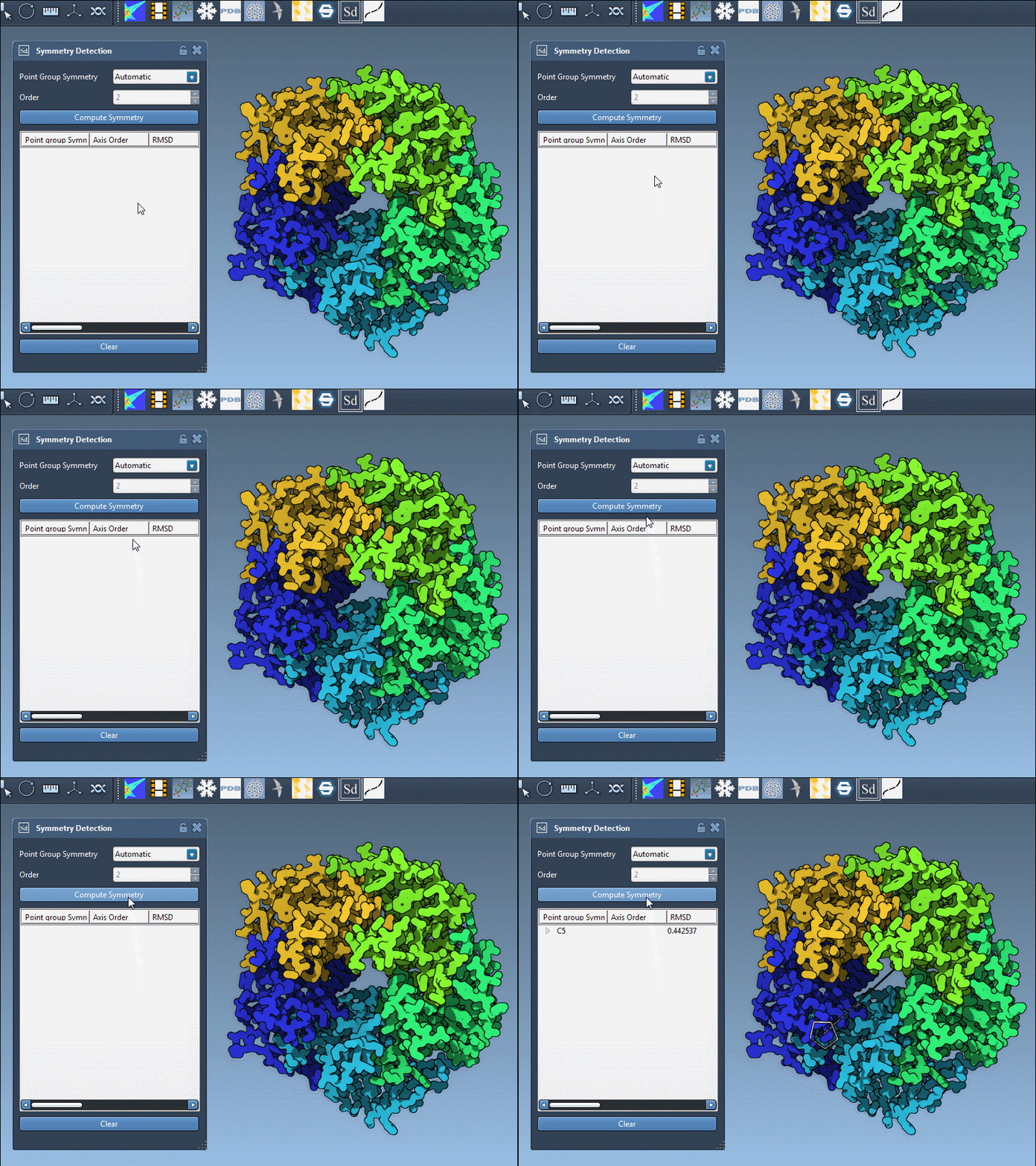
Another case involves the 1CHP model. For large assemblies like this, multiple groups may be proposed. Researchers can choose the most relevant group by considering factors like RMSD values and the symmetry’s fit to their scientific question.
Unlocking Better Visualization
As a practical tip, symmetry axes can be paired with ribbon or surface visualizations for additional clarity. Coloring asymmetric units distinctly provides even better context, aiding both communication and further analysis. The captured visualizations—complete with highlighted axes—are excellent for inclusion in research papers or presentations.
Want to Learn More?
Whether you’re aiming to validate experimental data, optimize simulations, or design the next generation of nanobiotechnology, symmetry detection offers a versatile toolset. To dive deeper into this functionality, visit the original documentation page: Symmetry Detection in Biological Assemblies.
SAMSON and all SAMSON Extensions are free for non-commercial use. You can get SAMSON at this link.