



One of the fundamental challenges in molecular modeling is capturing the dynamic behavior of complex biomolecular systems. For virologists and computational modelers studying SARS-CoV-2, understanding the opening motion of the viral spike protein is crucial, as this motion is key to how the virus infects human cells. In this blog post, we explore how to visualize and simulate this conformational change using the computational workflow available in SAMSON, addressing one of the most significant pains of modeling: creating accurate and meaningful transition pathways.
The Biological Importance of the Spike Protein’s Motion
To infect human cells, the SARS-CoV-2 virus relies on its spike protein, a structure composed of three identical subunits (S proteins) arranged in a C3 symmetry. This spike protein goes through an opening motion, transitioning from a closed to an open state to bind to the ACE2 receptor on human cells. Visualizing this conformational change is critical for understanding viral mechanics and for designing antiviral drugs and vaccines targeting this mechanism.
How to Simulate the Spike’s Motion
In SAMSON, the spike protein’s motion can be visualized using data from two experimentally determined states of the protein:
The motion is captured by computationally interpolating the path between these two states and refining it to produce a realistic trajectory. Below are the steps to reproduce the results:
- Prepare both structures: Adjust bond orders in sugar residues and add hydrogens using a Python script in SAMSON. Perform some initial minimization to stabilize the structure.
- Generate an initial path: Use the ARAP Interpolation Path module to create a transition path between the open and closed states. This step provides a starting trajectory that reflects the motion.
- Refine the path: Apply the P-NEB (Parallel Nudged Elastic Band) module to optimize the pathway for smoother and more accurate transitions. This process can be performed within minutes on a standard laptop.
Interactive Motion Visualizations
The simulated trajectory can be downloaded in various formats, such as PDB files or SAMSON-specific files. These allow researchers to experiment with and understand the SARS-CoV-2 spike’s motion in detail. Below are visualizations to illustrate the spike’s motion from closed to open states:
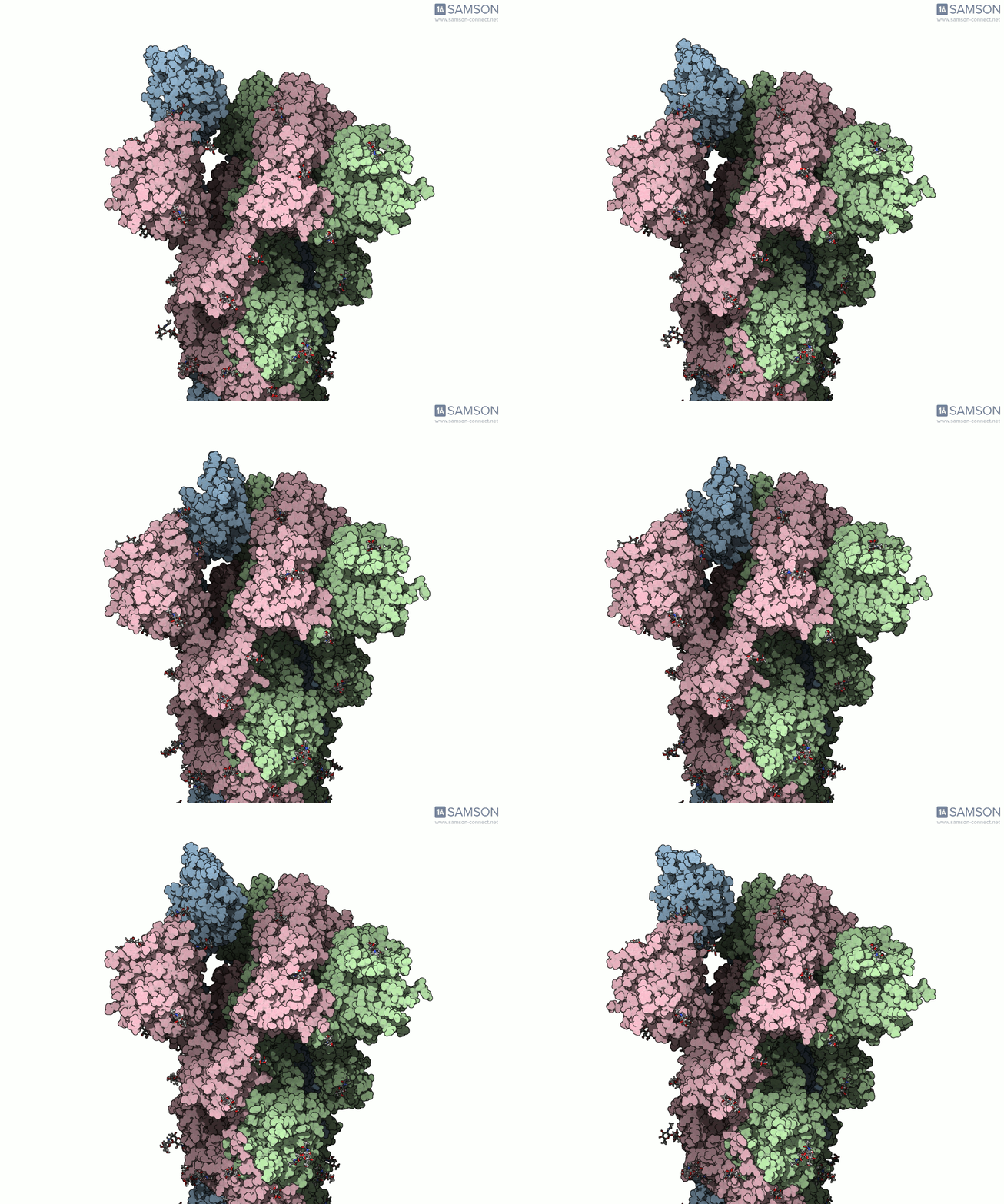
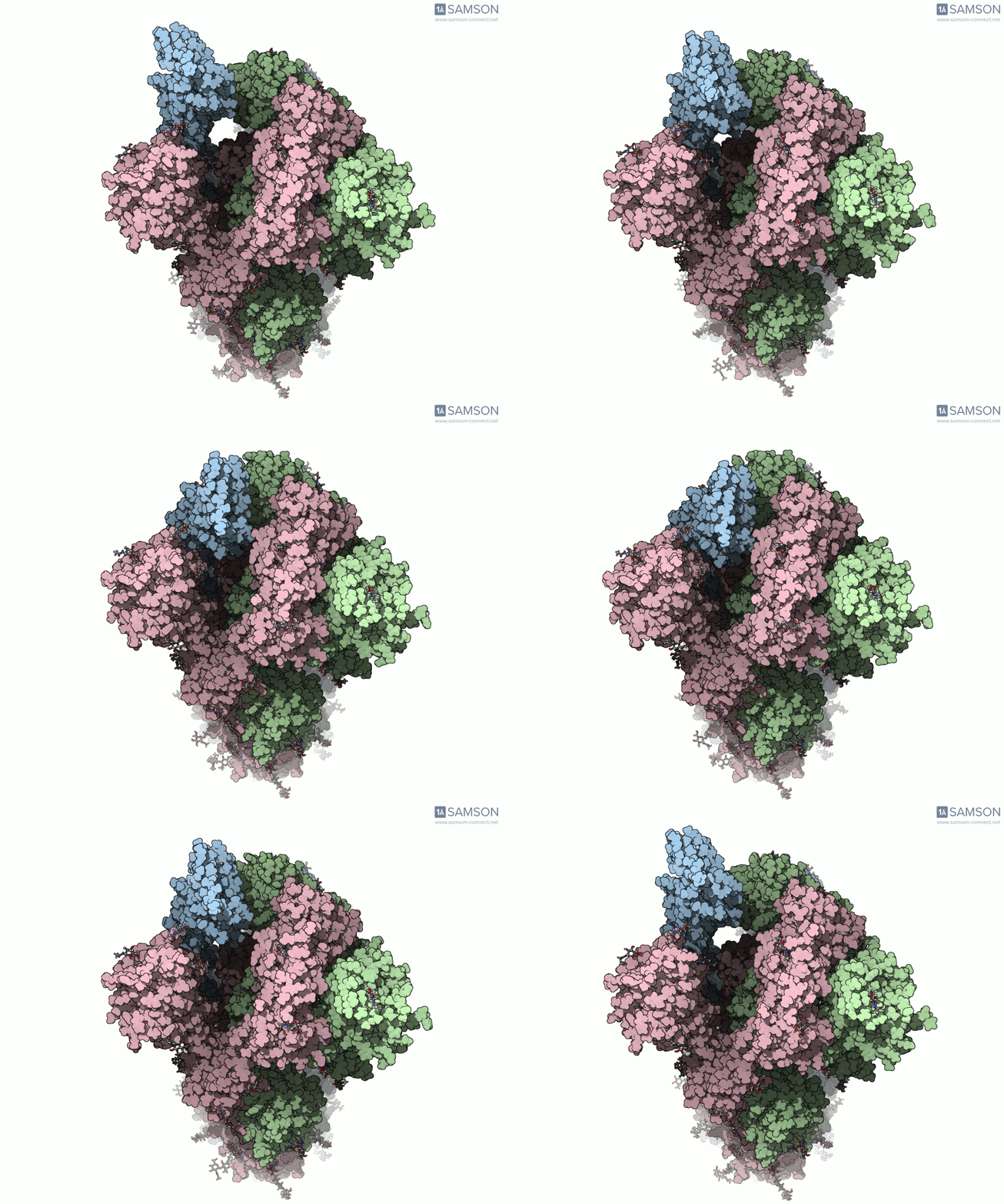
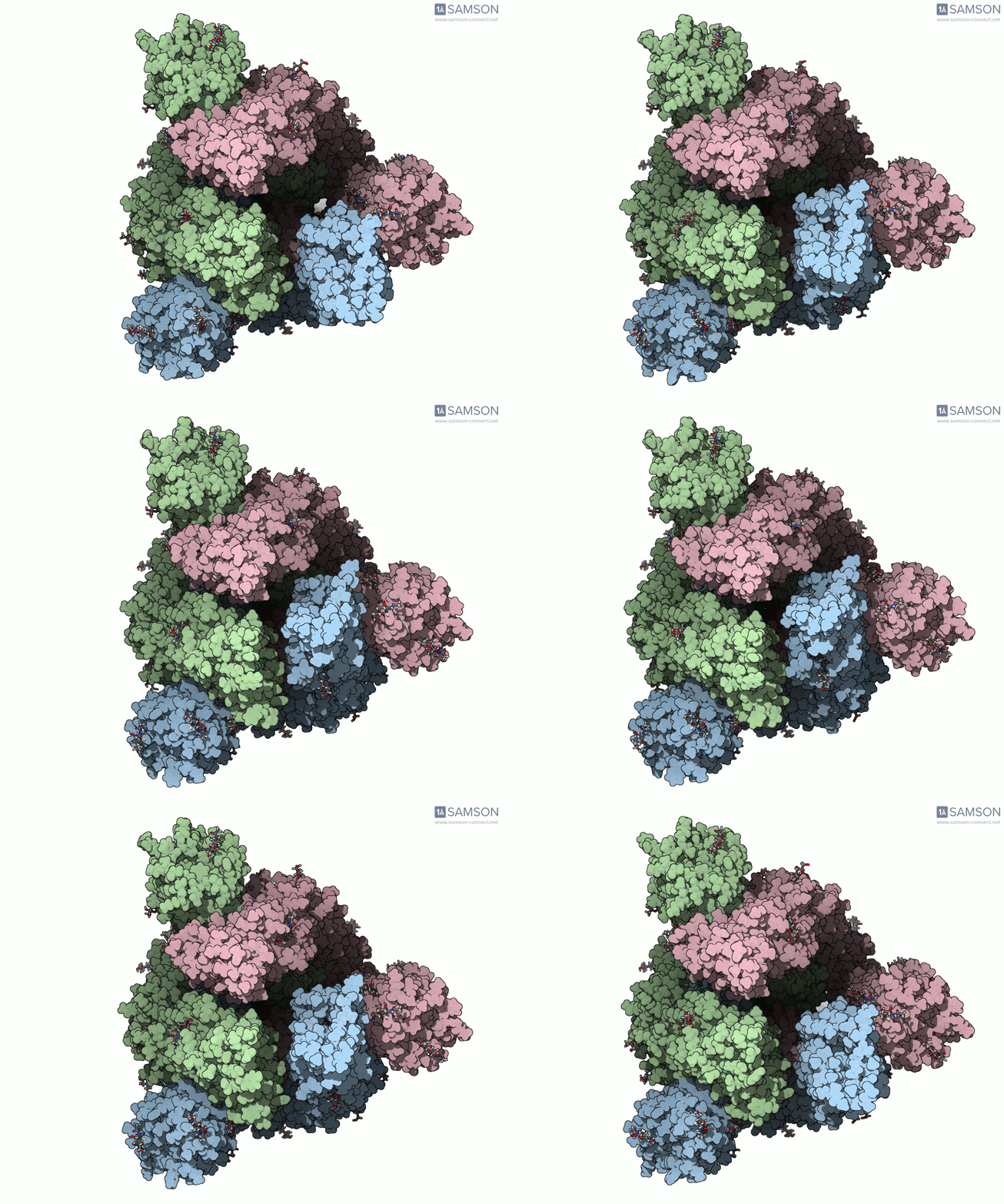
These animations reveal how just one of the S proteins transitions to its receptor-binding state, crucial for targeting ACE2 receptors.
Applications and Beyond
While these trajectories are illustrative, they may also serve as starting points for further computational studies, such as molecular dynamics simulations or docking experiments, vital for validating experimental hypotheses. The ease and speed of the outlined workflow make it invaluable for researchers, educators, and students exploring protein dynamics.
To learn more about the computational steps and access downloadable trajectory files, visit the original documentation page: Explore the SARS-CoV-2 Spike Opening Motion.
Note: SAMSON and all SAMSON Extensions are free for non-commercial use. Get SAMSON at SAMSON Connect.