



Lipid membranes play a critical role in many biological simulations, but generating them around proteins in a reliable and efficient manner can be challenging. The Molecular Box Builder, an extension within SAMSON, makes this process much more straightforward. Let’s dive into how you can create a lipid layer around a protein, step by step.
Why Build Lipid Layers Anyway?
Lipid bilayers are essential in modeling biological membranes. Whether you’re studying protein-lipid interactions, transport phenomena, or membrane-bound protein functions, a well-constructed lipid membrane is foundational.
Step-by-Step: Building a Lipid Layer Around a Protein
Step 1: Align the Protein
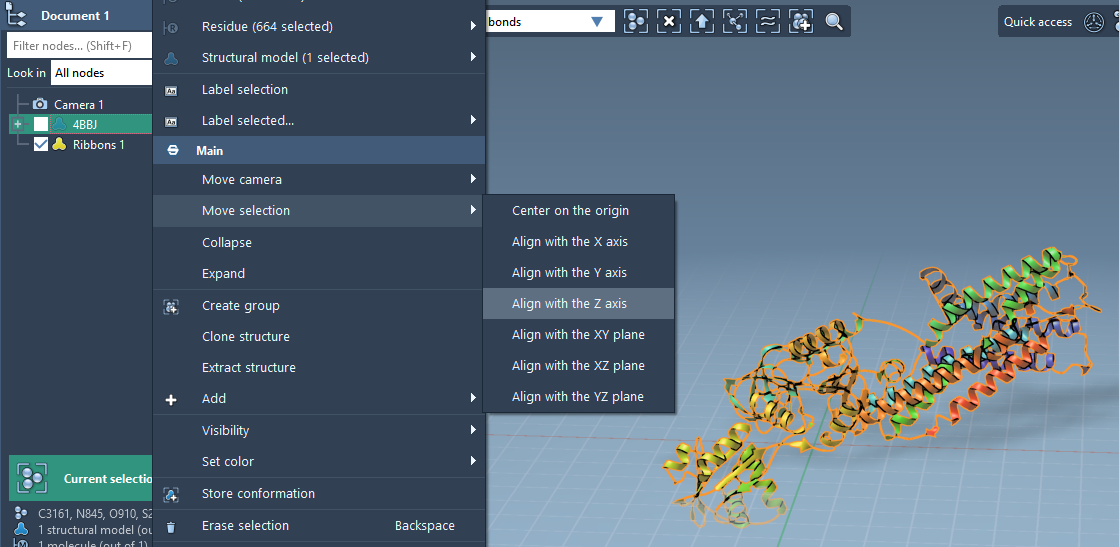
For accurate placement of the lipid layer, you’ll first need to align your protein within the workspace:
- In the Document view, right-click the protein.
- Choose Move selection > Align with Z axis from the context menu.
- Next, choose Move selection > Center on the origin.
Aligning the protein simplifies the positioning and allows for proper placement of the lipid around it.
Step 2: Set the Lipid Molecule
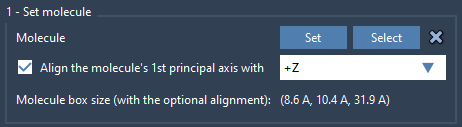
Now it’s time to choose and align your lipid molecule:
- Import a lipid molecule into your workspace.
- Once imported, select the lipid molecule and click Set in the Molecular Box Builder app.
- Align the lipid’s principal axis to the
+Zaxis for consistent orientation.
Step 3: Define the Box
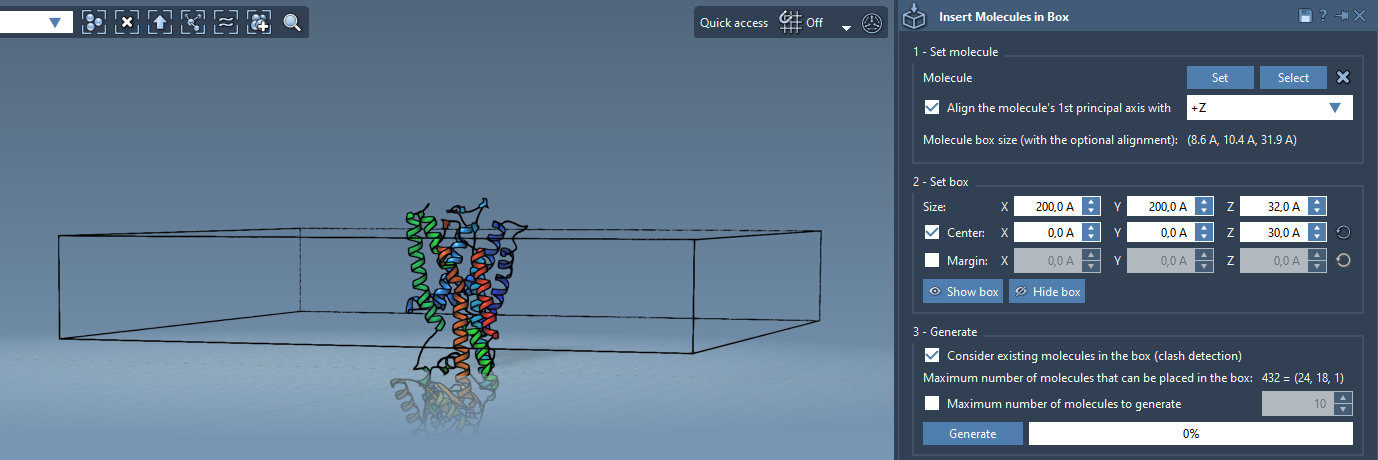
This step focuses on setting up the environment in which the lipid layer will be created:
- Center the box around your aligned protein.
- Adjust the box size to ensure it encapsulates the protein while defining a single lipid layer.
- If needed, specify margins to control the spacing between inserted lipid molecules.
Step 4: Generate
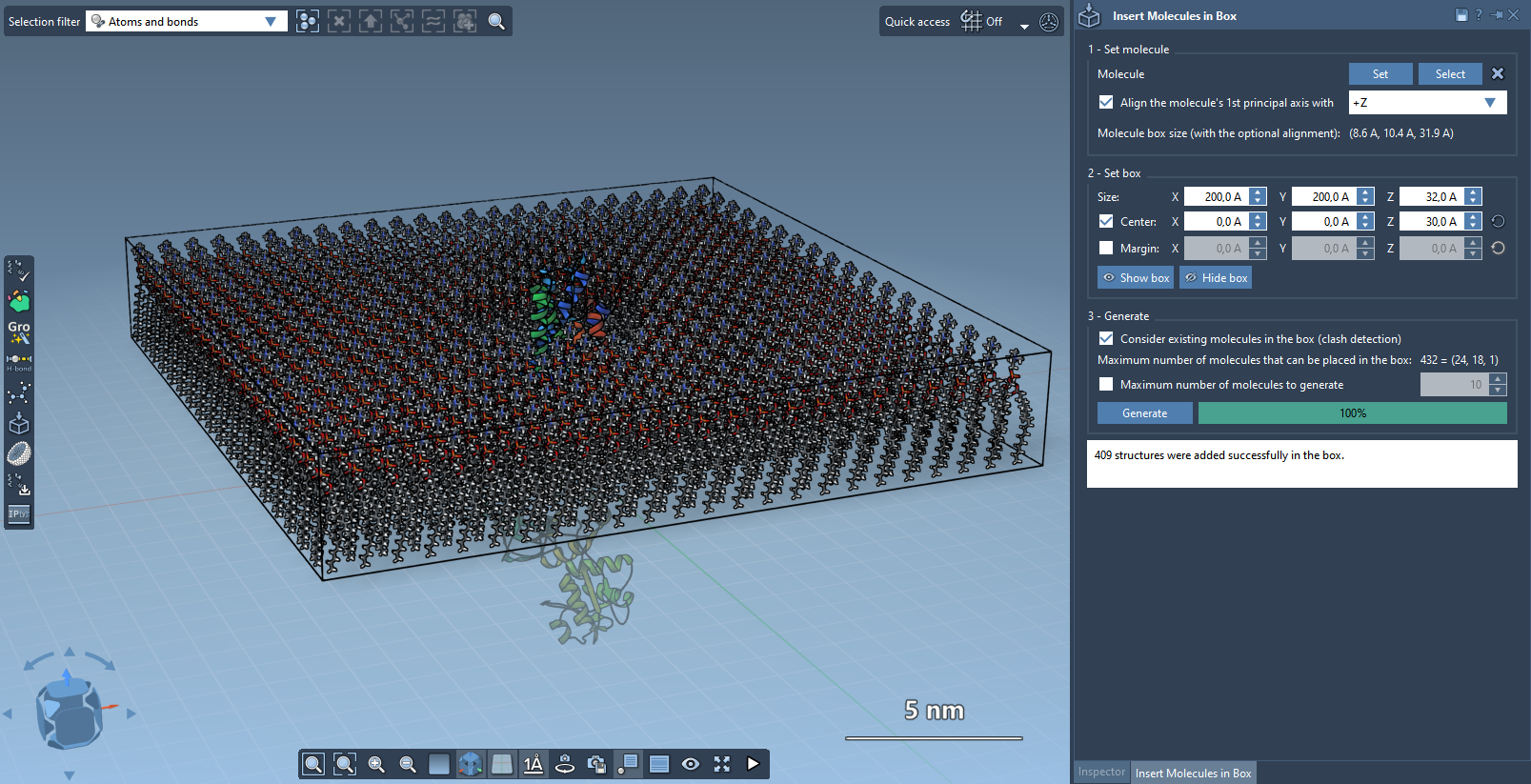
The Molecular Box Builder will now populate the defined box with lipid molecules:
- Enable Consider existing molecules in the box to ensure that lipids are placed only in available space, avoiding overlaps with the protein.
- Click Generate to create the lipid layer.
The result is a single, well-oriented lipid layer around your protein, ready for further simulation steps.
Optional: Create a Lipid Bilayer
If your study requires a full lipid bilayer, follow these additional steps:
- Generate the first layer by aligning lipids to the
+Zaxis. - Shift the box center in the
Z-direction to create space for the second layer. - Add the second lipid layer using
-Zalignment.
A full lipid bilayer offers a more realistic representation of cellular membranes and certain processes involving membrane dynamics.
Next Steps
After creating your lipid layer, you can minimize, equilibrate, and simulate the system using tools like GROMACS Wizard. These steps allow you to ensure structural stability and prepare for meaningful simulations and observations.
For detailed explanations, helpful visuals, and related tutorials, visit the Molecular Box Builder documentation page: learn more.
Note: SAMSON and all SAMSON Extensions are free for non-commercial use. You can get SAMSON at samson-connect.net.