



Molecular modeling can often be a tedious task, especially when it comes to interactively building or modifying molecules while maintaining a reliable physical representation of those systems. Issues such as handling bond creation and breaking, or dynamically updating molecular topology, can interrupt workflows and slow progress. This is where the Interactive Modeling Universal Force Field (IM-UFF) interaction model steps in, offering a solution for real-time molecular editing.
What is IM-UFF?
IM-UFF is an extension of the Universal Force Field (UFF) specifically designed for interactive molecular modeling. Unlike its predecessor, IM-UFF is equipped to seamlessly handle topological changes such as the creation and breaking of covalent bonds, adjusting bond orders, and updating atom types during interactive editing in SAMSON. This allows users to make significant modifications to molecular structures while being guided by physically-based inter-atomic forces.
Why Molecular Modelers Love IM-UFF
The biggest advantage of IM-UFF is its ability to handle real-time structural changes. Imagine working on a molecular system and needing to move atoms around. With IM-UFF:
- If you slightly displace atoms, the system adjusts locally to preserve bonds and maintain structure stability.
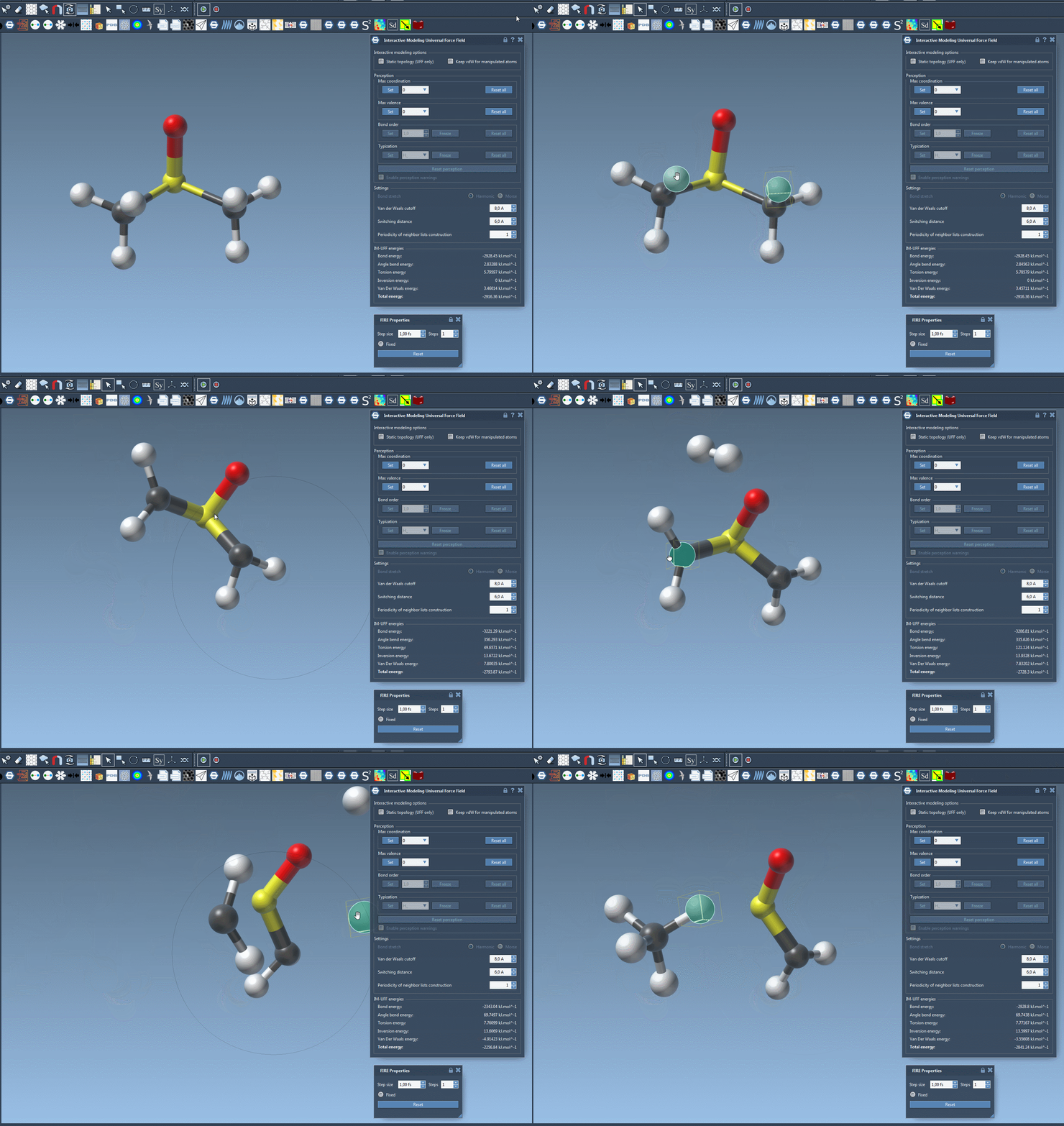
- If you significantly displace atoms, bonds may break, and a new topology will be computed dynamically.
- New bonds can form when atoms are brought close together to reflect real chemical interactions.
This dynamic capability makes IM-UFF ideal for tasks like building molecules from scratch, simulating structural changes during reactions, or exploring modifications to a design prototype.
How to Set Up and Run IM-UFF
Curious how to try IM-UFF? Follow these simple steps:
- Make sure you have added the IM-UFF extension in SAMSON.
- Open a molecular system document within SAMSON.
- Add a simulator by navigating to Edit > Simulate > Add simulator or using the shortcut (Ctrl + Shift + M on Windows or Cmd + Shift + M on Mac).
- Choose “Interactive Modeling Universal Force Field” as the interaction model.
- Select an updater (such as FIRE) for efficient simulation state updates and hit “OK.”
The IM-UFF parameter window will now appear, allowing you to refine settings. Unlike traditional UFF, the interactive options are conveniently offered in this window. For instance, you can decide to temporarily disable van der Waals (vdW) forces for atoms you’re manipulating, making it easier to rearrange atoms without interference from repulsive vdW interactions.
Experience IM-UFF in Action
Once set up, simply start your simulation by selecting Edit > Simulate > Start. Now, you can use your mouse to drag atoms around and experiment with molecular designs. Observe as the topology evolves to accommodate your changes seamlessly! This interactivity unlocks creative possibilities in real-time for researchers and students alike.
For example, displace an atom far from its bonded neighbors, and watch as its bonds dissolve. Bring it closer to other atoms, and observe the formation of new bonds. By adapting continuously, IM-UFF simplifies the workflow of designing molecular modifications.
Get Started Today
IM-UFF is a powerful tool for tackling molecular modeling challenges related to real-time editing and structural adaptability. Whether you are running experiments, teaching, or prototyping molecular systems, this interaction model will prove invaluable in your toolkit.
To dive deeper into the capabilities of IM-UFF and explore other tips, visit the complete documentation at IM-UFF Tutorial.
Note: SAMSON and all SAMSON Extensions are free for non-commercial use. Download and explore SAMSON at SAMSON.