



For molecular modelers and researchers in molecular design, understanding the mechanism behind SARS-CoV-2 spike protein motion is crucial. This motion plays a key role in the ability of the virus to infect human cells by binding to the ACE2 receptor. In this blog post, we’ll explore how SAMSON—a powerful molecular design platform—can help simulate and analyze this opening motion effectively, providing insights into a key stage in viral infection.
Why simulate spike protein motion?
The spike protein of SARS-CoV-2 transitions between a closed (down) state and an open (up) state. The open state allows the spike to bind to human ACE2 receptors, facilitating viral entry into cells. Understanding and simulating this transition not only deepens our scientific knowledge but also offers a framework for designing inhibitors or vaccines targeting this crucial interaction.
Animation-ready: Spike dynamics in SAMSON
Using SAMSON, molecular modelers can simulate the spike protein’s motion computationally. Unlike static structures, these computed motions offer a glimpse into the intermediate states of the spike protein during the transition from the closed state to the open state. Check out the following animated visualization, which illustrates this process in three different angles:
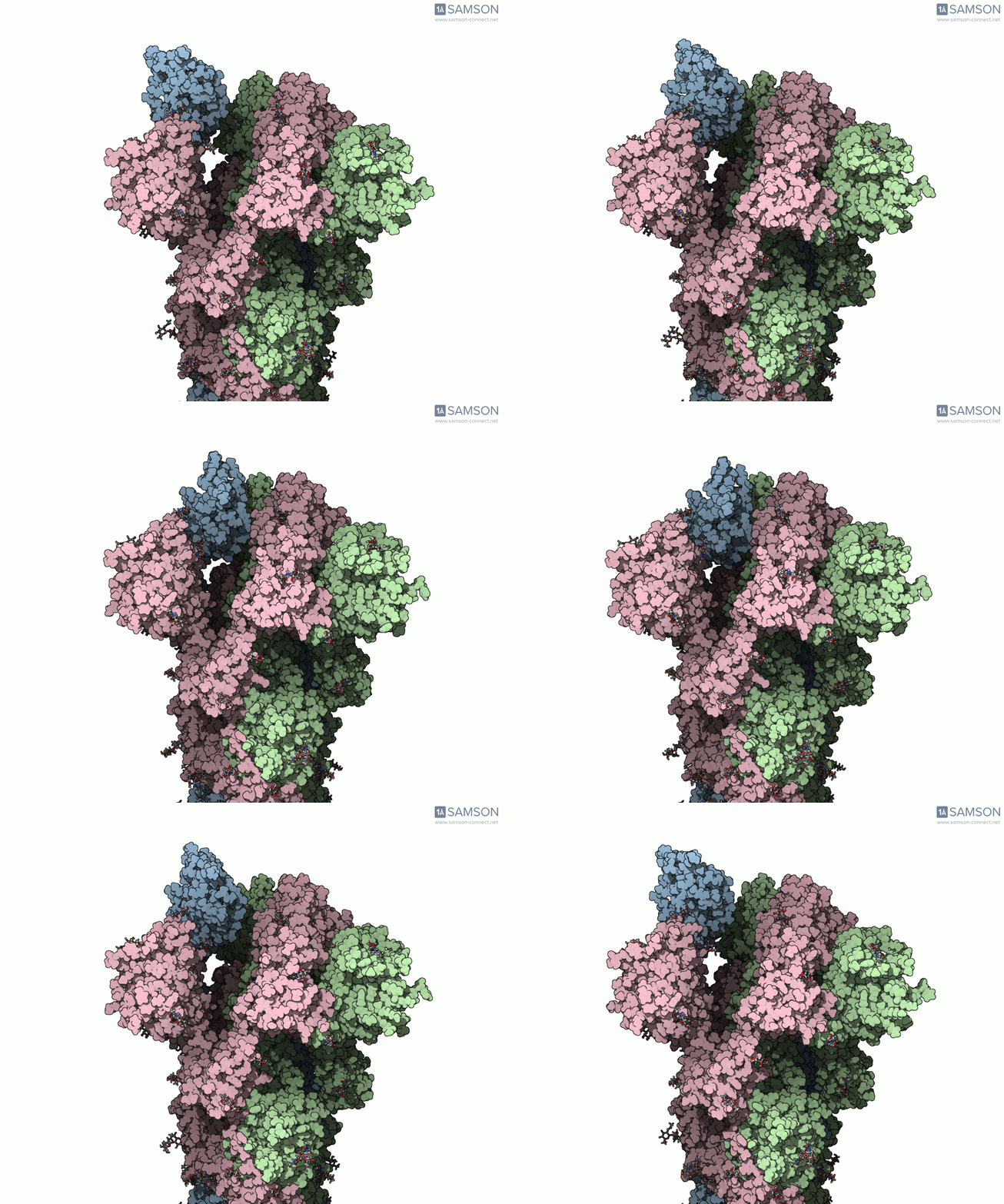
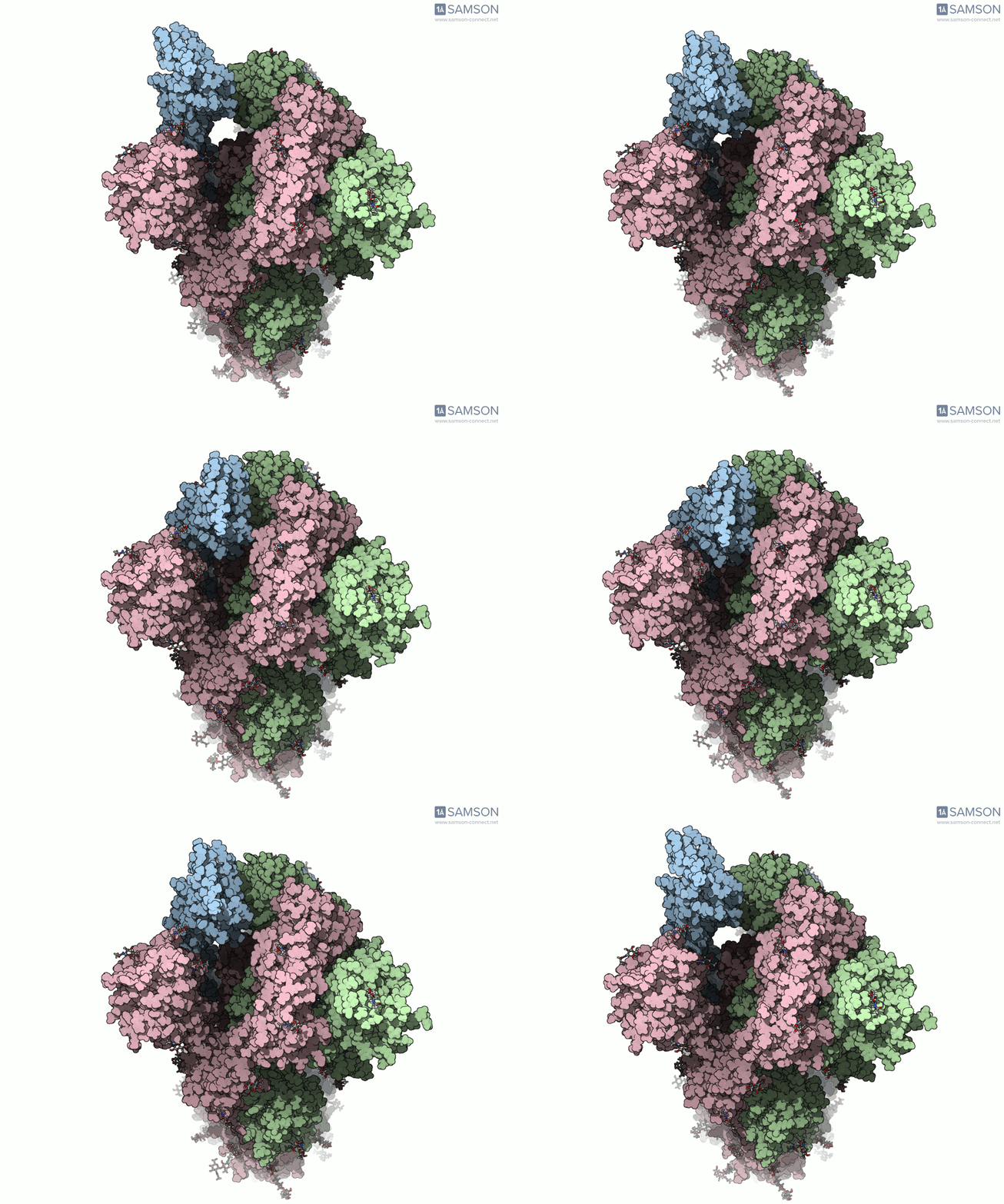
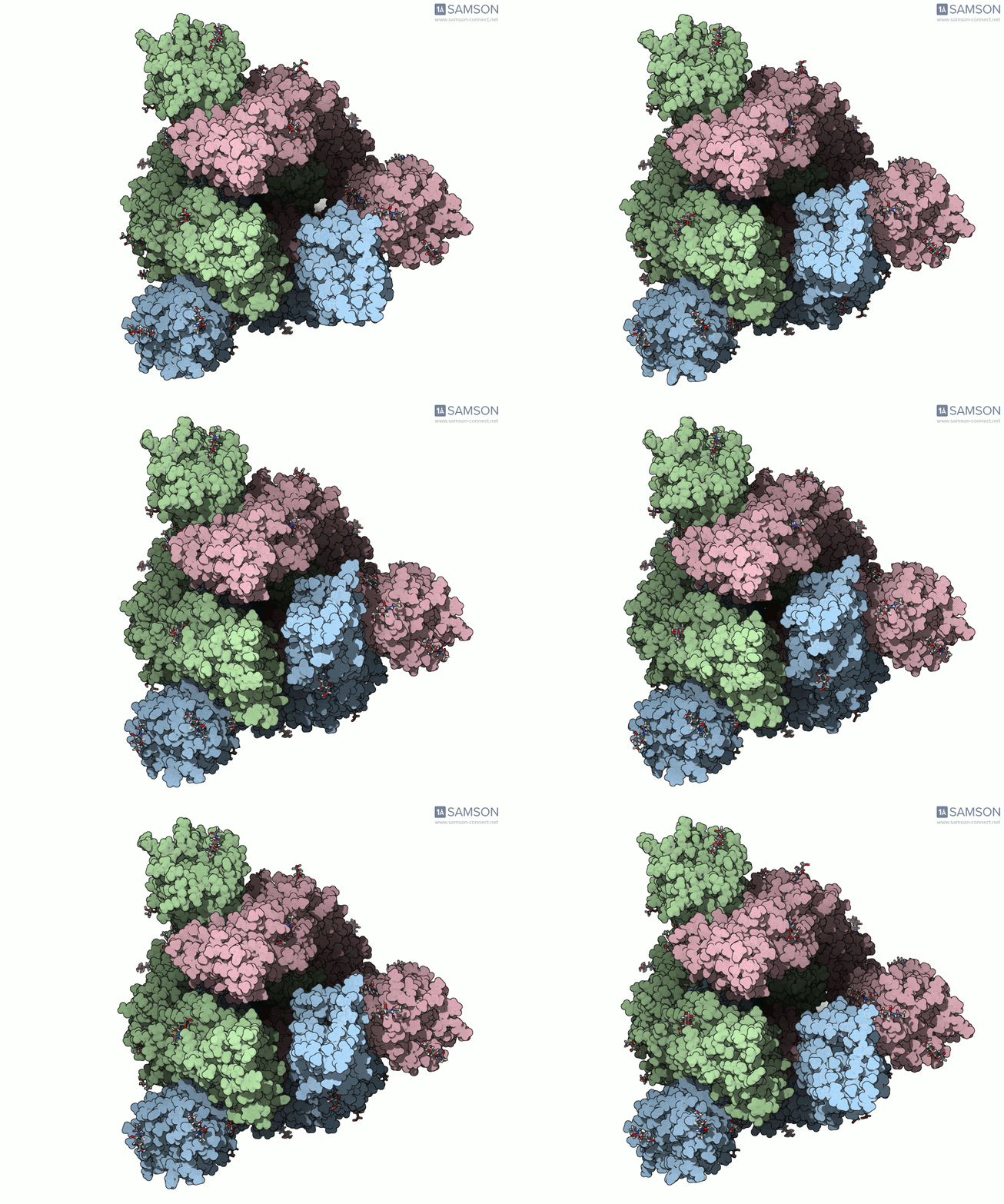
These visualizations show how the spike shifts conformation, revealing how it prepares for interaction with host cells.
How was the motion computed?
SAMSON integrates powerful modules to compute molecular trajectories from known states. For the SARS-CoV-2 spike protein, the following steps were used:
- Starting structures: Two published structures were used—one for the spike in its closed state (PDB 6VXX) and the other in its open state (PDB 6VYB).
- Interpolated path generation: SAMSON’s ARAP (As-Rigid-As-Possible) Interpolation Path module generated an initial trajectory between these states by interpolating conformational shifts.
- Path refinement: To optimize the transition path, the P-NEB (Parallel Nudged Elastic Band) module refined the computed trajectory, smoothing out unrealistic transitions and ensuring accuracy.
This pipeline not only provides detailed molecular insights but is computationally efficient, making it feasible to simulate complex protein motions even on a standard laptop.
Download trajectory files
To further explore the computed trajectory, researchers can download the ready-to-use data files provided in multiple formats directly from the SAMSON documentation:
These computational trajectories provide a valuable foundation for further molecular modeling studies, including drug discovery and antibody design. However, keep in mind that these are computational results and may require additional experimental validation for specific applications.
Conclusion
Visualizing and simulating the SARS-CoV-2 spike protein in motion is a vital tool for researchers exploring virus-receptor interactions. By providing easy access to tools like ARAP and P-NEB modules, SAMSON enables researchers to compute and refine molecular trajectories efficiently. To learn more about how to use SAMSON for spike motion simulations, visit the full documentation here.
Note: SAMSON and all SAMSON Extensions are free for non-commercial use. Download SAMSON for free at this link.