



One of the most vital challenges molecular modelers face in combating SARS-CoV-2 is understanding how its spike protein transitions between the closed and open states, facilitating the virus’s entry into human cells. If you’re working on protein motions or drug-target interactions, exploring these transitions could enhance your research in significant ways.
The SARS-CoV-2 spike protein serves as the virus’s primary tool for cell entry. In its closed state, the spike cannot interact with the host receptor (ACE2). However, in its open state, it binds to ACE2, enabling the virus to fuse with the host cell membrane. Understanding this motion not only provides insight into virus infectivity but also informs therapeutic strategies targeting this protein. Let’s dive into how computational tools, particularly within the SAMSON molecular design platform, can be used to explore this vital protein motion.
Why Explore Spike Opening Motion?
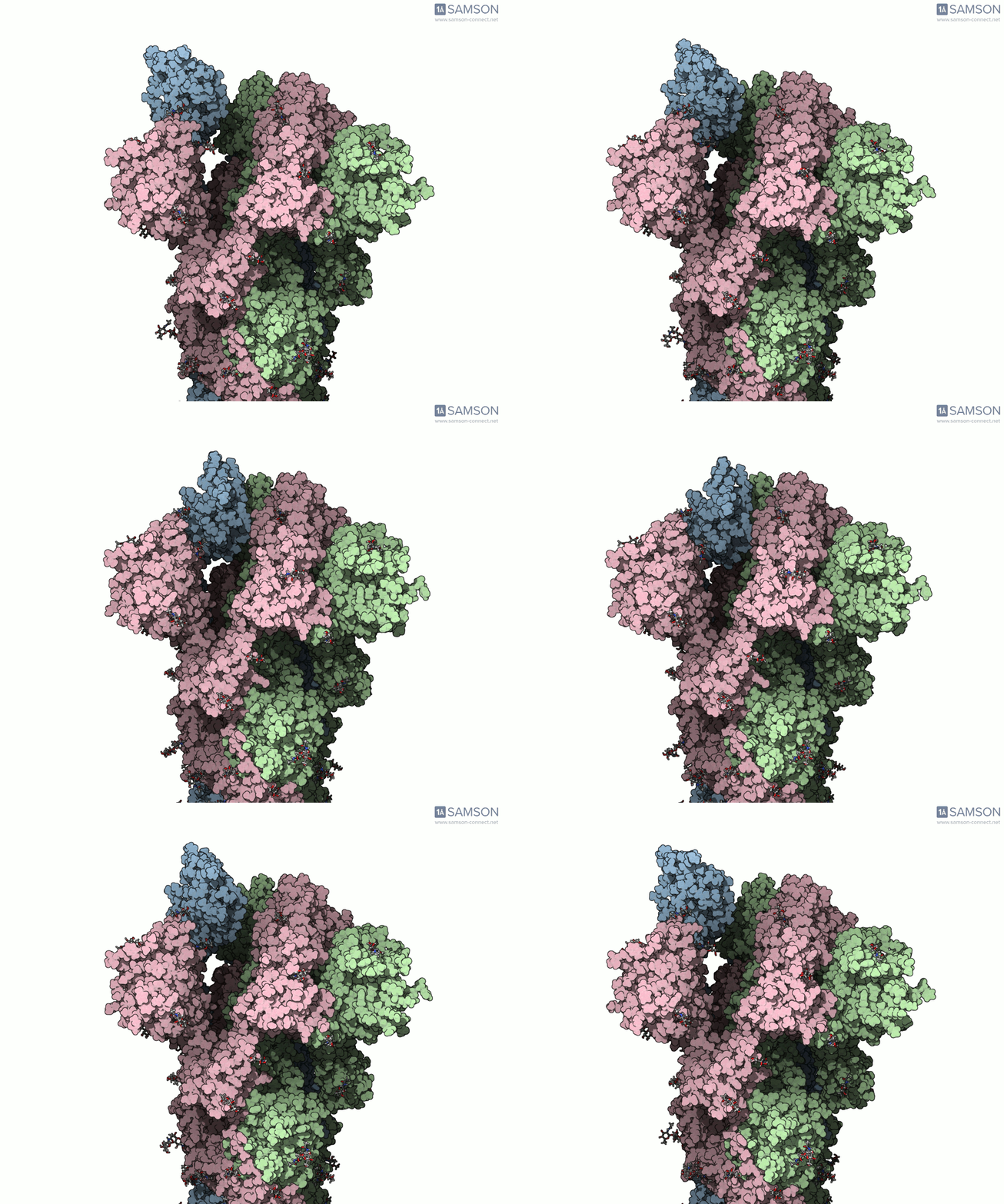
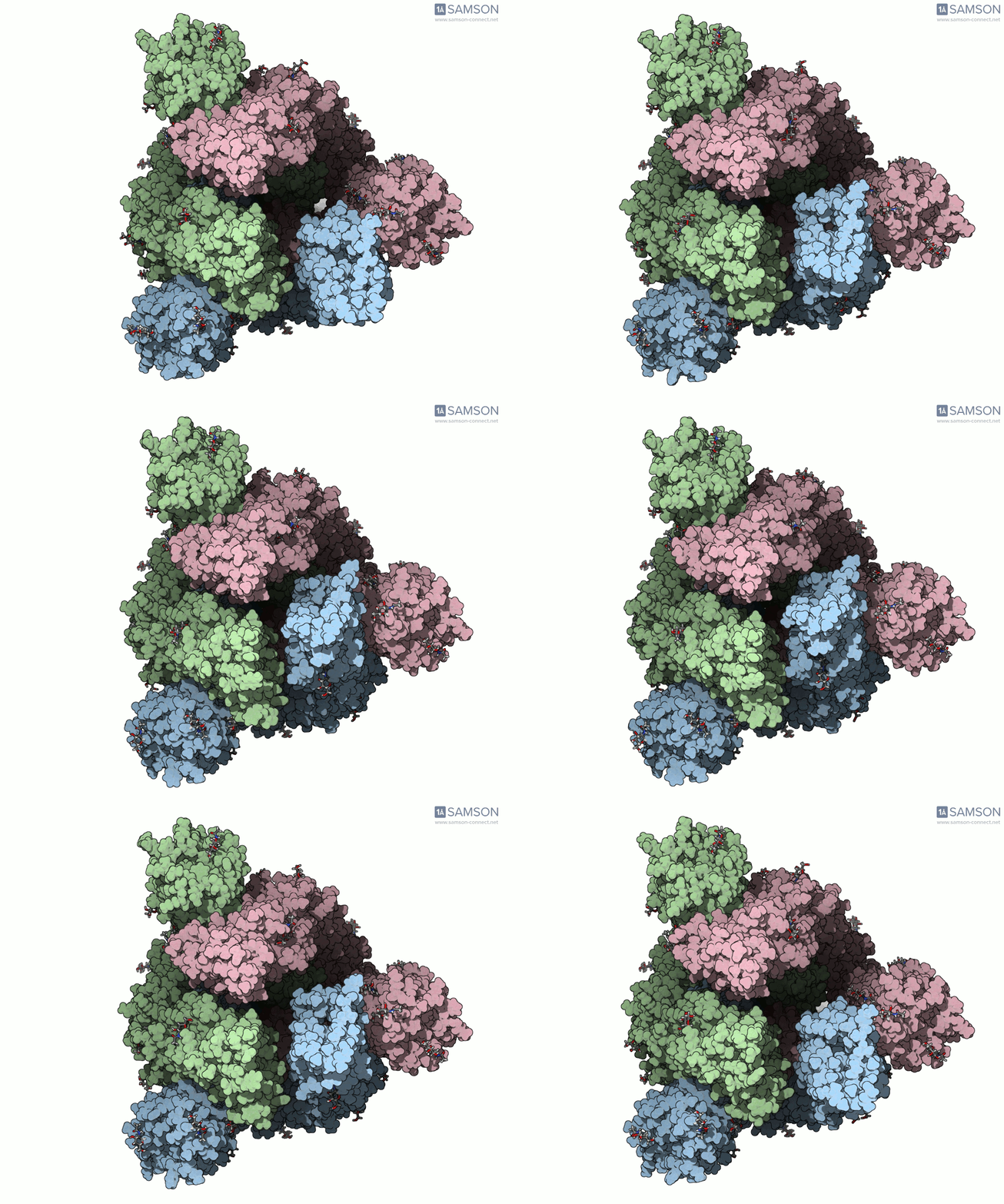
The spike protein is composed of three copies of the S protein, giving it a C3 symmetry. The transition from a closed to an open state reveals the receptor-binding domain (RBD) necessary for ACE2 recognition. This region, while partially covered by sugar molecules, remains a prime target for antibodies. Exploring these conformational changes can help validate structural hypotheses, improve vaccine designs, and further drug development aiming to hinder viral entry.
The interactive animations provided by SAMSON bring this process to life, showcasing the step-by-step protein motion. For example:
Hands-On Resources for Molecular Modelers
To support your research, SAMSON provides downloadable trajectory files illustrating the spike transition. These include:
Once downloaded, these files can be visualized and analyzed to deepen your understanding of the spike protein’s movement. Please note that while these trajectories serve as valuable computational insights, they have not yet undergone experimental validation and may require further processing for specific use cases.
Embedding the Knowledge Into Your Workflow
SAMSON also provides detailed documentation on reproducing the spike’s opening motion using its modules. Tools like the ARAP (As-Rigid-As-Possible) Interpolation Path module and the P-NEB (Parallel Nudged Elastic Band) module are free during the COVID-19 outbreak and available for researchers. By taking the known closed (PDB 6VXX) and open (PDB 6VYB) states of the spike, SAMSON computes the intermediate trajectory paths efficiently, with options to refine them further. This computational workflow allows you to explore enhanced pathways and adapt the methodology for your protein of interest.
Moreover, engaging with these tutorials, available freely on SAMSON’s platform, equips you to recreate these simulations for broader applications, whether you’re studying viral proteins, allosteric motions, or binding-site dynamics in any biological context.
Conclusion
Exploring the SARS-CoV-2 spike’s opening motion brings molecular modelers one step closer to unraveling the mechanisms behind viral infectivity and immune evasion. If you’re keen to incorporate this research into your work or simply want to understand the process, SAMSON’s resources provide an accessible and valuable starting point.
Learn more about this topic and follow detailed steps at the original documentation page.
SAMSON and all SAMSON Extensions are free for non-commercial use. Download SAMSON today at https://www.samson-connect.net.