



For molecular modelers, symmetry detection in biological assemblies is a game changer. Symmetry can provide critical shortcuts in the complex workflows of protein modeling and molecular design. Whether you’re working with protein complexes, viral capsids, or other biological assemblies, understanding their symmetry can reveal functional insights while significantly reducing computational overhead.
Why Detect Symmetry?
Symmetry isn’t just about aesthetics; it’s an essential tool in structural biology and molecular sciences. Here are some practical reasons why symmetry detection is so valuable:
- Identify functional interfaces: Symmetry detection can highlight repeating structures in large biological assemblies, helping modelers identify key interaction points.
- Validate structural accuracy: Comparing detected symmetry with expected patterns can be used to verify experimental data.
- Performance optimization: By isolating the unique asymmetric unit, simulations become far more efficient, cutting down on runtime and computational expenses.
- Guide design: Symmetry-aware modeling facilitates the creation of symmetric nanomaterials and specialized point mutations for targeted research applications.
How SAMSON Simplifies Symmetry Detection
The Symmetry Detection extension in SAMSON integrates powerful computational tools to identify and visualize axes of symmetry. It’s especially helpful when working with proteins like viral capsids (e.g., PDB 3NQ4) or complexes (e.g., PDB 1CHP, 1B4B).
The key to mastering symmetry detection is using visual aids and tailoring workflows to specific research needs. For example, one critical feature of the extension is its ability to detect multiple symmetry groups within a single assembly, allowing the user to refine selection based on significance (e.g., RMSD values).
Practical Example: Icosahedral Capsid (3NQ4)
Let’s explore an example. For the icosahedral capsid (PDB 3NQ4), the extension accurately identifies and displays all 2-, 3-, and 5-fold axes of symmetry. This allows users to isolate a unique asymmetric unit for high-resolution simulations, avoiding repetitive computations on symmetric elements.
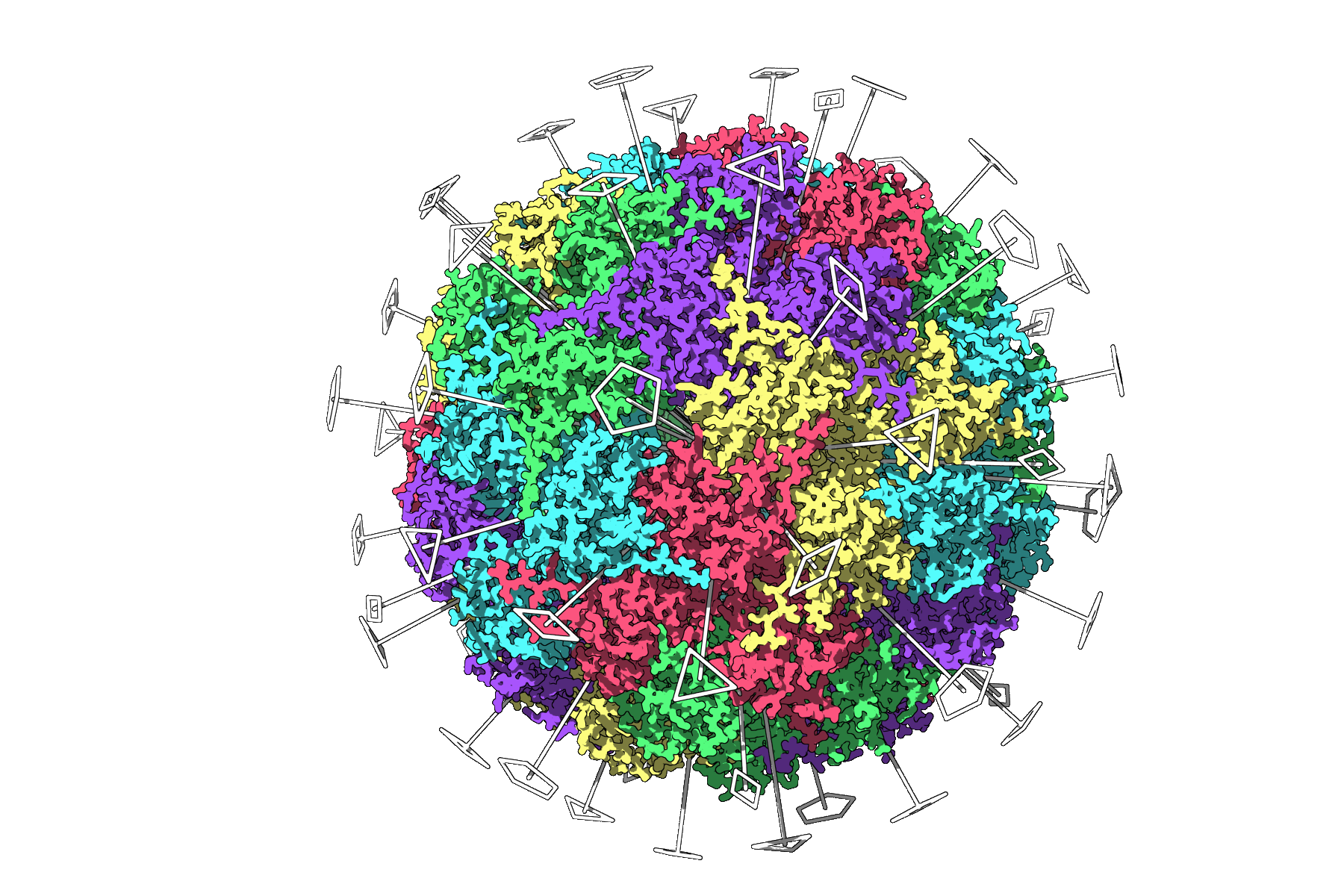
The visual representation of these axes can be combined with additional visual models (such as Ribbons or Surface) for intuitive context.
Optimizing Large Assemblies: Managing Multiple Symmetries
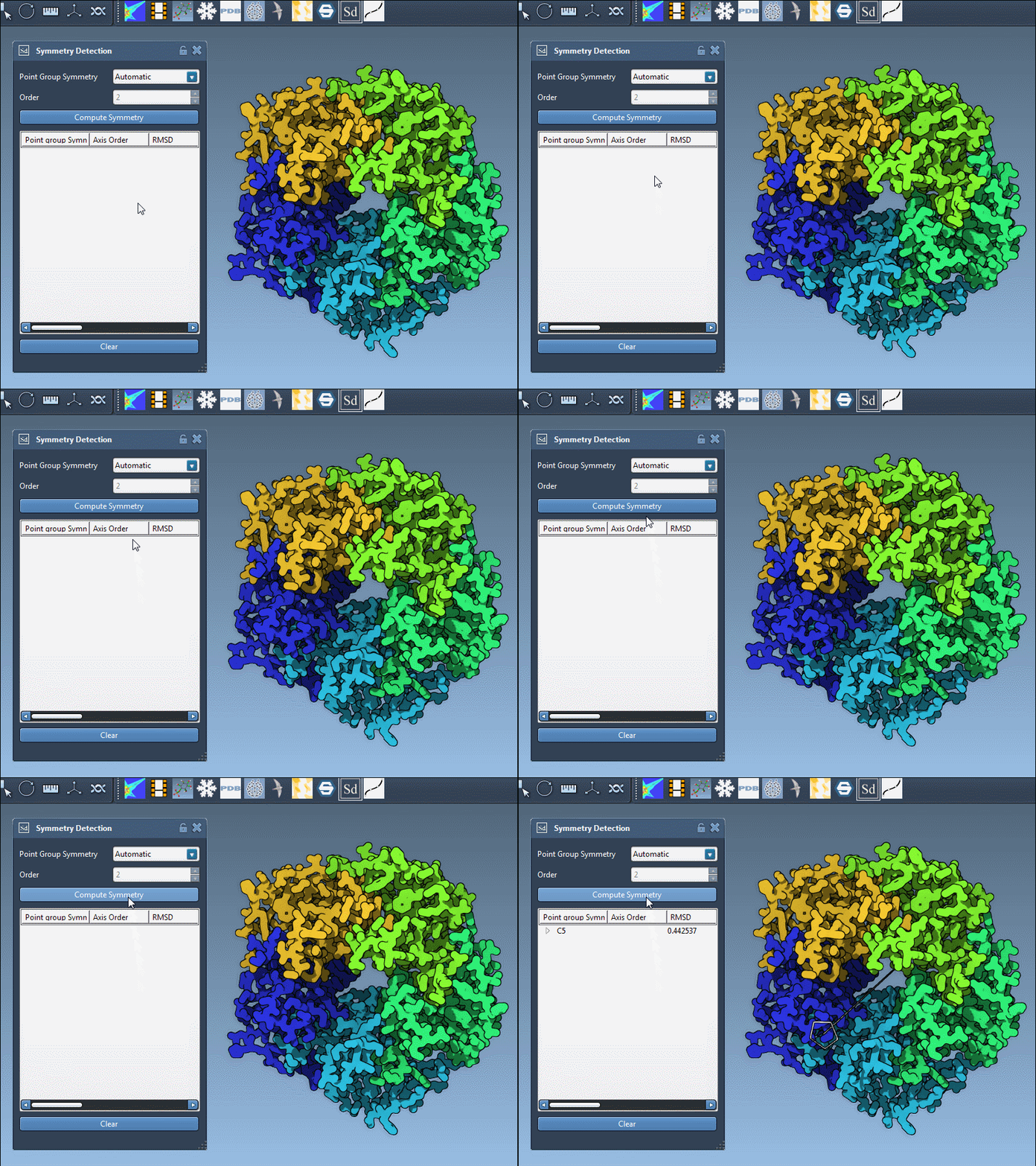
For larger assemblies like 1CHP, symmetry detection may propose more than one plausible symmetry group. Experienced users can analyze and refine the results further:
- Higher-order groups: Groups with smaller RMSD values are often more accurate and should be prioritized.
- Manual adjustments: Users can manually specify a symmetry group and order if the detection result deviates from experimental knowledge. For example,
D3dihedral symmetry may be the focus for certain large complexes like1B4B.
Double-Click Precision: Explore Axes in Detail
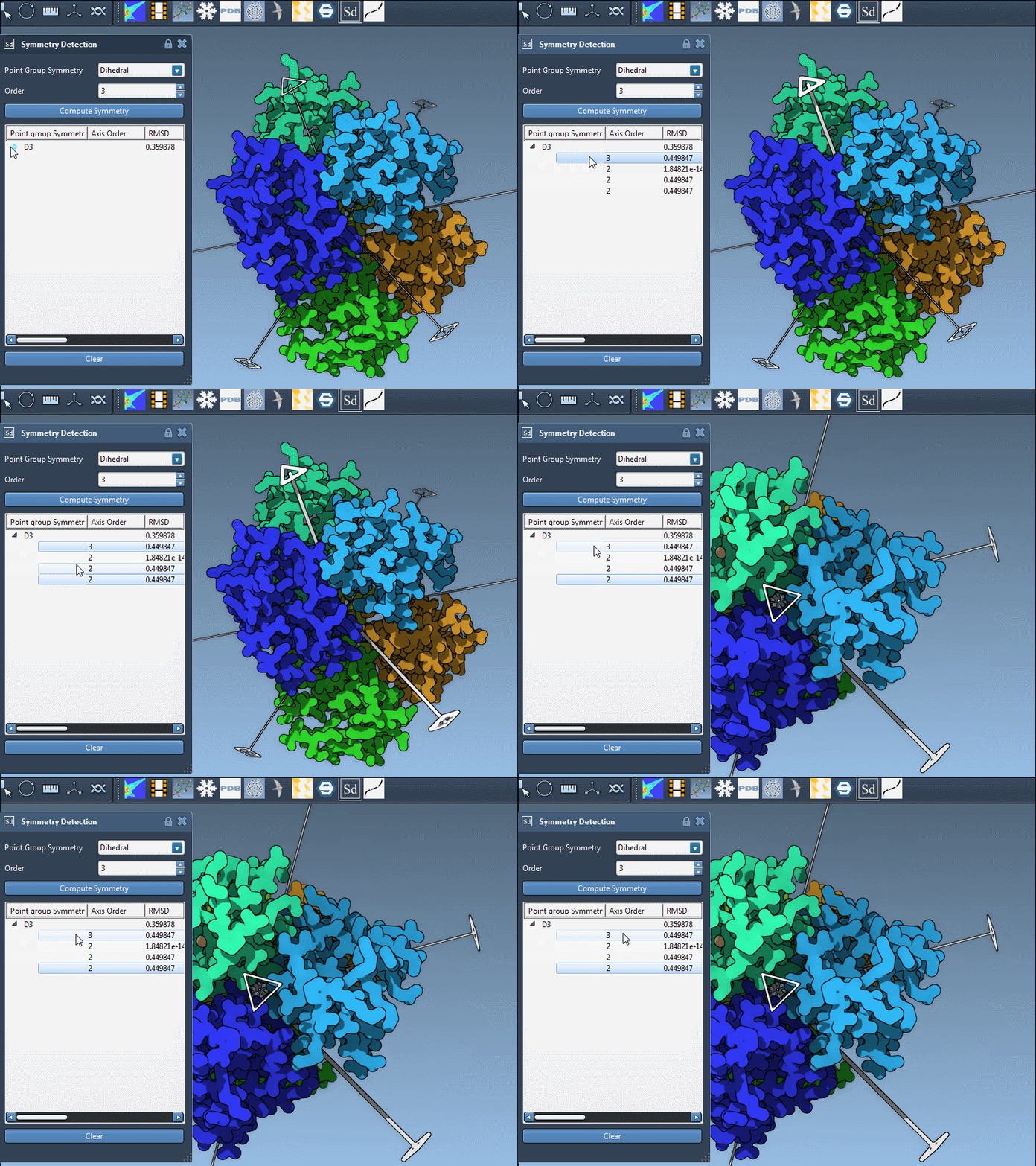
Understanding the detected axes is made easier with SAMSON. Expanding a symmetry group provides access to individual axes with associated RMSD values. Highlighting specific axes in the graphical viewport with a single click or aligning the camera using a double click further aids orientation in 3D space.
Conclusion
From functional annotation to streamlined simulations, symmetry detection opens up new possibilities for complex workflows in structural biology and beyond. Learn to efficiently integrate this tool into your project by exploring the full documentation at this link.
SAMSON and all SAMSON Extensions are free for non-commercial use. Download SAMSON at https://www.samson-connect.net.