



For molecular modelers working with large biological assemblies such as protein complexes or viral capsids, symmetry detection can often feel like a daunting and tedious task. However, identifying symmetry accurately is essential for many workflows: it helps validate molecular structures, identify functional regions, and optimize computational resources for simulations. If you’re managing symmetric systems, SAMSON’s Symmetry Detection extension offers a powerful and user-friendly solution to make this process seamless.
Streamlining Symmetry Detection for Biological Assemblies
The Symmetry Detection tool in SAMSON is tailored for identifying and visualizing axes of symmetry in biological structures. Whether you’re dealing with a cyclic, dihedral, or cubic symmetry type (such as tetrahedral, octahedral, or icosahedral symmetries), the extension simplifies the task of pinpointing precise symmetry elements. Instead of manually analyzing structures, the app provides visual feedback on repeating patterns and axes.
Imagine you’re investigating the structure of a capsid or protein complex. SAMSON’s extension quickly identifies symmetrical components and groups, allowing you to focus on meaningful aspects of the system. For molecular design or preparation of systems for simulations, this tool is a game-changer.
Three Quick Benefits of Symmetry Detection
- Discover repetitive functional interfaces: Repeated units can indicate active sites or regions for mutagenesis targeting.
- Validate experimental arrangements: Symmetry elements can confirm that your assembly matches expected models from structural biology experiments.
- Optimize computational time: By simulating only the unique asymmetric unit, you minimize calculation costs without sacrificing accuracy.
The Power of Visualization: A Practical Example
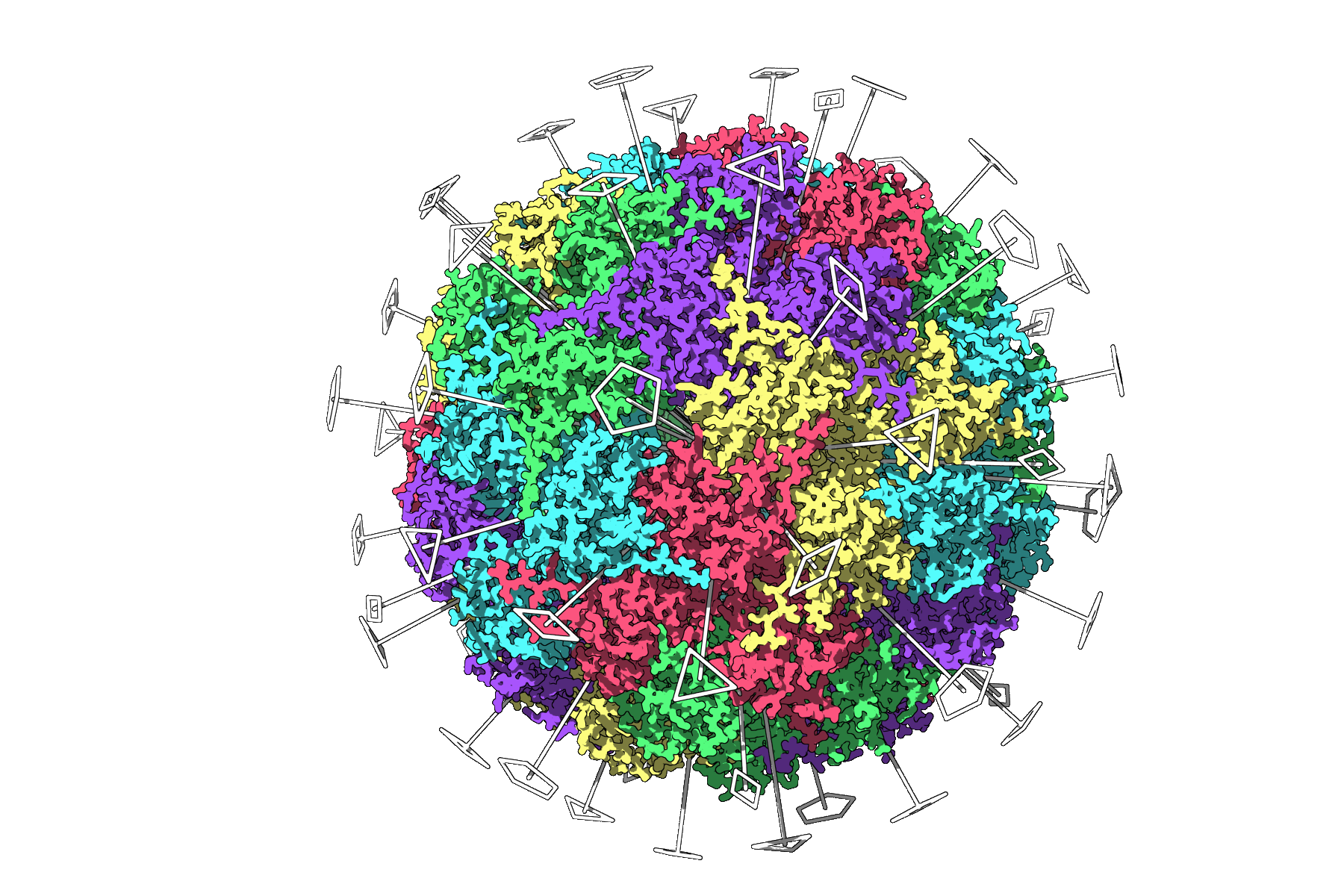
Take the example of a pentameric icosahedral structure, such as capsid protein 3NQ4. By uploading the molecule into SAMSON, the tool detects the full icosahedral symmetry and highlights the 2-, 3-, and 5-fold axes. This insight enables researchers to isolate an asymmetric unit for focused analysis or heavy simulations, accelerating the design workflow without compromising on biological relevance. Additionally, the clear visualization allows you to share symmetry analyses effectively in publications, or when collaborating with your peers.
Enhanced Control: Exploring Multiple Symmetries
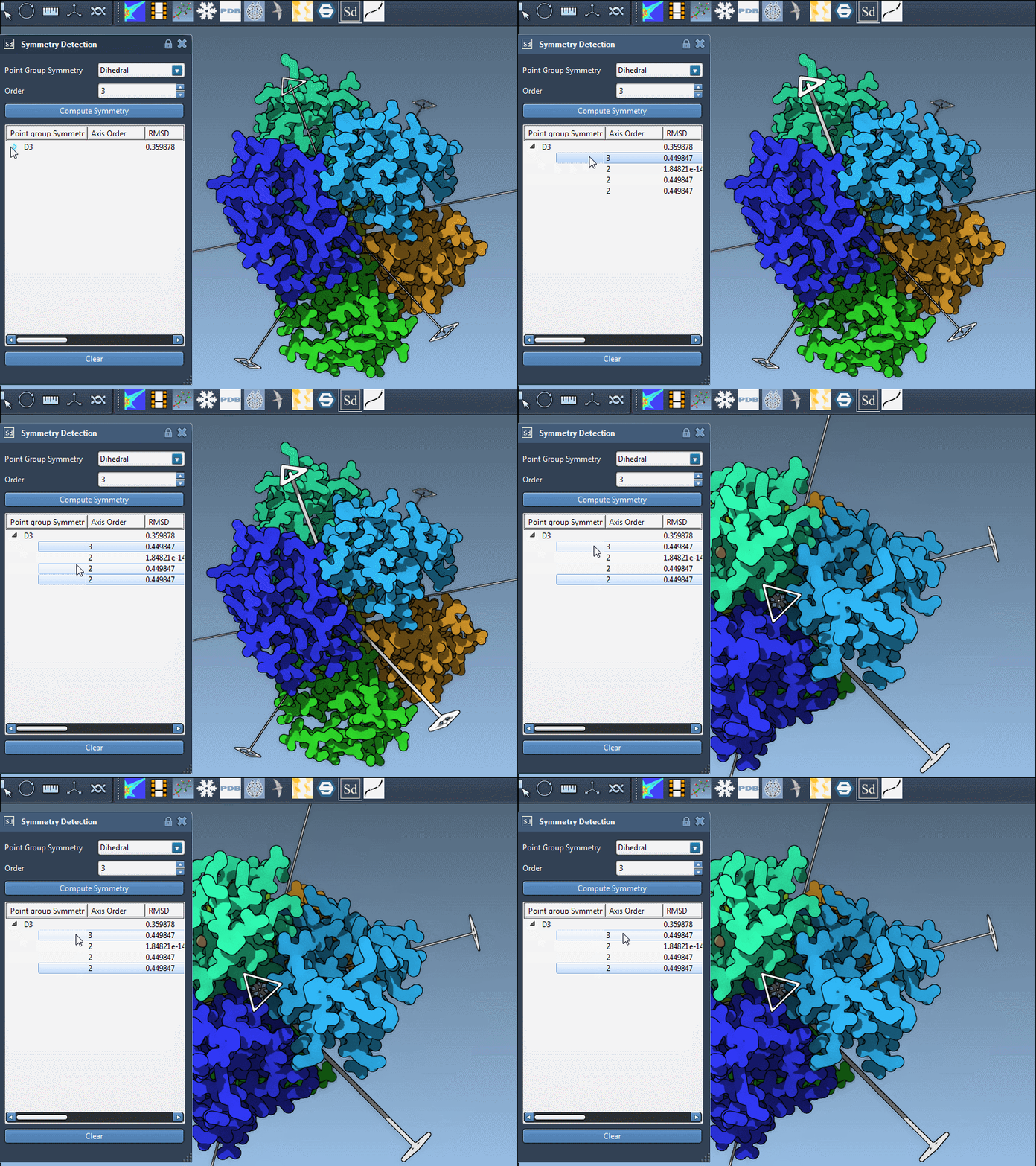
For complex systems or assemblies without a clear symmetry, the Symmetry Detection tool’s ability to detect multiple plausible groups comes in handy. Users can filter through the proposed groups based on criteria like RMSD (root-mean-square deviation). High-order symmetries with low RMSD values are usually the best candidates.
Pro tip: By manually specifying a group or axis, you can further refine symmetry detection to match biological assumptions or experimental evidence. For example, if you’re working with 1B4B, the app will recognize its D3 (dihedral symmetry of order 3) group, and you can drill down to individual axes to better visualize functionality.
Symmetry Detection, Simplified
Using the Symmetry Detection tool in SAMSON not only reduces time spent decoding symmetry manually but also greatly increases confidence in biological modeling. You can explore symmetry groups, axes, and functional facets all while ensuring your systems are ready for advanced workflows.
Curious to learn more? Dive into the documentation page for this feature at this link.
Note: SAMSON and all SAMSON Extensions are free for non-commercial use. Get started by downloading the platform at SAMSON-Connect.