



One common challenge in molecular modeling is modifying molecular structures on the fly—connecting or breaking bonds—without having to recalculate everything from scratch. Typically, simulations require a fixed topology, and making any structural change leads to restarting your workflow, setting parameters again, and often creating a new model entirely.
If you’ve been there, you know how time-consuming and error-prone it can be. Fortunately, IM-UFF (Interactive Modeling Universal Force Field), available in SAMSON, helps solve exactly this problem.
Why dynamic topology matters
Many modeling situations demand flexibility:
- Building new molecules from fragments
- Exploring reaction mechanisms
- Manually positioning functional groups into a scaffold
- Connecting docking candidates into large assemblies
With traditional force fields, these operations often result in unnatural strain, failed simulations, or the need for tedious parameter adjustments. IM-UFF changes that.
Smooth transitions while editing
IM-UFF extends the original Universal Force Field (UFF) for interactive applications by allowing:
- Dynamic bond creation and breaking
- Automatic detection of updated atom types
- Continuous response to dragging atoms with the mouse
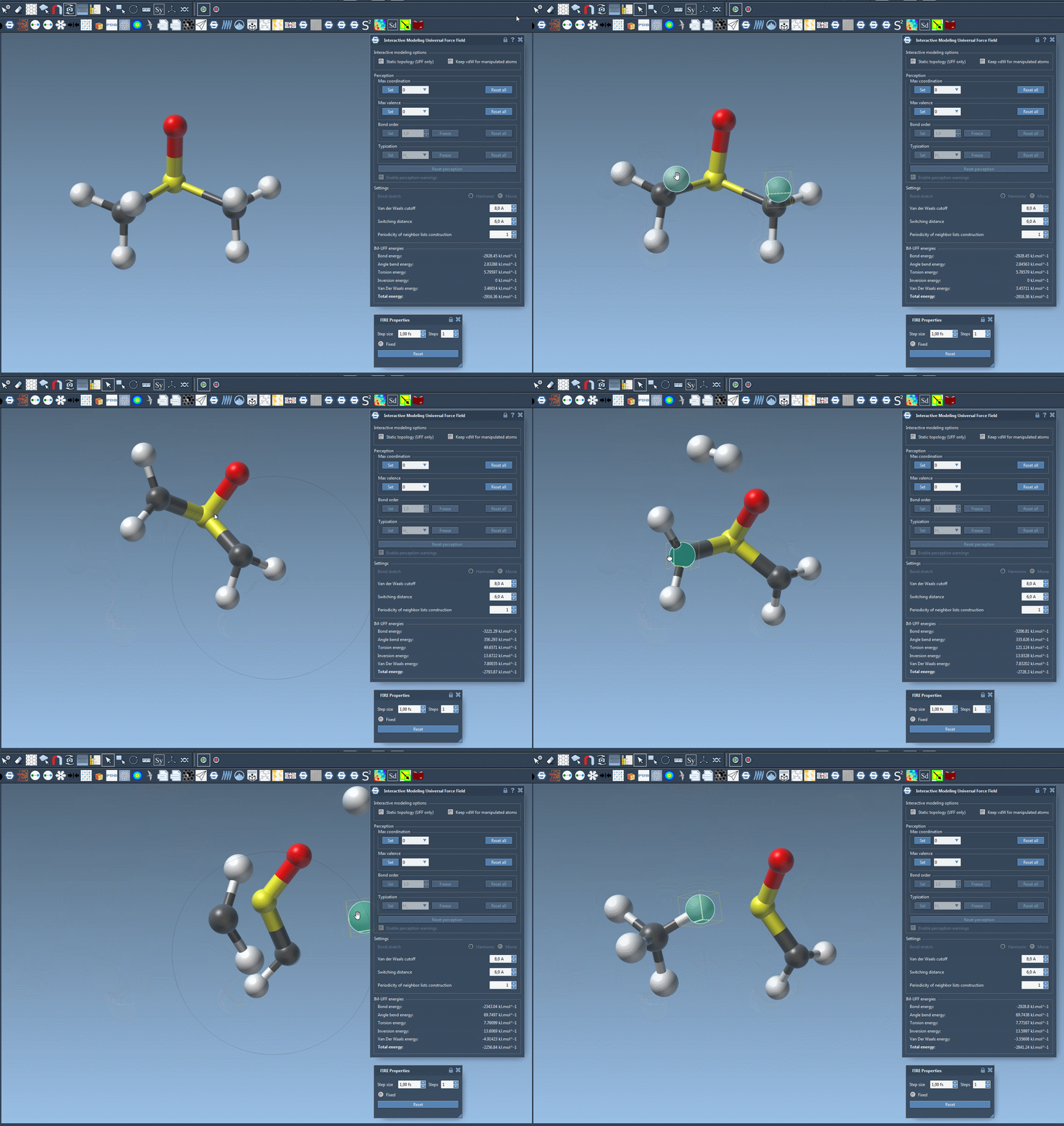
This means you can now gently pull atoms apart or bring them together, and the system will automatically adjust the bonding and topology accordingly. No tedious retyping or reassigning bonds needed.
How to use IM-UFF for dynamic modeling
After setting up a molecular system in SAMSON:
- Go to Edit > Simulate > Add simulator (shortcut: Ctrl + Shift + M or Cmd + Shift + M).
- Select Interactive Modeling Universal Force Field from the interaction models.
- Use a state updater like FIRE.
- Uncheck Static topology (UFF only) and Keep vdW for manipulated if you want full dynamic modeling.
Once simulation is running, try moving atoms with your mouse. You’ll notice:
- Minor movements preserve bonds with flexible adjustment
- Large displacements break bonds and reform new ones if atoms approach others
This allows for a fluid, interactive editing experience directly within your modeling environment.
Visualizing the transition
This animated example shows a user manually pulling atoms and seeing realtime bond formation and breakage:
A flexible simulation environment
Even when editing, IM-UFF ensures that bond order and atom types update according to atom positions. Unlike traditional UFF, no fixed tables of bonded atoms or orders are required—all is inferred directly from geometry, continuously.
And if you add or delete atoms during simulation, IM-UFF handles typization and bond perception automatically, without restarting your setup. It’s ideal for interactive design sessions where ideas take shape somewhat spontaneously.
To explore the detailed tutorial and recommendations on IM-UFF use and customization, visit the original documentation page.
SAMSON and all SAMSON Extensions are free for non-commercial use. You can get SAMSON at https://www.samson-connect.net.