



For molecular modelers aiming to simulate realistic biomolecular environments, creating lipid layers around proteins is often a crucial step. Lipid membranes play a fundamental role in cellular processes, and replicating these environments in silico can provide key insights into molecular interactions. With Molecular Box Builder, part of the SAMSON platform, you can efficiently construct these lipid layers to accelerate your research. Here’s how you can use this powerful tool to generate a lipid layer—and even a bilayer—surrounding your protein of choice.
Why Build Lipid Layers?
Lipid bilayers provide critical support for understanding membrane-protein dynamics, ion transport, and pharmaceutical interactions. However, manually constructing these systems can be time-consuming and error-prone. Molecular Box Builder simplifies the process with an automated, customizable workflow for adding lipid molecules around your target structure.
Step-by-Step Guide to Building a Lipid Layer Around a Protein
Step 1 – Align the Protein
Before adding the lipid molecules, it’s important to correctly position your protein. This will help ensure that the lipid layer aligns properly during generation:
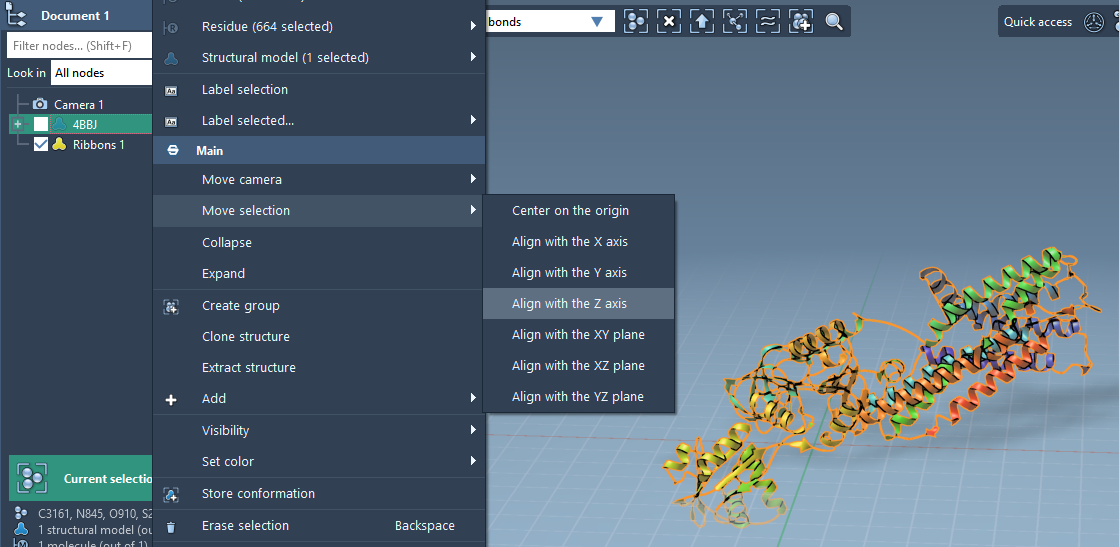
- Right-click the protein in the Document view.
- Choose Move selection > Align with Z axis from the context menu.
- Next, select Move selection > Center on the origin to place the protein at the system’s center.
This step aligns your protein to ensure an optimal configuration for the lipid layer.
Step 2 – Set the Lipid Molecule
After aligning the protein, it’s time to choose the lipid molecule that will form the layer:
- Import the desired lipid molecule (for instance, POPC or any other relevant molecule).
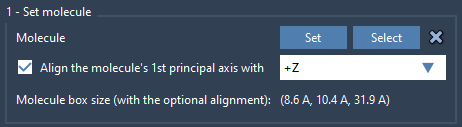
- Select the lipid in the workspace and click Set in the Molecular Box Builder app.
- Use Align to +Z to align the lipid along the Z-axis, preparing it for systematic placement.
Step 3 – Define the Box
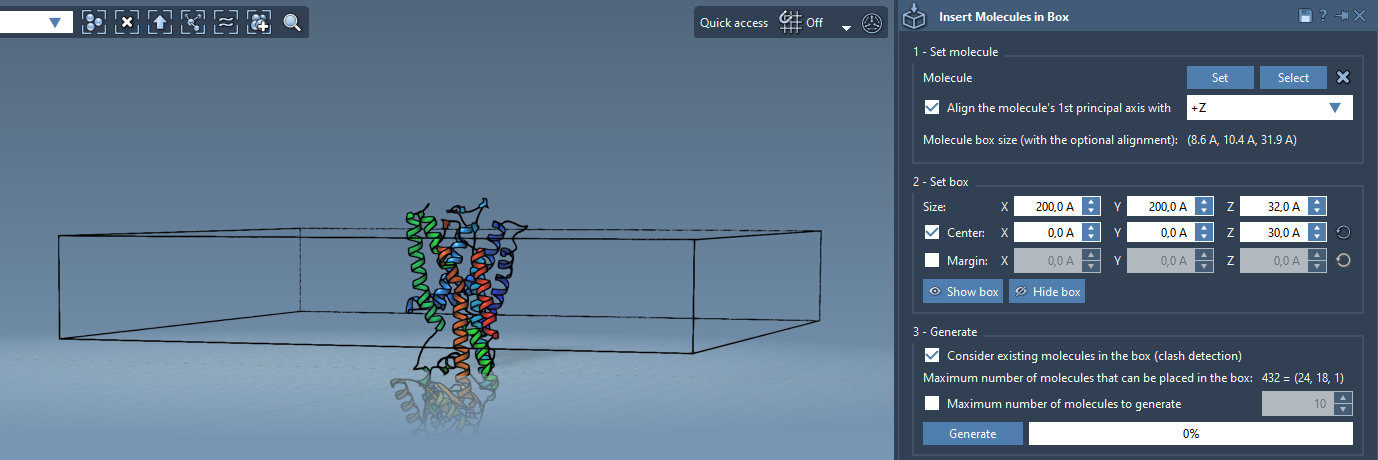
Next, create a bounding box that will house the lipid layer:
- Center the box around the protein to ensure the layer is positioned correctly.
- Adjust its dimensions to specify the size of the lipid layer.
- If required, modify the margin between lipids to fit your structural modeling needs.
Step 4 – Generate the Lipid Layer
Now that your protein, lipid molecule, and bounding box are configured, it’s time to generate the system:
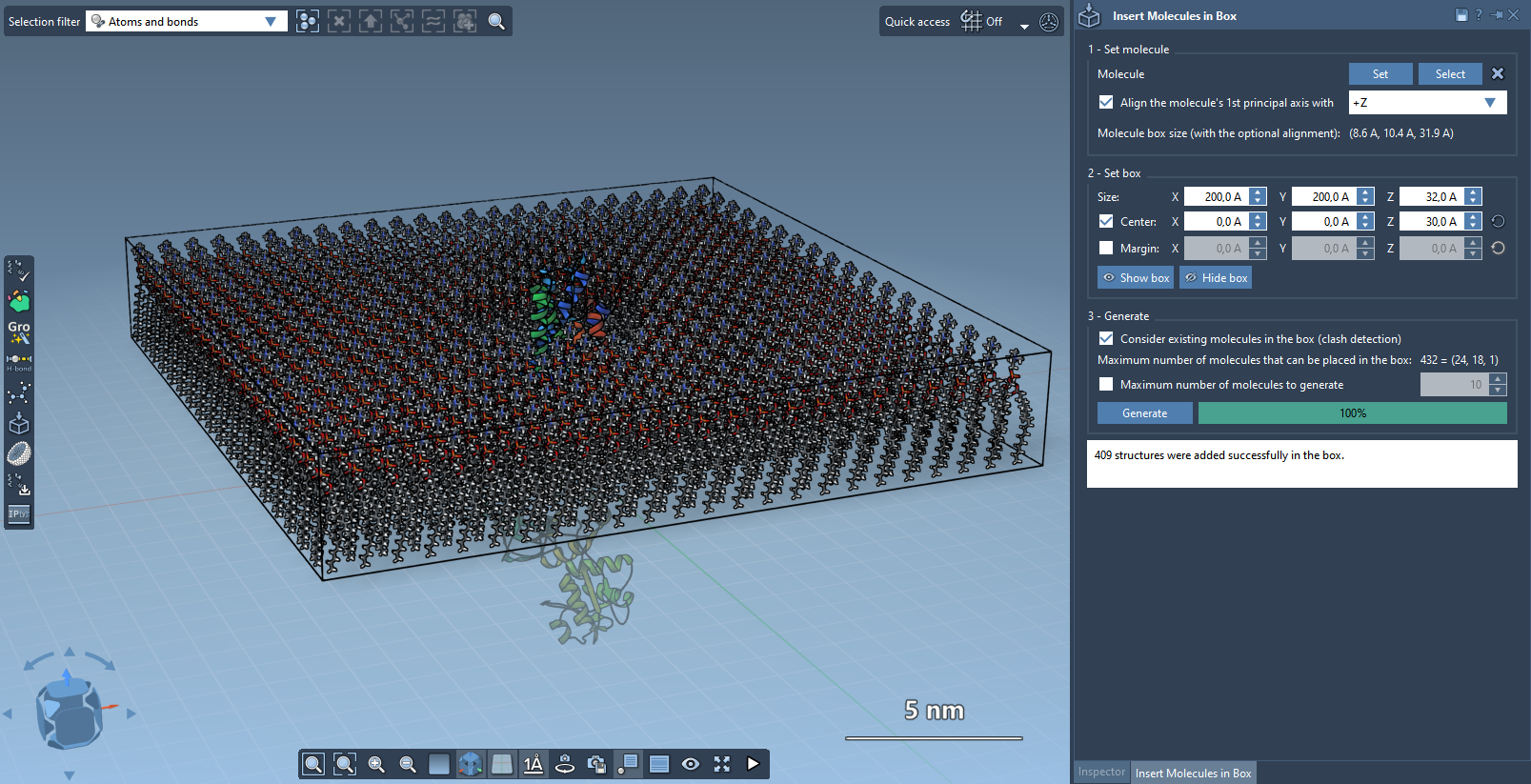
- Within the Molecular Box Builder app, enable the option Consider existing molecules in the box. This ensures lipids are placed only in available space, avoiding overlaps with the protein.
- Click Generate. The tool will populate the box with a single layer of lipids around the protein.
The resulting system will include non-overlapping lipid molecules arranged neatly around the protein:
Optional: Create a Lipid Bilayer
If a full lipid bilayer is required, you can follow these additional steps:
- Generate the first layer with alignment to the
+Zaxis. - Shift the box center along the Z-direction.
- Add the second layer, aligned to the
-Zaxis.
This process results in a complete bilayer surrounding your protein, ready for simulation and analysis.
Conclusion
By leveraging the Molecular Box Builder, constructing lipid layers or bilayers becomes a quick and reliable process, letting molecular modelers skip manual adjustments and focus directly on simulations. To explore more applications of this tool and additional features, visit the official Molecular Box Builder documentation.
SAMSON and all SAMSON Extensions are free for non-commercial use. You can get SAMSON at https://www.samson-connect.net.