



One of the critical tasks for molecular modelers working with proteins is creating lipid layers around them for membrane simulations. This can be a time-consuming process, especially if manual adjustments are needed. Fortunately, SAMSON's Molecular Box Builder simplifies and speeds up this process significantly. In this blog post, let's walk through how you can use the Molecular Box Builder to generate a lipid layer around a protein in just a few steps.
Why Build Lipid Layers?
Simulating protein-membrane interactions often requires inserting the protein into a lipid bilayer. This step is essential for understanding biological processes like ion transport, signaling, or interactions with pharmaceuticals. However, the complexity of aligning both the protein and lipids can pose a significant hurdle.
The Molecular Box Builder extension for SAMSON helps streamline this process by automatically arranging lipids around your protein, ensuring proper alignment and minimizing overlap. Let's take a closer look at the steps involved.
Step 1: Align the Protein
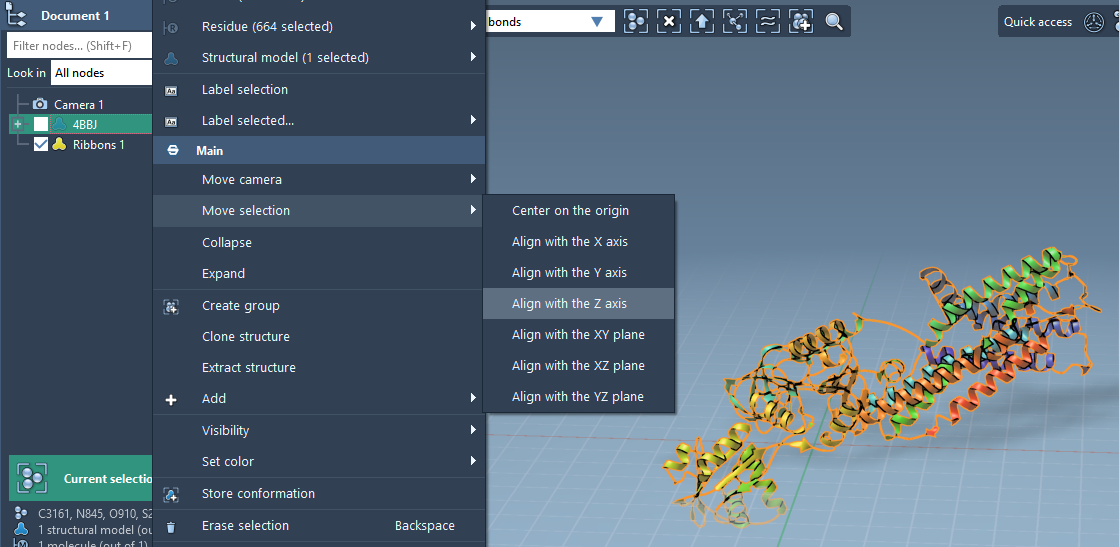
To build a lipid layer around a protein, you first need to align the protein in the desired orientation:
- Right-click on the protein in the Document view.
- Select Move selection > Align with Z axis from the context menu. This orients the protein along the Z-axis.
- Next, choose Move selection > Center on the origin. This centers the protein in the modeling space.
Step 2: Set the Lipid Molecule
After aligning the protein, you'll need to define the lipid molecule to populate the layer:
- Import the lipid molecule you want to use.
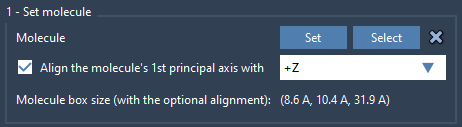
- Select it in the Document view and click Set in the Molecular Box Builder app.
- Align the lipid molecule's principal axis with the
+Zdirection to ensure proper orientation.
Step 3: Define the Box
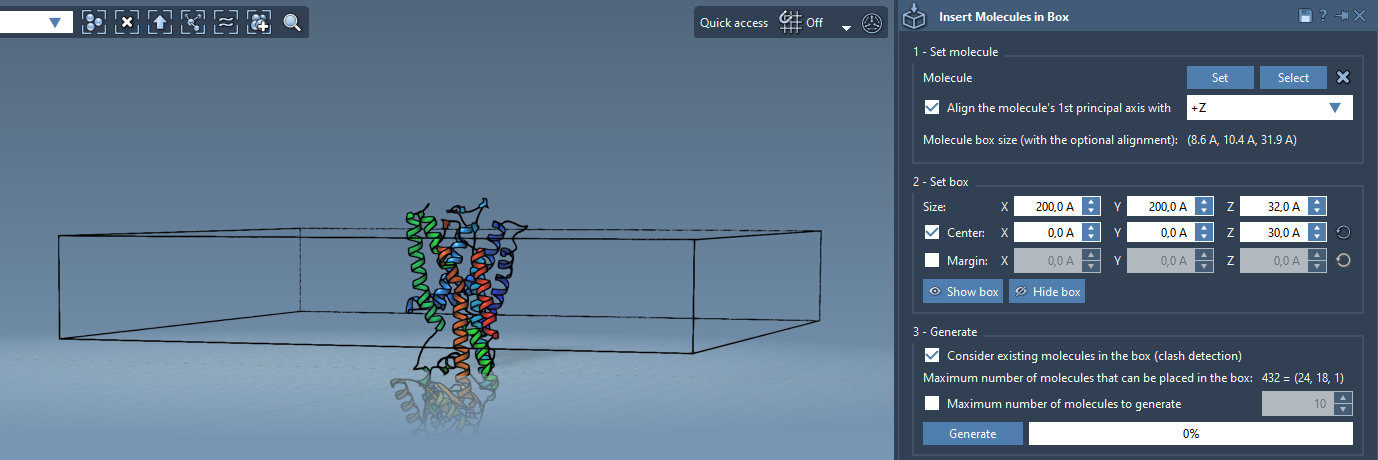
To create the lipid layer:
- Adjust the size of the box so it surrounds your aligned protein completely.
- Center the box around the protein.
- Optional: Specify the margin between inserted lipid molecules to control their density. This prevents clashes or overlaps in the generated layer.
Step 4: Generate the Lipid Layer
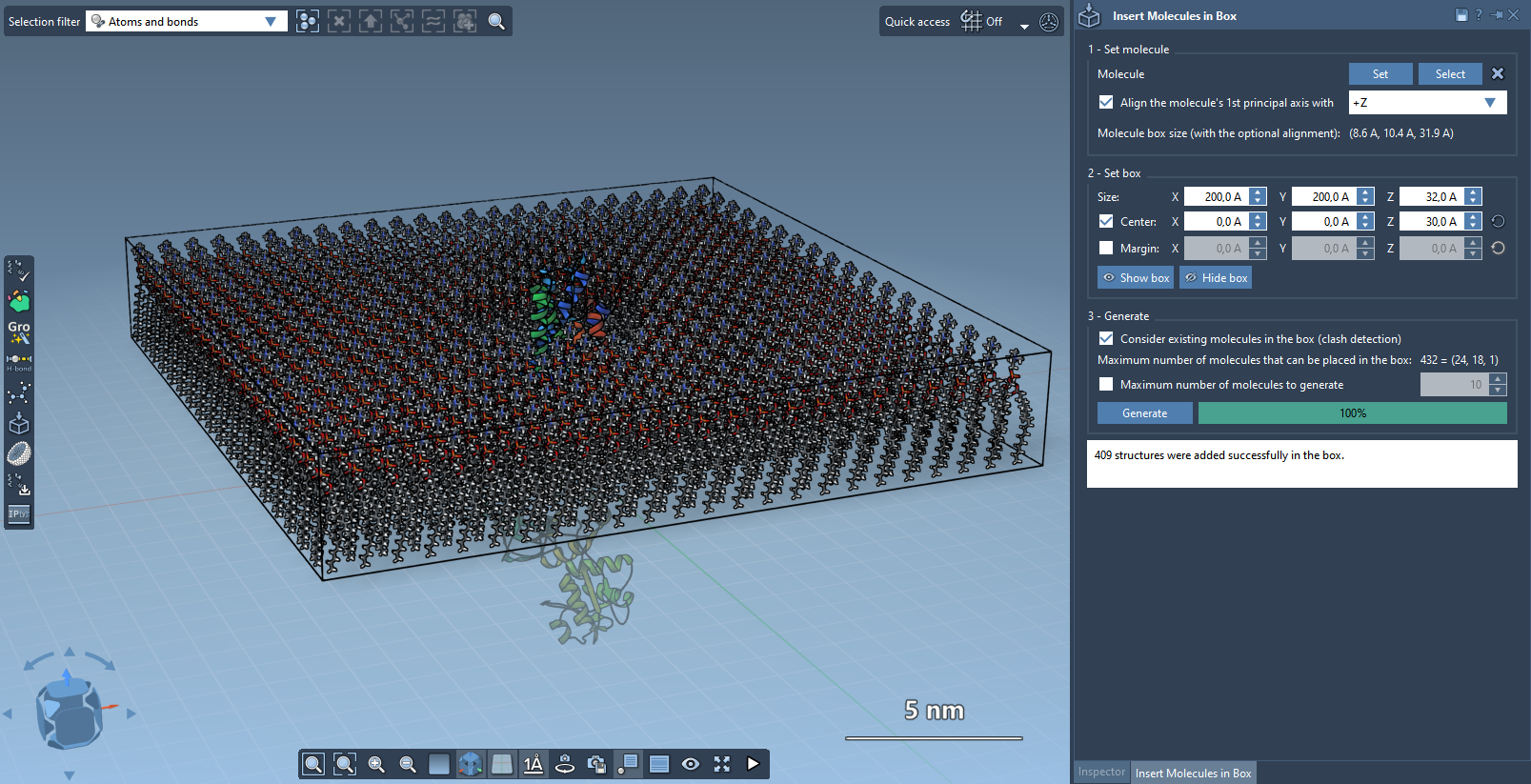
With all parameters set, it's time to generate the lipid layer:
- Enable the option Consider existing molecules in the box. This ensures lipids will only be placed in the available space, avoiding the protein structure itself.
- Click Generate in the Molecular Box Builder app. The generation process typically takes just a few seconds, depending on the size of the system.
The end result will be a lipid layer neatly arranged around your protein, ready for further study and simulation.
Final Thoughts
Building a lipid layer around proteins can be a daunting task, but tools like the Molecular Box Builder in SAMSON make the process far more accessible. With its intuitive alignment and molecule arrangement features, it provides a fast and efficient solution for modelers focused on membrane-protein interactions.
Of course, this is just the beginning. You can go even further by creating lipid bilayers or fine-tuning your system for specialized simulations. To explore these advanced capabilities, check out the complete documentation at Molecular Box Builder tutorial.
SAMSON and all SAMSON Extensions are free for non-commercial use. You can download SAMSON at SAMSON Connect.