Author: OneAngstrom
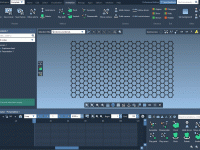
Streamlining Molecular Trajectories: Reverse Path Animation in SAMSON
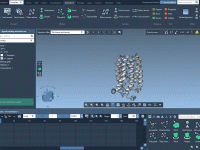
Molecular modeling often involves studying and interpreting dynamic processes, such as conformational changes, binding events, or even complex molecular pathways. One critical challenge many molecular modelers face is efficiently exploring and presenting complex molecular trajectories. The Play reverse path animation…
Mastering Node Visibility with the Hide Animation in SAMSON
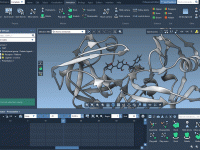
Understanding Node Types in Molecular Modeling
Mastering Molecular Zoom with the Dolly Camera Animation
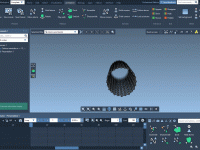
Simplifying Molecular Design with Note Attributes in SAMSON NSL
For molecular modelers, efficiency in organizing, selecting, and visualizing molecular nodes is essential. The Note Attributes feature in SAMSON’s Node Specification Language (NSL) provides a powerful approach to streamline these tasks. Let’s explore how note attributes work, their capabilities, and…
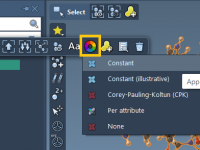
A Practical Guide to Applying Color Schemes in SAMSON.
Simplify Molecular Presentations with the Disassemble Animation
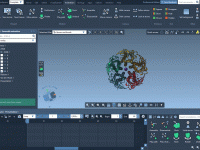
Molecular modeling often involves creating clear and visually compelling presentations of complex structures. One frequent challenge for scientists and designers is effectively illustrating how components of a molecular system are spatially distributed. This is where SAMSON’s Disassemble animation can be…