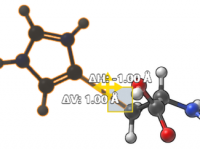
Getting the Most Out of SAMSON AI with Advanced Commands

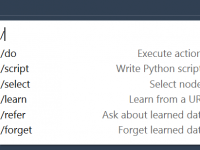
If you’re a molecular modeler navigating complex tasks, the advanced commands of SAMSON AI could be a game-changer. Designed to automate repetitive actions, generate scripts, and more, these tools simplify workflows and optimize productivity. Let’s explore how you can use…

Mastering Undo and Redo in Molecular Modeling
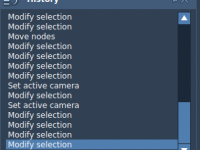
When working on complex molecular models, mistakes are inevitable. Tweaking nanoscale structures, editing configurations, or fine-tuning their spatial orientations may lead to unexpected results you wish to reverse. This challenge becomes even more pressing with intricate designs, where a single…

Optimizing the Protein Docking Search Domain in Hex
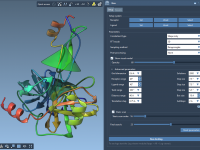
Protein docking is a fascinating and complex process, and one challenge molecular modelers often face is minimizing computation time while improving docking accuracy. Did you know that you can significantly optimize your docking workflow in Hex by restricting the search…

Understanding Side Chain Attributes in SAMSON’s NSL

Molecular modelers often grapple with the challenge of efficiently specifying and querying structural components within molecular systems. When working on side chains, understanding the available attributes in SAMSON’s Node Specification Language (NSL) can greatly streamline your interactions with molecular models.…

Simplify Molecular Organization with Folder Attributes in SAMSON

Managing molecular data effectively is a significant challenge for molecular modelers, especially when working on complex projects involving large molecular systems. SAMSON, the integrative molecular design platform, provides powerful organizational tools with its Folder Attributes, which allow users to categorize…
Reverse Your Molecular Animations with Precision

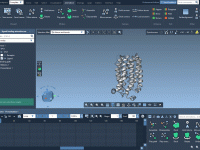
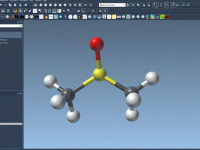
Molecular modelers often face the challenge of visualizing trajectory data effectively, whether to study molecular pathways, explore conformational dynamics, or analyze simulation outputs. One common need is the ability to visualize motion in reverse, which can help identify subtle details…