



Constructing lipid layers around proteins is a common yet time-consuming task for molecular modelers, especially when aiming to design realistic membrane-protein complexes. The Molecular Box Builder extension in SAMSON offers a straightforward solution to this challenge, helping you efficiently generate membrane environments around proteins. Here’s a step-by-step walkthrough to guide you.
Why Build Lipid Layers?
Lipid bilayers, or single lipid layers, are crucial in studying membrane proteins, drug delivery systems, or biological interactions. Traditionally, assembling these structures around proteins has often involved manual setup or complex scripts, creating a steep learning curve. This process can now be streamlined using the Molecular Box Builder in SAMSON.
Step 1: Align the Protein
To begin, ensuring proper orientation of your protein is key:
- Locate the protein in the Document view of SAMSON.
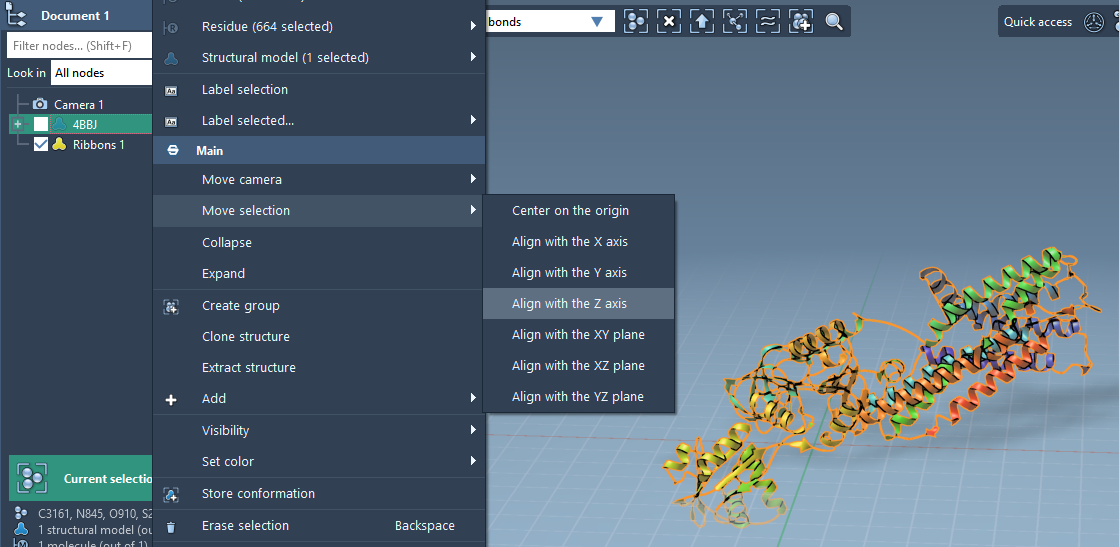
- Right-click the protein and choose: Move selection > Align with Z axis.
- Follow this by selecting: Move selection > Center on the origin.
This ensures that your protein is centered and aligned along the Z-axis, making it ready for lipid packing.
Step 2: Set the Lipid Molecule
The next step is to prepare the lipid molecule to form the layer:
- Import the lipid molecule (e.g., POPC).
- Select this lipid molecule and click Set in the Molecular Box Builder.
- Align the lipid’s principal axis with the
+Zaxis to ensure uniform orientation.
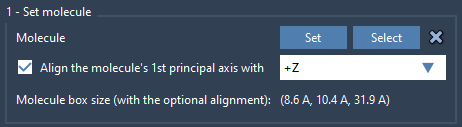
Orienting the lipid molecule helps maintain consistency when assembling the layer.
Step 3: Define the Box
Once the protein and lipid are aligned, the box dimensions for the lipid layer can be defined:
- Center the box around your protein by checking the Center option in the Molecular Box Builder. This aligns the box with the protein’s position.
- Adjust the box dimensions to fit a single lipid layer around the protein, ensuring proper coverage.
- Define the margin between molecules if needed, ensuring minimal overlaps or gaps in the layer.
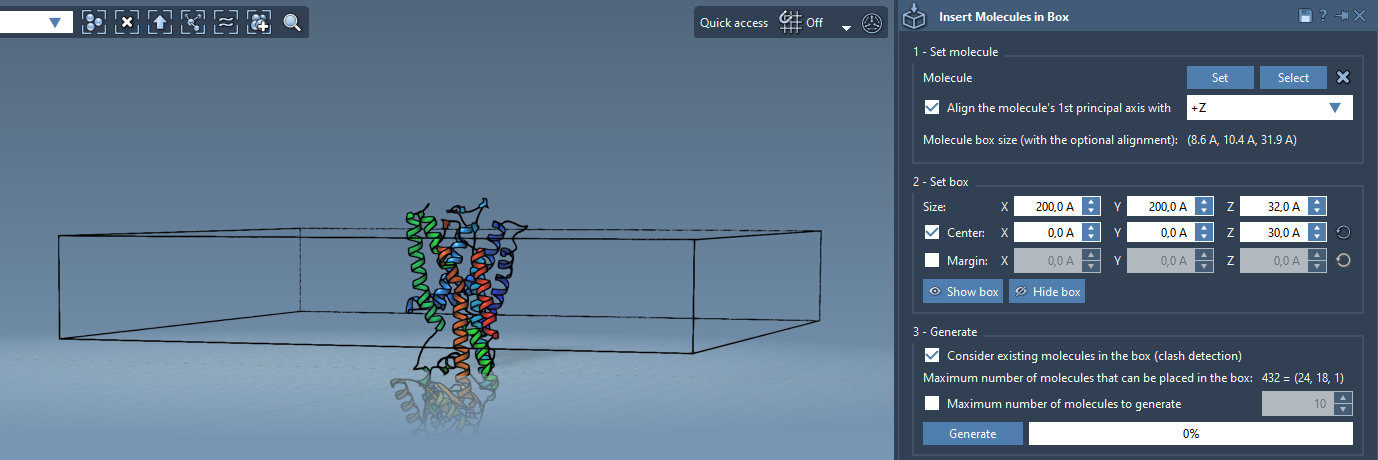
The defined box determines the spatial limits of the lipid layer, ensuring accurate placement within the system.
Step 4: Generate the Layer
The final step involves generating the lipid layer:
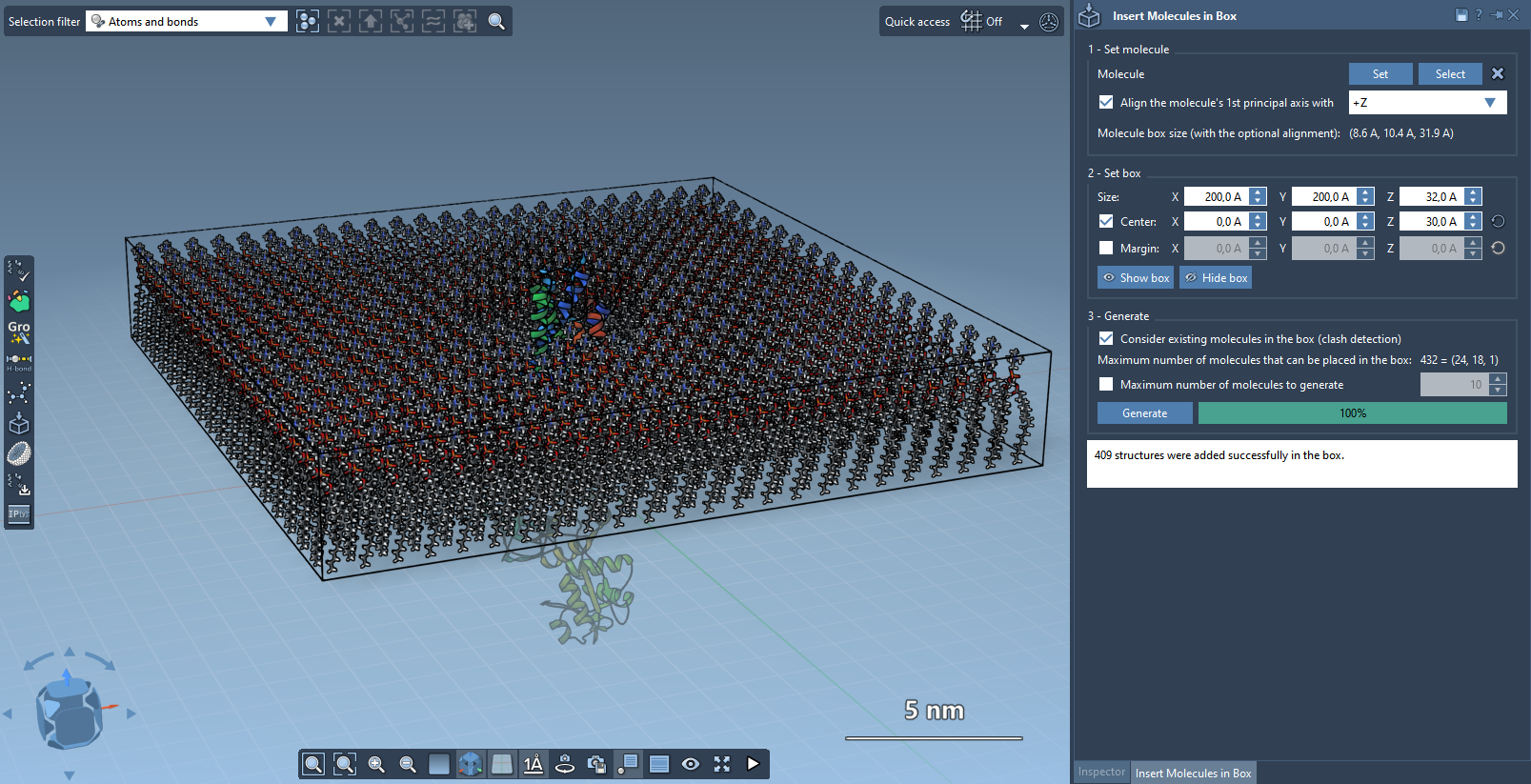
- Enable Consider existing molecules in the box to ensure the lipids are placed in available spaces without overlapping the protein.
- Click Generate in the app. The generation process takes only a few seconds depending on the box size and selected parameters.
Once complete, you’ll have a lipid layer surrounding your protein, neatly assembled and ready for further refinement.
Optional: Building a Lipid Bilayer
For proteins embedded within membranes, a full lipid bilayer might be necessary. You can achieve this by:
- Adding the first lipid layer with
+Zalignment. - Shifting the box center in the
Zdirection. - Adding the second lipid layer with
-Zalignment.
This approach extends the single layer into a full, realistic bilayer system.
To conclude, using the Molecular Box Builder can save molecular modelers significant time and effort in preparing lipid layers for simulations—a task that is now intuitive and efficient. Visit the official Molecular Box Builder documentation to learn more.
Note: SAMSON and all SAMSON Extensions are free for non-commercial use. You can get SAMSON at https://www.samson-connect.net.