Category: Uncategorized
Mastering Chain Attributes in SAMSON’s Node Specification Language
Molecular modeling often involves managing complex structures, and molecular modelers frequently encounter challenges when identifying and categorizing specific chains within their models. This is especially true when working with large biomolecular systems. To alleviate this pain, SAMSON’s Node Specification Language…
Streamlining Ligand Parametrization for Non-Covalent Complexes in GROMACS Wizard
For molecular modelers preparing protein-ligand systems, ligand parametrization is often one of the trickiest steps. Ensuring compatibility with your chosen force field, handling hydrogen atoms, and formatting your files correctly can complicate what should be a straightforward process. Thankfully, the…
Understanding Light Node Attributes for Molecular Modeling.
For molecular modelers using SAMSON, understanding and controlling light node attributes in the Node Specification Language (NSL) can significantly improve your workflow efficiency. If you’ve been struggling with managing visibility or selection states for your molecular visualizations, this article breaks…
Exploring Atom Attributes in SAMSON’s Node Specification Language.
Visualizing Molecular Interactions with Contact Maps and Series
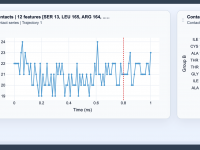
Molecular modelers often face challenges in tracking and understanding the subtle interactions between different regions of biomolecules over time. Identifying when key interface regions form or break, understanding domain interactions, or observing binding events are critical tasks in molecular dynamics…
Customizing Bond Graphs in Your Molecular Simulations
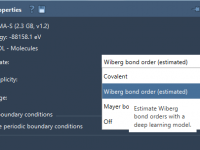
For molecular modelers, refining and understanding bond structures during simulations can be a challenging task. Whether you’re optimizing molecular geometries, exploring chemical reactivity, or examining material properties, the way bonds are updated can significantly affect your insights. This blog post…
Running Molecular Simulations in the Cloud with GROMACS Wizard
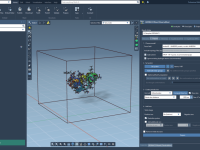
One common challenge for molecular modelers is ensuring they have enough computational resources to run molecular dynamics simulations. These simulations can demand significant computational power, especially when dealing with extensive systems, long timescales, or advanced workflows like umbrella sampling or…
Exploring Light Attributes in SAMSON’s NSL
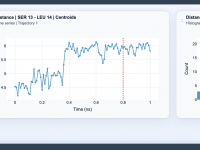
Understanding Molecular Interactions with Distance Analysis in SAMSON
Mastering Chain Attributes in SAMSON’s Node Specification Language
Molecular modeling often involves managing complex structures, and molecular modelers frequently encounter challenges when identifying and categorizing specific chains within their models. This is especially true when working with large biomolecular systems. To alleviate this pain, SAMSON’s Node Specification Language…
Streamlining Ligand Parametrization for Non-Covalent Complexes in GROMACS Wizard
For molecular modelers preparing protein-ligand systems, ligand parametrization is often one of the trickiest steps. Ensuring compatibility with your chosen force field, handling hydrogen atoms, and formatting your files correctly can complicate what should be a straightforward process. Thankfully, the…
Understanding Light Node Attributes for Molecular Modeling.
For molecular modelers using SAMSON, understanding and controlling light node attributes in the Node Specification Language (NSL) can significantly improve your workflow efficiency. If you’ve been struggling with managing visibility or selection states for your molecular visualizations, this article breaks…
Exploring Atom Attributes in SAMSON’s Node Specification Language.
Visualizing Molecular Interactions with Contact Maps and Series
Molecular modelers often face challenges in tracking and understanding the subtle interactions between different regions of biomolecules over time. Identifying when key interface regions form or break, understanding domain interactions, or observing binding events are critical tasks in molecular dynamics…
Customizing Bond Graphs in Your Molecular Simulations
For molecular modelers, refining and understanding bond structures during simulations can be a challenging task. Whether you’re optimizing molecular geometries, exploring chemical reactivity, or examining material properties, the way bonds are updated can significantly affect your insights. This blog post…
Running Molecular Simulations in the Cloud with GROMACS Wizard
One common challenge for molecular modelers is ensuring they have enough computational resources to run molecular dynamics simulations. These simulations can demand significant computational power, especially when dealing with extensive systems, long timescales, or advanced workflows like umbrella sampling or…