Category: Uncategorized
Making Notes Work for You: Visibility, Selection, and More in SAMSON
Seeing Your Molecules Clearly: Organize and Navigate with SAMSON’s Document View
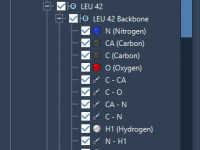
Working with complex molecular systems isn’t just about atom placements or energy calculations—it’s also about staying organized. When you’re managing multiple structures, simulations, and design components, locating and modifying specific parts of your system efficiently becomes a challenge. That’s where…
Managing Shared Molecular Files with Precision on SAMSON Connect
Struggling to Open Molecular Files? Here’s How to Import Them in SAMSON
Your Digital Lab Coat: Building a Scientific Profile with SAMSON Connect

In collaborative scientific environments, communication and visibility are key—not just among internal teams but across the broader research community. For molecular modelers, bioinformaticians, and computational chemists, your contributions often live in datasets, simulation files, and 3D models. Making those accessible…
Making Molecular Cinematics: How to Follow Atoms in Your Simulations
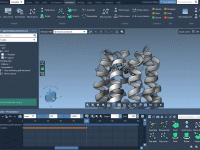
One of the most common challenges in molecular modeling is communicating dynamic molecular behavior effectively. Whether you’re analyzing conformational changes, studying interactions, or presenting your findings, static images rarely capture the full story. Animations help, but default camera motions can…
Permanent or Temporary? Making the Most of Measurement Labels in Molecular Modeling
Filtering Molecular Models by Atom Counts: A Quick Guide for Structural Modelers
Understanding Selection Flags in SAMSON: What’s Actually Selected?
Making Notes Work for You: Visibility, Selection, and More in SAMSON
Seeing Your Molecules Clearly: Organize and Navigate with SAMSON’s Document View
Working with complex molecular systems isn’t just about atom placements or energy calculations—it’s also about staying organized. When you’re managing multiple structures, simulations, and design components, locating and modifying specific parts of your system efficiently becomes a challenge. That’s where…
Managing Shared Molecular Files with Precision on SAMSON Connect
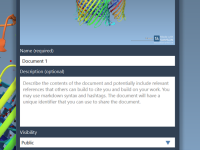
Struggling to Open Molecular Files? Here’s How to Import Them in SAMSON
Your Digital Lab Coat: Building a Scientific Profile with SAMSON Connect
In collaborative scientific environments, communication and visibility are key—not just among internal teams but across the broader research community. For molecular modelers, bioinformaticians, and computational chemists, your contributions often live in datasets, simulation files, and 3D models. Making those accessible…
Making Molecular Cinematics: How to Follow Atoms in Your Simulations
One of the most common challenges in molecular modeling is communicating dynamic molecular behavior effectively. Whether you’re analyzing conformational changes, studying interactions, or presenting your findings, static images rarely capture the full story. Animations help, but default camera motions can…