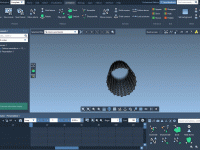
For molecular modelers, data visualization is not just aesthetic—it’s functional. The way atoms, residues, and molecules are colored can directly impact the clarity of your interpretations, the speed of your decision-making, and even the persuasiveness of your publications or presentations.…
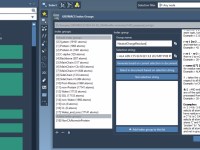
When working with large biomolecular systems using GROMACS, it’s often necessary to define custom index groups—for example, to specify pull groups for umbrella sampling, analyze specific subsets of atoms, or apply restraints. But creating these groups manually using gmx make_ndx…
In large molecular models, it’s easy to feel overwhelmed by the sheer number and variety of elements displayed. Labels—while useful—can quickly clutter the view, especially when the model grows in complexity. Turning labels on and off manually for dozens or…
When visualizing molecular systems and presenting dynamics to collaborators, students, or in publications, clarity and focus matter. One subtle yet powerful tool in the molecular modeler’s toolkit is the ability to rotate a selected group of particles around its geometric…
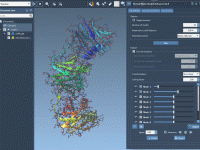
One of the challenges structural biologists often face is not only computing and visualizing protein motions, but also saving them in a way that is easy to analyze, compare, or share with collaborators. Whether you’re studying conformational transitions or designing…
Predicting protein structures has traditionally been a time-consuming and computationally intensive task. With the rise of deep learning approaches like AlphaFold-2, this process has become more accessible — but still requires a convenient interface and computational resources that not all…
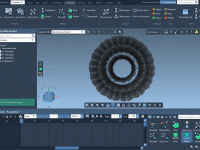
One recurring challenge for researchers and designers working in DNA nanotechnology is building complex molecular wireframe shapes—quickly and correctly. How can we effortlessly transform a 3D mesh into a DNA-based model ready for simulation or experimentation? Adenita, an extension of…
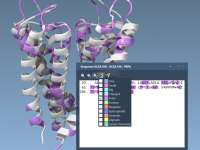
One of the common pain points in molecular modeling is managing and synchronizing selections between 3D structures and the sequence data they represent. As structures become more complex with multiple chains and intricate residue interactions, staying organized while moving between…
If you’ve ever created a molecular animation and wished for more control over how the camera moves through your system, you’re not alone. Many molecular modelers run into limitations when trying to zoom in smoothly or direct attention to a…
When working with complex molecular scenes in SAMSON, modelers often face the challenge of selecting precisely the data they want to inspect or process: a specific visual representation, or only what’s currently visible, or perhaps just the selected part of…