



For molecular modelers, adapting molecular structures to refine models or explore topological changes can be both challenging and time-consuming. A frequent hurdle lies in smoothly manipulating atomic structures while ensuring the appropriate formation and breaking of bonds. The Interactive Modeling Universal Force Field (IM-UFF) extension for SAMSON offers an elegant solution, empowering users to manage topological changes interactively during molecular modeling. Here’s how you can make the most of IM-UFF.
What Makes IM-UFF Special?
Unlike standard Universal Force Field (UFF), IM-UFF gives you the ability to interactively break and form covalent bonds, adjust bond orders, and change atom types in real-time. This dynamic ability means that molecular systems can smoothly adapt their topology to better reflect atomic arrangements as you manipulate structures. Essentially, you can edit or simulate molecules while being guided by physically-based inter-atomic forces, helping you reach meaningful configurations efficiently.
For those unfamiliar with UFF, it’s a force field applicable across the periodic table, originally introduced by Rappe et al. IM-UFF extends these principles to enable interactive changes, making it an important tool for molecular modelers working with evolving systems or exploring new configurations.
Setting Up IM-UFF
To get started with IM-UFF, the setup is straightforward. Here’s how:
- Add the IM-UFF Extension in SAMSON.
- Open a molecular system you want to modify or simulate.
- Under Edit > Simulate, select Interactive Modeling Universal Force Field as the interaction model.
- Choose your desired simulation state updater (e.g., the FIRE optimizer).
No extensive setup windows clutter the process — simply activate IM-UFF and its customizable parameter window opens. From here, users can tune options like interaction with van der Waals forces for smoother manipulations.
Dealing With Topological Changes
One of the most powerful aspects of IM-UFF is how it handles topology updates:
- Atoms move slightly? Local structures adjust while preserving bonds.
- Atoms move significantly? Bonds with neighboring atoms break, automatically updating the molecular topology.
The interactive illustrations below demonstrate these capabilities in action. Observe how bonds dynamically form or break as atoms are maneuvered:
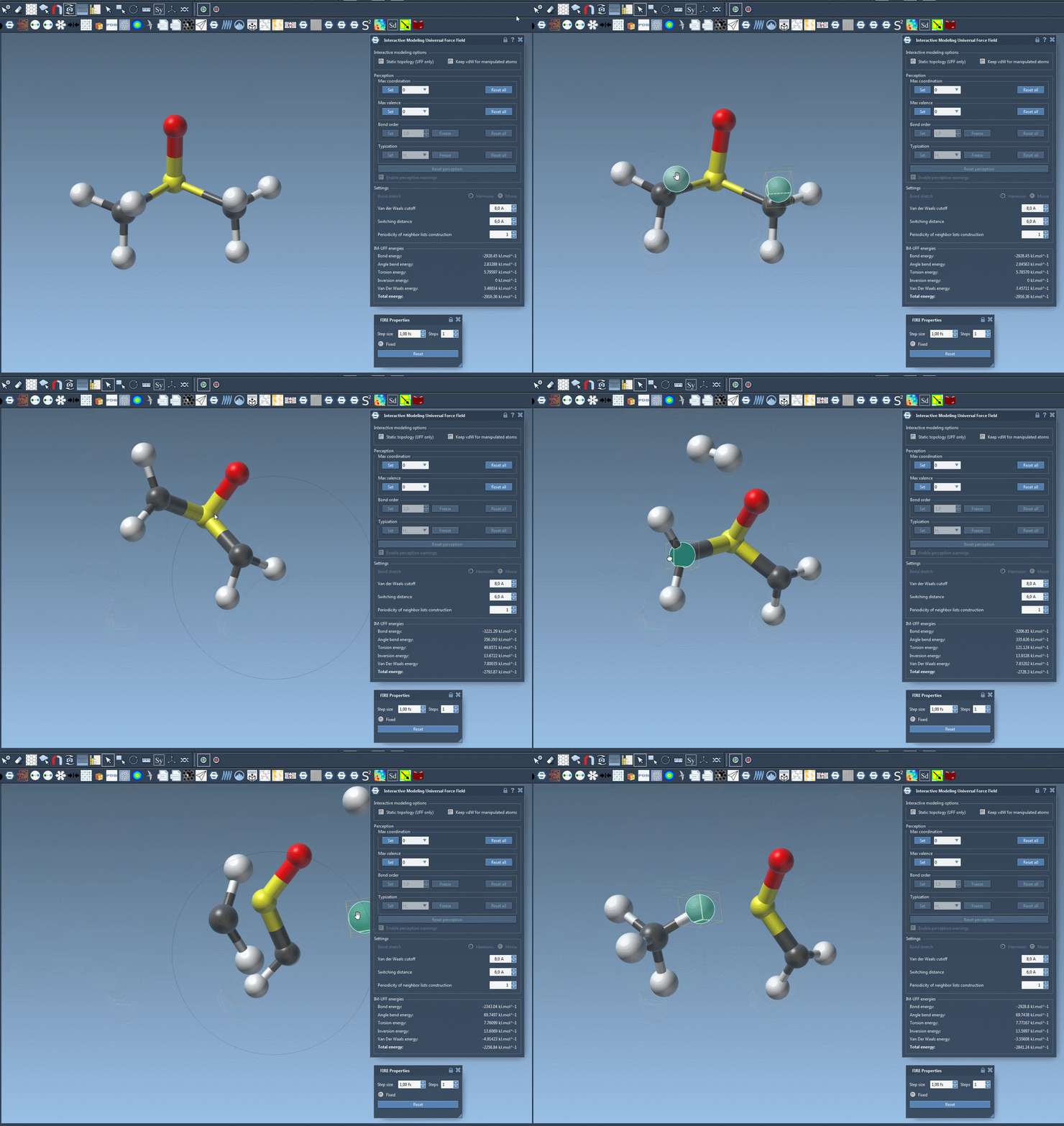
This dynamic responsiveness is especially useful for tasks such as assembling molecules, simulating chemical reactions, or testing how systems stabilize under new configurations.
Why Does This Help?
With traditional force fields, the process of editing molecular structures often involves navigating cumbersome workflows, such as manually defining changes or rigidly maintaining static topologies. IM-UFF removes these limitations, facilitating seamless structural adaptation. Additionally, it helps users maintain better physical accuracy during exploratory modeling.
Efforts like restraint-free bond handling or intuitive toggling between static and interactive modes directly address the needs of researchers aiming to accelerate their workflows without sacrificing precision.
Learn More
Ready to transform how you interact with molecular systems? Visit the official IM-UFF documentation page to dive deeper into its features, setup instructions, and practical tips for interactive modeling.
*Note: SAMSON and all SAMSON Extensions are free for non-commercial use. Download SAMSON today at https://www.samson-connect.net.