



Small imperfections in crystal structures, known as defects, can have a big impact on materials’ physical properties—altering conductivity, stability, and even color in some cases. If you’re modeling materials like diamond at the atomic level, understanding and controlling defects is key.
In this post, we dive into how you can use the Crystal Creator extension in SAMSON to investigate defects in diamond structures. We’ll walk through the process of importing a diamond CIF file, editing its atomic structure to simulate defects, and observing the structural changes.
Start with a Clean Diamond
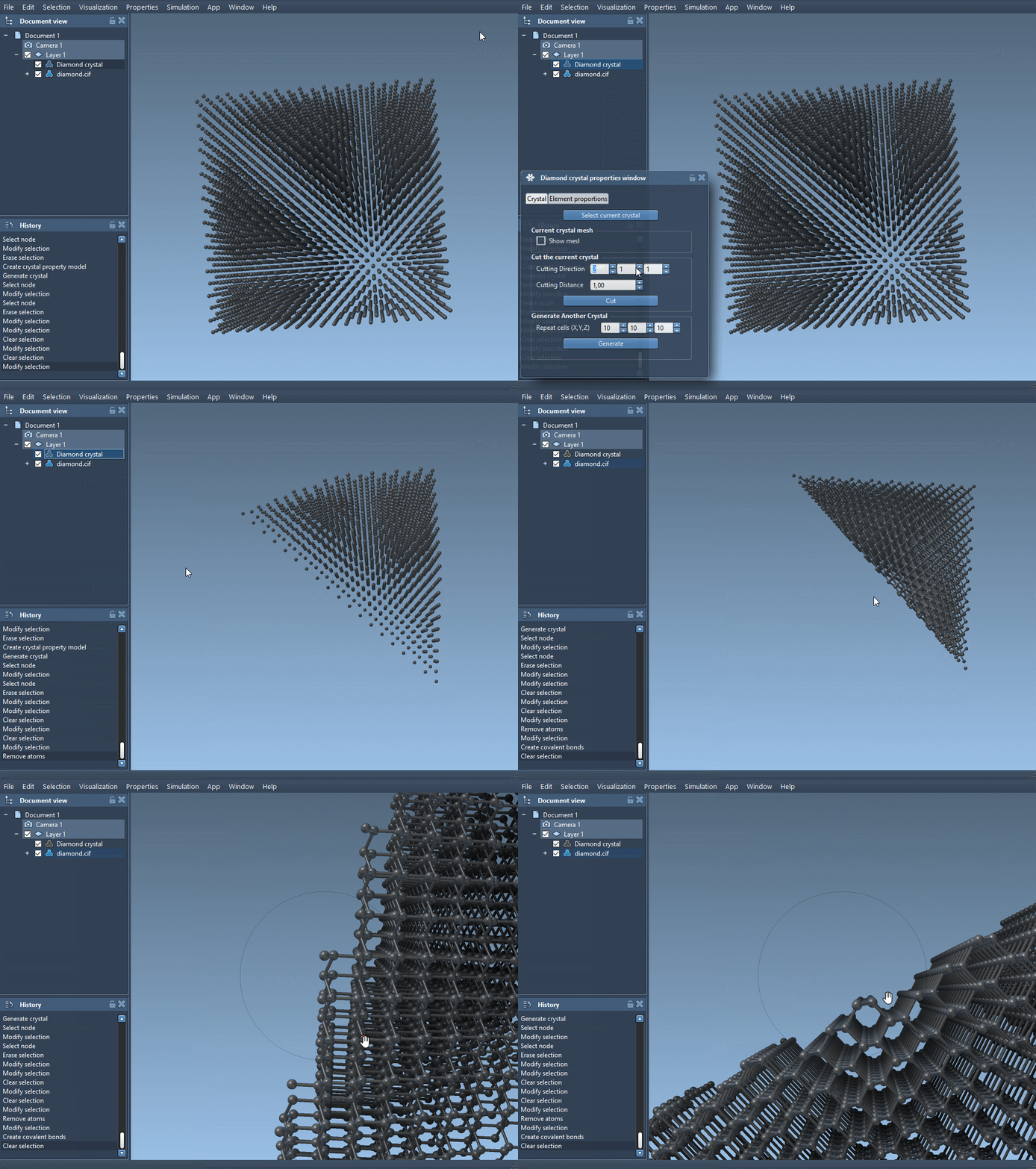
First, load a diamond structure by importing a CIF file into SAMSON using the Crystal Creator app. You can find high-quality crystal CIF files on sites like the RRUFF Project or the American Mineralogist Crystal Structure Database.
Once loaded, create the bonds between atoms, then minimize the structure using the Brenner interaction model. This gives you a clean, baseline model of a diamond to compare later.
Edit the CIF File to Add Defects
To simulate defects, open a copy of your CIF file in a text editor. You’ll need to modify the atomic site definitions to include _atom_site_occupancy, which lets you define the statistical presence of atoms.
Originally, the file might look like this:
|
1 2 3 4 5 6 |
loop_ _atom_site_label _atom_site_fract_x _atom_site_fract_y _atom_site_fract_z C 0.00000 0.00000 0.00000 |
Change it to specify an occupancy value (for example, 0.95 means a 95% chance the atom is present):
|
1 2 3 4 5 6 7 |
loop_ _atom_site_label _atom_site_fract_x _atom_site_fract_y _atom_site_fract_z _atom_site_occupancy C 0.00000 0.00000 0.00000 0.95 |
This simple line simulates a missing atom with 5% probability — a vacancy that might affect the material’s behavior.
Reload and Analyze the Defective Crystal
Import this modified CIF file back into SAMSON. Then, regenerate the bonds to visualize the new structure. You’ll likely notice subtle changes—slight distortions or shifts—as the structure reacts to the missing atom.
This helps you analyze how local defects influence the material’s geometry and stability, and can be a crucial step in understanding nanoscale behaviors in crystalline materials.
Why This Matters
Whether you’re researching semiconductors, ceramics, or even biomaterials, introducing and analyzing defects within your crystal models is a key part of predictive modeling. With the Crystal Creator extension in SAMSON, you can simulate these changes directly and visually—without needing to write simulation code or switch platforms.
To deepen your modeling knowledge and see more features, visit the full tutorial on generating crystal models.
SAMSON and all SAMSON Extensions are free for non-commercial use. You can get SAMSON at https://www.samson-connect.net.