



Protein structure modeling often involves spotting and correcting outlier conformations in the backbone. These problematic residues can affect simulation stability, energy minimization, or interpretation of function. Fixing them typically means switching between raw coordinate editing or laborious script-based correction. But there’s a more visual and intuitive option available, especially if you want to tweak φ (phi) and ψ (psi) angles directly: the Interactive Ramachandran Plot in SAMSON.
This tool lets you manipulate backbone geometry directly from a Ramachandran plot and see the 3D structure update in real time. Whether you’re refining a homology model or preparing a simulation, this interactive approach could save you time—and uncertainty.
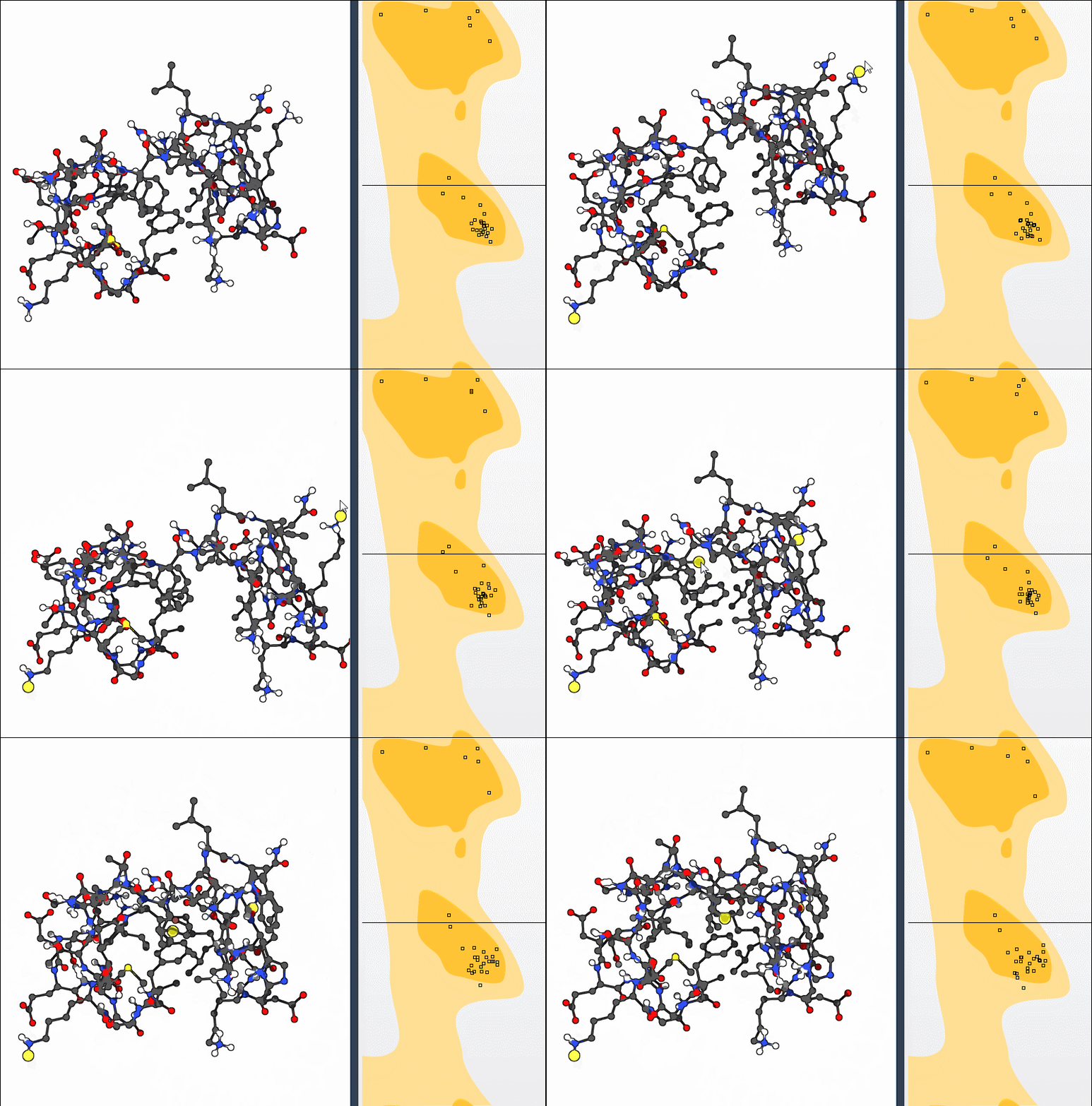
Dragging in the Plot: Instant Feedback
After generating a Ramachandran plot, each dot corresponds to a residue’s φ/ψ dihedral angles. Selecting one of these dots highlights the residue in the 3D view and shows the current angle values in the status bar.
Want to adjust it? Just click and drag the point:
- As you move it, φ and ψ values change, updating the residue’s conformation live.
- The 3D model reflects the new angles immediately, eliminating the ambiguity of how angle adjustments affect overall structure.
- If you don’t like the result, Ctrl/Cmd + Z undoes the change.
This makes it easier to explore allowed regions and ensure residues no longer occupy strained or disallowed positions.
Twister Editor: Manipulate in 3D Space
If you prefer working in the 3D view rather than the 2D plot, the Twister editor provides another route:
- Select the Twister tool from the left-hand panel.
- Grab a residue and twist it—literally. The plot updates instantly as you rotate the bonds in the viewport.
This tight integration between the conventional plot view and molecular visualization allows quick, localized geometry refinements, capitalizing on both representations for a fuller picture.
Which Editing Method Should You Use?
That depends on where you’re starting:
- If you’ve identified problematic φ/ψ combinations and want precise control, dragging on the Ramachandran plot is the most direct route.
- If you prefer adjusting geometry visually in 3D first and then verifying angles, the Twister editor will feel more natural.
Either way, the changes you make register immediately in both views. There’s no need to switch tools or export intermediary files.
When To Use This in a Workflow
This interactive editing is useful in several phases of a modeling workflow:
- After initial model building or importing a structure, identify outliers and manually refine them.
- Before molecular dynamics simulations, ensure that all residues fall within sterically allowed conformational zones.
- In educational settings, demonstrate how slight φ/ψ changes alter overall shape and stability.
To learn more, visit the full documentation page: https://documentation.samson-connect.net/tutorials/ramachandran/ramachandran-plot/
SAMSON and all SAMSON Extensions are free for non-commercial use. You can download SAMSON from https://www.samson-connect.net