



Molecular modelers often face the challenge of accurately editing molecular structures while maintaining physical consistency. This task becomes especially complex when structural changes such as bond formation and breaking need to be dynamically accounted for during simulations. Fortunately, SAMSON’s Interactive Modeling Universal Force Field (IM-UFF) extension offers a streamlined solution, enabling interactive editing of molecular systems with real-time topological updates.
Why Interactive Modeling Matters
Standard molecular modeling often lacks the flexibility to handle topological changes dynamically. For example, creating or breaking covalent bonds, modifying bond orders, or adjusting atom typizations can involve substantial setup and result in unintended structural inconsistencies. IM-UFF addresses this by allowing these modifications to occur seamlessly during interactive simulations. This capability is particularly useful for researchers designing novel structures, optimizing molecular systems, or exploring chemical reactions.
Getting Started with IM-UFF
IM-UFF is an extension of the Universal Force Field (UFF), designed to handle dynamic interactions and modifications. To begin:
- Install the IM-UFF extension from here.
- Start with a small or medium-sized molecular system to observe topological adjustments clearly.
Once you’ve added the IM-UFF extension to your simulation, you can enable it by:
- Opening a molecular system file in SAMSON.
- Selecting Edit > Simulate > Add simulator, or using the shortcut
Ctrl + Shift + M(Windows) orCmd + Shift + M(Mac). - Choosing Interactive Modeling Universal Force Field from the interaction models list.
Dynamic Topology in Action
IM-UFF is particularly notable for its ability to incorporate dynamic topological changes. For instance:
- Move atoms slightly with the mouse to observe local structural adjustments while preserving bonds.
- Displace atoms significantly to break bonds with their neighbors and update the topology accordingly.
- Bring atoms closer to create new bonds dynamically.
These features allow researchers to explore molecular systems intuitively, fostering creativity and precision during the design process. The incorporation of physically based inter-atomic forces ensures that the resulting structures reflect realistic molecular behavior. For a visual demonstration, refer to this 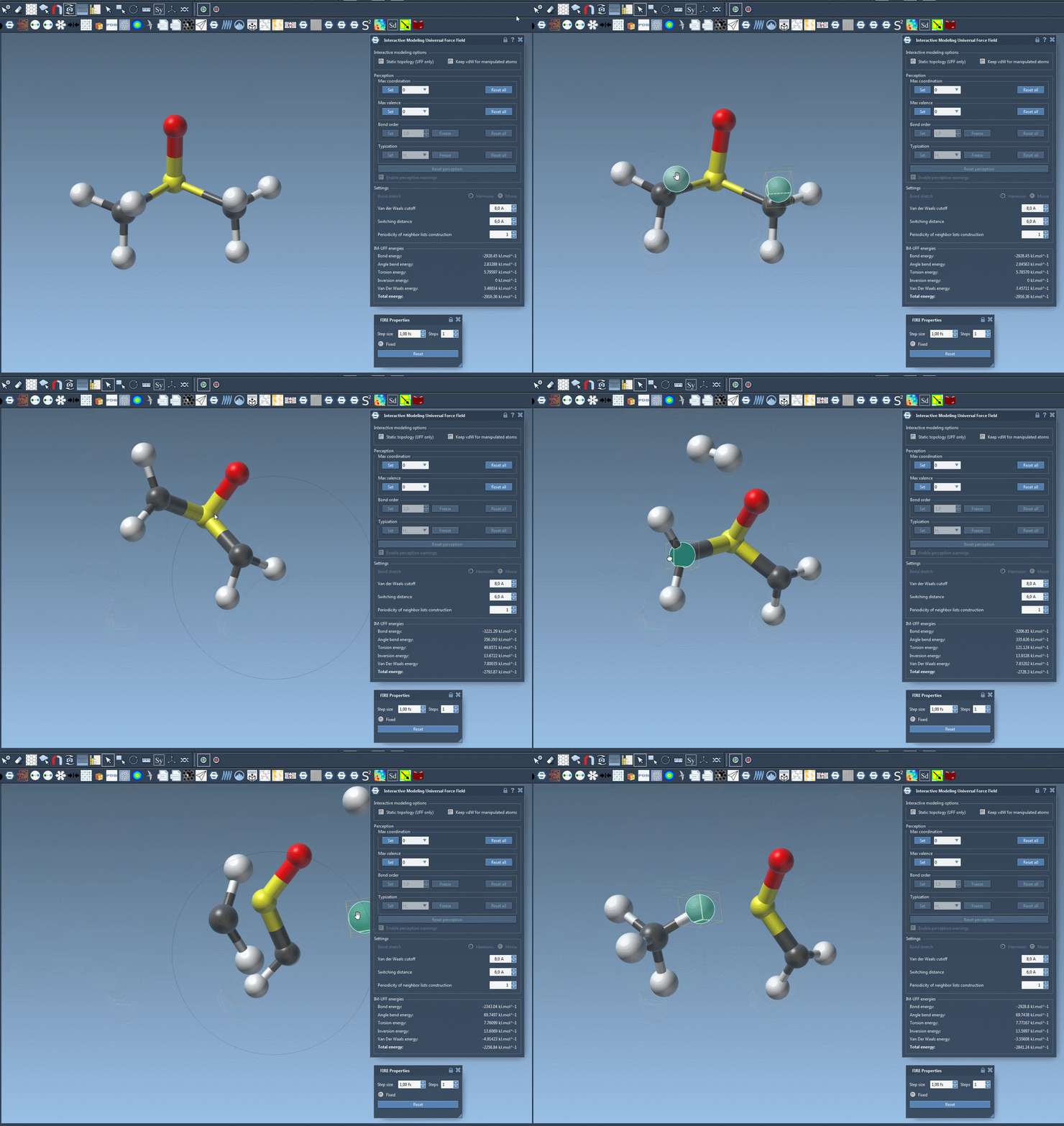 .
.
Customizing Your Simulations
IM-UFF gives users control over van der Waals interactions, typization, and coordination settings, ensuring a highly tailored modeling experience. For example:
- Use the Static topology option to toggle between standard UFF and IM-UFF, depending on whether you need dynamic topologies.
- Enable Keep vdW for manipulated to include or exclude manipulated atoms from van der Waals interactions, simplifying atom connections.
These customization options make IM-UFF a valuable tool for a wide range of applications, from drug design to materials science.
Your Next Steps
If you’re curious about how dynamic molecular editing can improve your modeling workflows, start by experimenting with small structures in IM-UFF. Compare its behavior with standard UFF or other interaction models in SAMSON to see how it adapts to your needs.
For a deeper dive into the IM-UFF extension, visit the official documentation at https://documentation.samson-connect.net/tutorials/uff/im-uff/.
Note: SAMSON and all SAMSON Extensions are free for non-commercial use. Get started today by visiting SAMSON Connect.