



One of the most common frustrations molecular modelers face is configuring simulation tools to accurately model structural changes. If you’ve ever wished for a streamlined setup process to handle topological changes like bond creation, bond breaking, and smooth atom typing transitions, SAMSON’s Interactive Modeling Universal Force Field (IM-UFF) extension offers robust solutions. In this blog post, we’ll guide you through setting up IM-UFF simulations step-by-step and share tips for leveraging its capabilities effectively. Ready to simplify your workflow?
What is IM-UFF?
The Interactive Modeling Universal Force Field (IM-UFF) extends the traditional Universal Force Field (UFF) to include interactive features, enabling real-time adjustments of molecular systems. You can easily simulate dynamic topological changes, such as creating and breaking covalent bonds or altering bond orders and atom types, during the modeling process. This flexibility is invaluable for constructing and refining complex molecular systems.
How to Set Up IM-UFF Simulations
Setting up IM-UFF simulations in SAMSON is intuitive. Here’s how you can get started:
- Step 1: Open a SAMSON document containing the molecular system you wish to simulate using the IM-UFF interaction model.
- Step 2: Add a simulator by navigating to
Edit > Simulate > Add simulator. Alternatively, use the shortcut Ctrl+Shift+M (or Cmd+Shift+M on Mac). - Step 3: From the list of interaction models, select Interactive Modeling Universal Force Field.
- Step 4: Choose a state updater for your simulation, such as FIRE (Fast Inertial Relaxation Engine) to control the dynamic behavior.
- Step 5: Click OK. The IM-UFF parameter window will appear, giving you direct access to fine-tune simulation conditions.
Adjusting IM-UFF Parameters
While IM-UFF doesn’t feature a separate setup window like UFF, its parameter window includes additional Interactive modeling options for further customization:
- Static topology (UFF only): Toggle between the standard UFF and IM-UFF. When unchecked, IM-UFF is employed, and dynamic topologies are enabled.
- Keep vdW for manipulated: Control how van der Waals forces are calculated for atoms being manually adjusted. Enabling this precision facilitates smoother modifications and bond formation without interference from vdW repulsive forces.
Running and Observing IM-UFF Simulations
To run the simulation, ensure the Static topology and Keep vdW for manipulated options are unchecked. Then simply go to Edit > Simulate > Start. The system’s total energy, as well as individual energy terms, will be displayed at the bottom of the parameter window during the simulation.
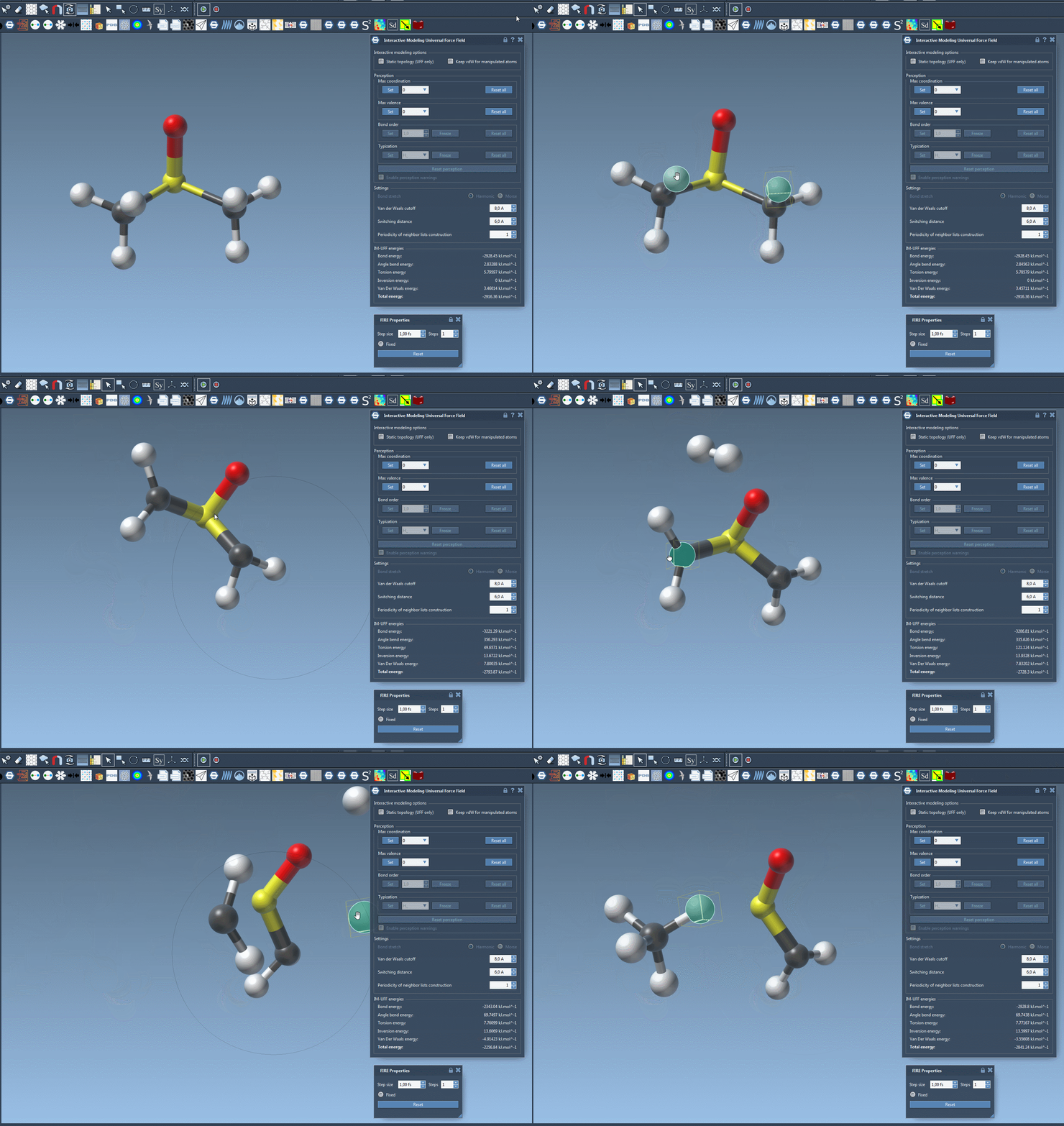
One standout feature of IM-UFF is its ability to handle molecular changes seamlessly. For instance, when atoms move slightly, bonds remain intact, and the structure adapts locally. If an atom moves significantly away from neighbors, bonds break, and the topology adjusts automatically. Bring atoms closer together, and new bonds may form dynamically.
Ready to Simplify Molecular Design?
SAMSON’s IM-UFF simulation setup allows you to focus on science rather than configuration hurdles. Use it to rapidly test structural hypotheses, perform dynamic edits, and generate highly accurate molecular systems, all guided by physically realistic interactions. Your workflow has never been smoother!
For more detailed guidance, visit the official SAMSON documentation on IM-UFF.
Note: SAMSON and all SAMSON Extensions are free for non-commercial use. You can download SAMSON at https://www.samson-connect.net.