Smarter Polymer Design with Custom Monomer Sequences

For molecular modelers working with synthetic or biological polymers, flexibility in defining and reusing molecular building blocks is critical. When creating complex polymers—especially those with repeating units or custom architectures—managing monomer sequences efficiently can save time and reduce errors. This…

Quickly Filter Visible Labels in Complex Models

When working with large molecular systems, it’s easy for the workspace to become visually cluttered. Especially when label nodes—used for annotating or identifying parts of a system—are scattered across complex models. Finding which labels are visible, filtering out those that…

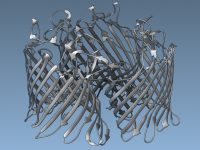
Filtering Molecular Backbones by Atom Count in SAMSON

When studying large molecular systems, zooming in on relevant structural groups is essential. Whether you’re analyzing protein backbones, coarse-grained models, or complex supramolecular assemblies, being able to filter groups of atoms based on structural attributes saves considerable time and helps…

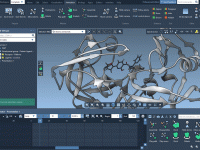
How to Limit the Protein Docking Search Space in Hex

If you’ve ever performed protein-protein docking using tools like Hex, you’ve probably encountered this common challenge: docking takes time, especially when the search space is large and the receptor and ligand can explore orientations across the full 360° sphere. While…

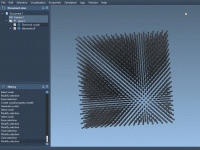
Filtering Structures by Atom Count in SAMSON’s NSL

When working with complex molecular assemblies, one of the key challenges for computational chemists and molecular modelers is filtering out irrelevant parts of a structure to focus only on regions of interest. You might be looking at thousands of components…