



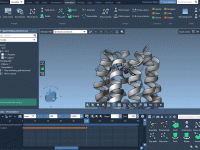
Streamlining Input Selection in NVT Equilibration
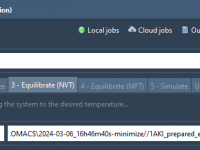
A Practical Guide to Setting Up Ligands in SAMSON
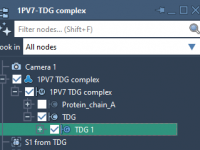
Effortless Zooming in Molecular Models with SAMSON’s Zoom Camera Animation
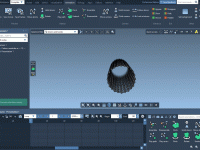
Understanding Animation Attributes in Molecular Design
Adding Precision to Molecular Presentations with the Stop Animation.
When presenting molecular simulations or complex molecular structures, precision and narrative flow can be game-changing. As molecular modelers often deal with intricate multi-frame animations, finding a way to divide these presentations into logical, focused segments can significantly enhance understanding. If…
Mastering Static Views with the ‘Hold Camera’ Animation
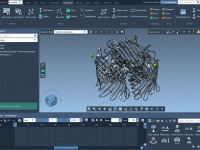
When working on molecular modeling projects, consistency in your viewpoint can be essential. Whether you’re preparing presentations, crafting molecular movies, or running analyses, unwanted shifts in your camera perspective can disrupt your workflow. Thankfully, SAMSON provides the ‘Hold Camera’ animation…
Navigating Ligand Pathways with Precision: Setting the Sampling Box

How to Minimize Only a Part of a Molecule in SAMSON.
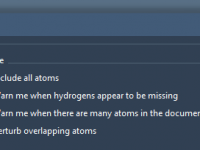
Streamlining Molecular Visualizations with SAMSON’s Visual Models
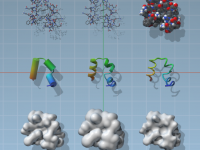
For molecular modelers, visualizing intricate nanosystems effectively is a crucial part of their workflows. Whether you’re examining protein secondary structures, electron density maps, or electrostatic fields, a clear and intuitive graphical representation can make a world of difference. SAMSON, the…