Keeping Your Molecules in Sight: The Show Animation in SAMSON
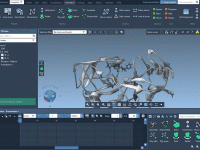
When presenting molecular animations, one common challenge is controlling when specific molecular components appear—and stay visible—throughout the timeline. This is especially important for molecular educators, researchers, and designers who create molecular presentations and want to seamlessly illustrate complex transformations without…
Modeling Molecules with Metal, Glass, or Glow? Here’s How to Do It Precisely
Retain Key Waters, Remove the Rest: A Practical Guide for Molecular Modelers
Why Your Coarse-Grained Solvent Might Clash — And How to Fix It
Present Molecular Models with Custom Backgrounds and Transitions
When preparing molecular presentations, many scientists struggle with delivering complex results clearly and engagingly. A frequent challenge is: how to create smooth, visually coherent transitions between scenes, especially when contextual images like presentation slides or textures are needed in the…
Dark Mode in SAMSON: A Simple Way to Reduce Eye Fatigue
Choosing Discrete Color Palettes That Make Molecular Models Clearer
Color can make or break the interpretation of molecular models. For researchers and designers working in molecular science, the right color palette isn’t just aesthetic—it’s essential for accurate, effective communication. Whether you’re analyzing large biomolecular systems or visually presenting molecular…
From One Chain to the Whole Assembly: Understanding Symmetry in Protein Structures
Getting Molecules Moving: A Practical Guide to the Undock Animation in SAMSON
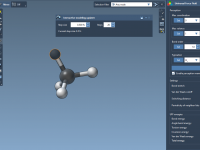
Setting up realistic presentations of molecular interactions often involves visualizing molecules transitioning between docked and undocked states. Whether you’re demonstrating a ligand leaving a binding pocket, or separating structural elements for clarity, precise control over these animations can make your…