Filtering Side Chains by Atom Count in SAMSON with NSL

In molecular modeling, especially in protein design and ligand optimization, analyzing and selecting specific parts of a molecule based on structural characteristics can save time and improve precision. One frequent task is identifying side chains with specific compositions, such as…

Reusing Commands as Python Scripts in SAMSON

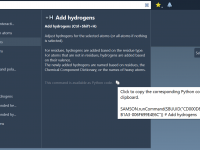
One common challenge for molecular modelers using interactive platforms is the repetitive nature of certain tasks: adding hydrogens, applying color schemes, changing visual presets, and more. These actions, often done through graphical menus, can be tedious when applied regularly to…

A Simple Way to Organize Complex Molecular Projects

Working with molecular data often involves handling multiple structures, simulations, and associated files — all within a single modeling session. If you’ve ever felt overwhelmed navigating large molecular models or trying to apply the same operation to a group of…

Turning Trajectories into Batch Simulations in SAMSON

Setting up molecular dynamics (MD) simulations for a series of conformations can be a tedious task—especially when you want to explore how small differences in protein structure affect simulation outcomes. Manually preparing each conformation for simulation increases setup time and…

Changing Multiple Atom Positions in One Go in SAMSON

One of the repetitive and time-consuming tasks in molecular modeling is adjusting the positions of atoms in a structure. Whether you’re building a molecular system from scratch or making structural corrections, moving atoms individually can become a bottleneck. Fortunately, SAMSON’s…

Avoiding Solvent Clashes in Coarse-Grained MD Systems

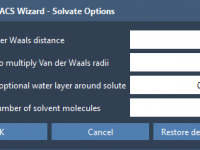
When preparing coarse-grained (CG) systems for molecular dynamics simulations using the MARTINI force field, one common issue is improper solvation. CG water models like Martini water represent multiple water molecules as one bead (typically 4:1), which drastically changes spatial interactions…