



For molecular modelers, accurately simulating interactions and dynamics is often at the core of designing better molecules. But what happens when workflows are slowed down by tedious setup steps? This is where the Interactive Modeling Universal Force Field (IM-UFF) in SAMSON comes in, offering an intuitive way to model molecular topological changes without unnecessary friction. In this post, we’ll take you through the streamlined process of setting up IM-UFF, so you can kickstart simulations efficiently.
Why IM-UFF?
IM-UFF builds upon the widely-used Universal Force Field (UFF) by enabling simulation of dynamic topological changes, such as bond formation and breaking, changes in bond orders, and atom typization. If you’ve ever wanted an easier way to model significant molecular changes interactively rather than being constrained by static topologies, IM-UFF is built for you.
How to Get Started with IM-UFF
The process of setting up IM-UFF in SAMSON has been designed with simplicity in mind, allowing you to focus more on science and less on repetitive tasks. Follow the steps below:
- Open your system: Start by opening a SAMSON document containing the molecular system you’d like to simulate with IM-UFF.
- Add the simulator: Navigate to
Edit > Simulate > Add simulatoror use the handy shortcut:Ctrl + Shift + Mon Windows orCmd + Shift + Mon macOS. - Select IM-UFF: From the list of available interaction models, pick “Interactive Modeling Universal Force Field.” This ensures your simulator uses the extended UFF model for dynamic interactions.
- Choose a state updater: You can now select a state updater (e.g., FIRE) that controls how your simulation progresses.
- Confirm parameters: Click “OK” to finalize your setup. You’ll notice that the parameter window appears. This includes the “Interactive modeling options,” which give you greater control during your simulations.
Key Options for Customization
The IM-UFF extension differs from standard UFF due to its dedicated “Interactive modeling options” section. Here are two critical parameters you can tweak:
- Static topology (UFF only): Check this box to switch to standard UFF or leave it unchecked to utilize the interactive modeling capabilities of IM-UFF. Note that the “zero” energy reference differs slightly to keep the system consistent under both modes.
- Keep vdW for manipulated: When active, this setting enables van der Waals forces to be applied to atoms manipulated by the mouse. Disabling it makes it easier to connect manipulated atoms to others without repulsive interferences.
Try It Out
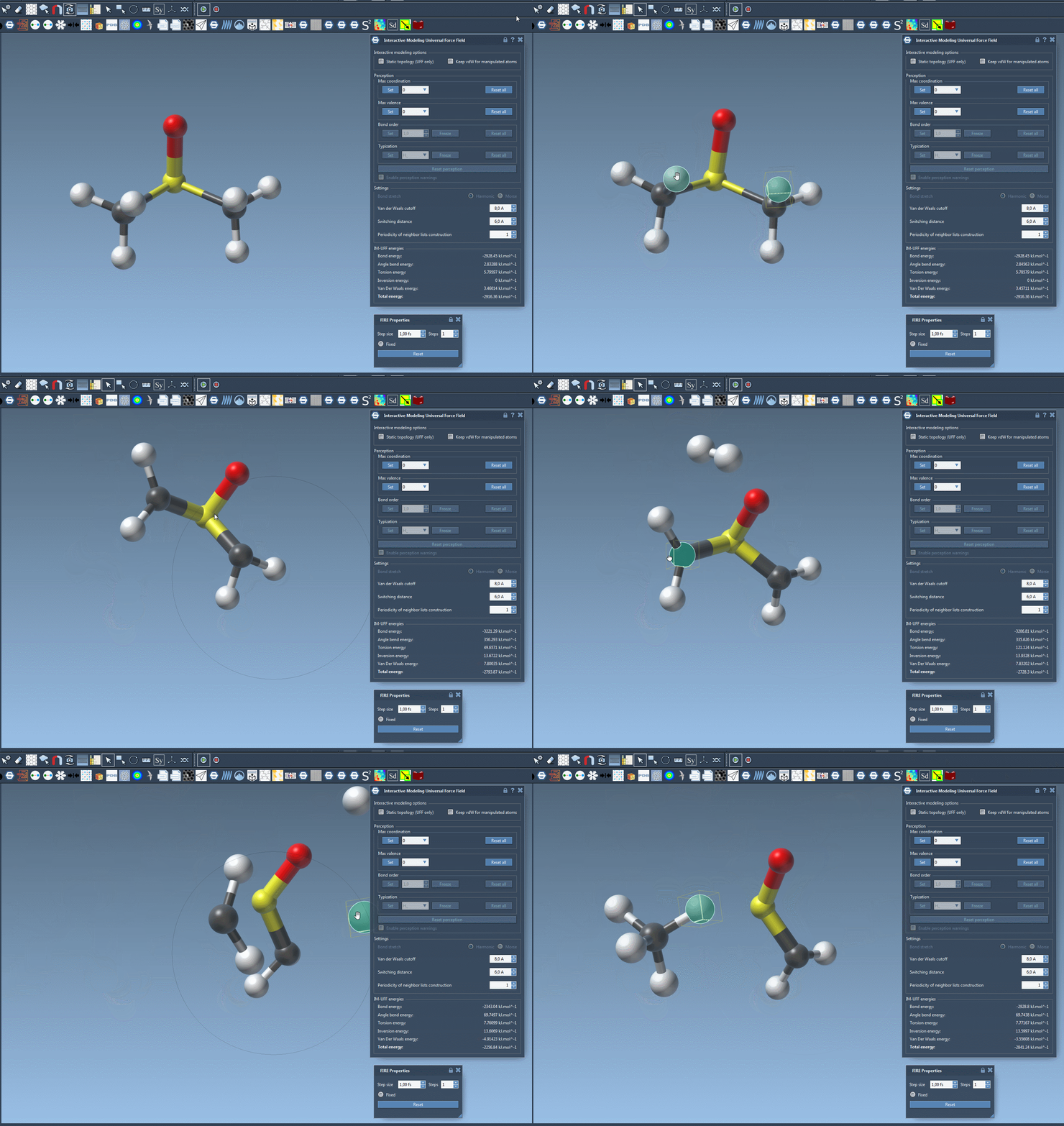
Once the setup is complete, you can start your simulation with a single click by selecting Edit > Simulate > Start. IM-UFF allows you to visualize your changes in real-time. By displacing atoms with the mouse, you’ll notice how bonds adapt locally for minor movements but break entirely with more significant displacements. Similarly, atoms moving closer to others can dynamically form new bonds, offering unparalleled flexibility for modeling molecular changes.
Conclusion
IM-UFF in SAMSON is an excellent solution for building, editing, and simulating molecular systems while keeping pace with their evolving topology. Its customizable parameters ensure precision, and the streamlined setup helps save time for more meaningful modeling tasks. To explore more about using IM-UFF, check out the full documentation here.
Note: SAMSON and all SAMSON Extensions are free for non-commercial use. You can download SAMSON at https://www.samson-connect.net.