



For molecular modelers, refining protein structures and identifying strained residues is a crucial task. This process often involves meticulous exploration of the protein’s backbone dihedral angles—an area where tools like the Interactive Ramachandran Plot in SAMSON excel. If you’ve ever wondered how to simplify this aspect of protein modeling while enhancing accuracy, this post is for you.
Why the Ramachandran Plot Matters
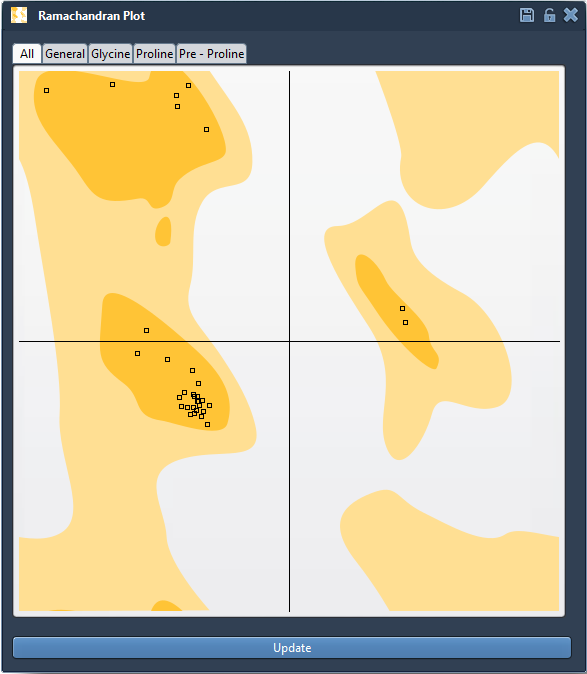
A Ramachandran Plot helps evaluate the backbone conformations of amino acids within a protein structure. It maps the φ (phi) and ψ (psi) dihedral angles of residues, visually distinguishing between energetically favorable (yellow) and unfavorable (white) regions. This visualization enables users to review structural errors and refine conformations as needed before simulations, docking, or other workflows.
Getting Started with the Interactive Ramachandran Plot
The Interactive Ramachandran Plot extension in SAMSON is a powerful tool for exploring and editing backbone dihedral angles. Here’s how you can start:
- Log into SAMSON Connect and add the Interactive Ramachandran Plot extension.
- Restart SAMSON to activate the extension.
- Load a protein structure, such as PDB ID
1YRF, and open the Ramachandran Plot app from the Home > Apps > Biology section.
Visualizing and Interacting with Residues
Once the app generates the Ramachandran plot, you can interact with residues directly from the plot. For example:
- Clicking on a point highlights the corresponding residue in the 3D viewport, showing its φ and ψ angles in the status bar.
- The interface categorizes residues into tabs, such as General, Glycine, Proline, and Pre-proline, for easier filtering and exploration.
Edit Protein Backbones Interactively
The extension allows direct manipulation of protein backbone dihedral angles in two ways:
Option 1: Drag Points in the Plot
- Click and drag a residue’s point in the plot to instantly adjust φ and ψ values.
- Undo changes using Ctrl/Cmd + Z for iterative refinement.
Option 2: Use the Twister Editor
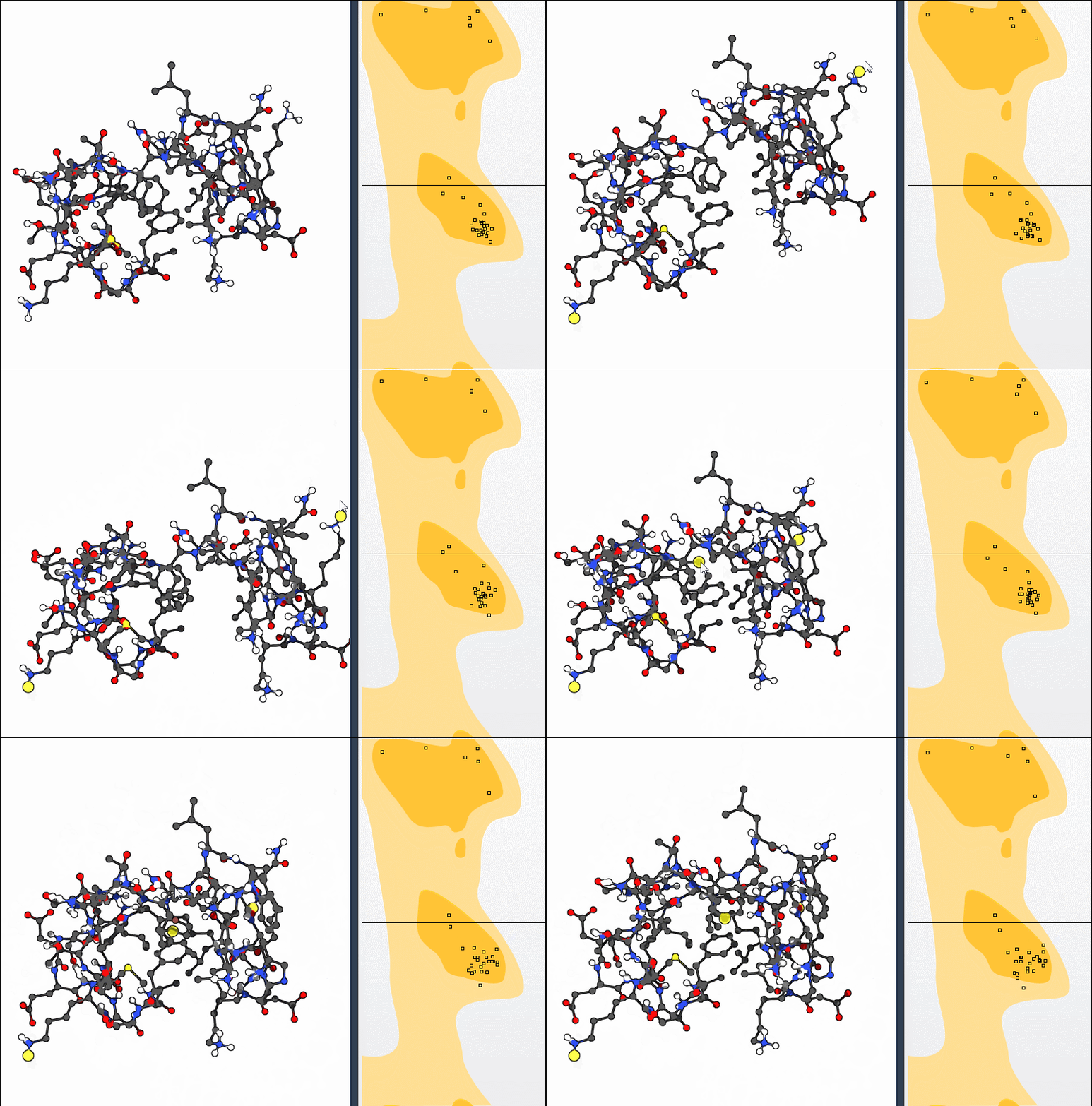
- Select the Twister editor from the left-hand menu in the 3D viewport.
- Twist the protein manually while observing real-time updates in the Ramachandran plot.
Applications in Protein Modeling
The Interactive Ramachandran Plot streamlines several protein modeling workflows:
- Identify and fix strained residues before running simulations.
- Refine homology models by repositioning outlier residues.
- Explore conformational flexibility at active or binding sites.
Learn More
This tool is highly impactful for both new users and seasoned structural biologists aiming to perfect their protein models. For additional step-by-step details, visit the original documentation page: https://documentation.samson-connect.net/tutorials/ramachandran/ramachandran-plot/.
Note: SAMSON and all SAMSON Extensions are free for non-commercial use. Download SAMSON today from https://www.samson-connect.net.