



Crystalline defects are a fascinating aspect of material science that can drastically affect the properties of materials. Whether you are designing new materials or studying existing ones, having a clear understanding of these imperfections is critical. In this blog post, we’ll guide you through how to simulate and visualize defects in diamond crystals using the Crystal Creator Extension in SAMSON. This hands-on approach will help you better understand how defects influence crystal structures and properties.
Why Study Defects in Crystals?
Crystals are rarely perfect. Natural or man-made, they often contain defects such as vacancies (missing atoms), substitutional impurities (foreign atoms replacing native ones), or dislocations. These imperfections can impact a material’s mechanical strength, electrical properties, optical characteristics, and thermal conductivity. Simulating and observing these effects helps molecular modelers predict and design materials with desired functionalities.
Simulating Defects in Diamond Crystals
Let’s explore how to model defects in diamonds using SAMSON and the Crystal Creator Extension:
- Step 1: Load the Diamond Crystal File
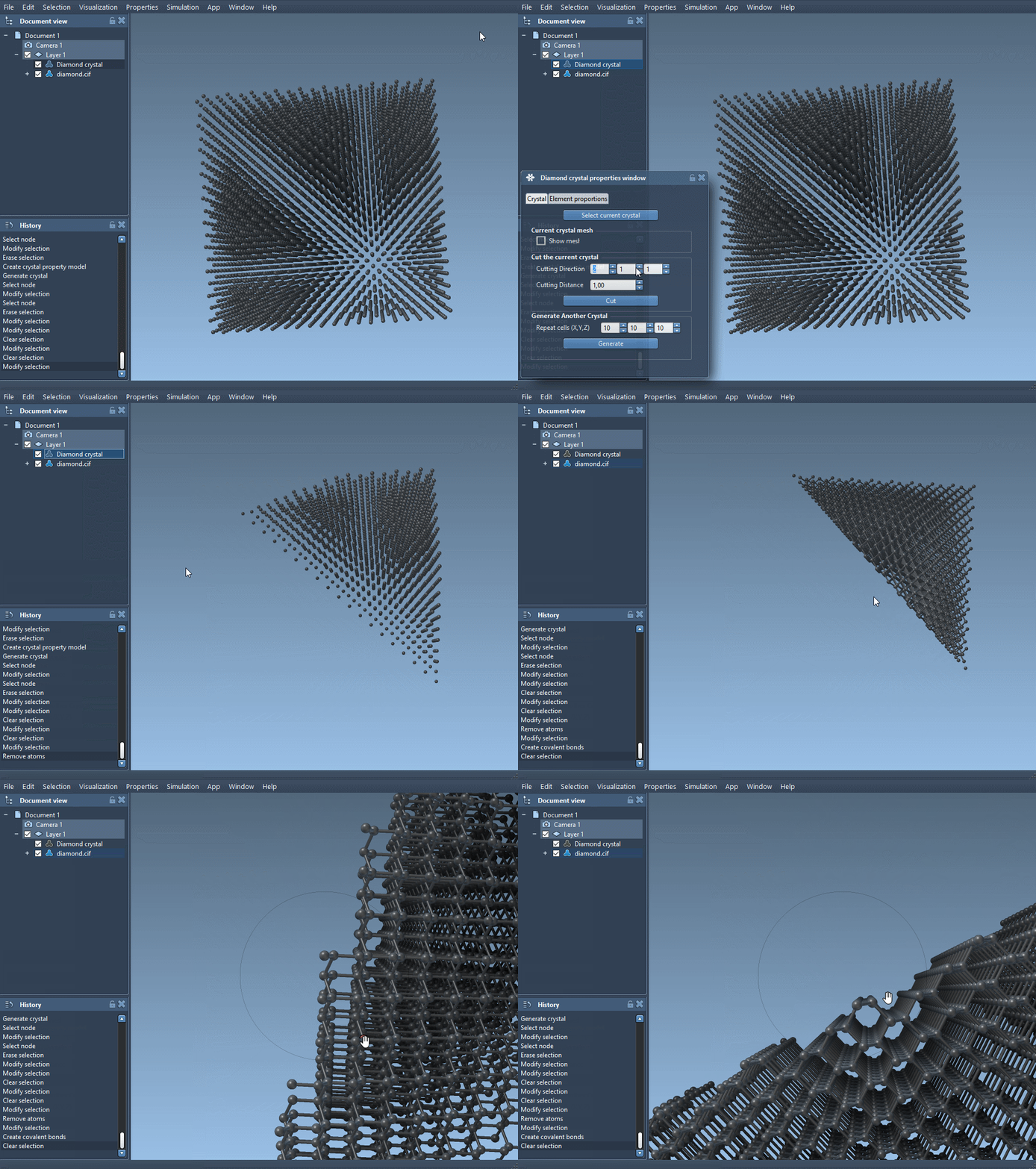
Begin by loading a diamond CIF file into SAMSON using the Crystal Creator App. If you don’t have a diamond CIF file, you can easily download one from databases like the American Mineralogist Crystal Structure Database. - Step 2: Minimize the Structure
After loading the crystal, use the Brenner interaction model in SAMSON to minimize the structure’s energy. This step ensures your diamond crystal is in a stable configuration. - Step 3: Add Defects
Duplicate the original CIF file and open the duplicate in a text editor. Locate the section defining the atom positions. For instance, you might find something like this:123456loop__atom_site_label_atom_site_fract_x_atom_site_fract_y_atom_site_fract_zC 0.00000 0.00000 0.00000To introduce a defect, modify the file by adding an occupancy column and assigning a probability value for the presence of an atom, like this:
1234567loop__atom_site_label_atom_site_fract_x_atom_site_fract_y_atom_site_fract_z_atom_site_occupancyC 0.00000 0.00000 0.00000 0.95In this example, the atomic presence probability is 95%.
- Step 4: Load the Modified Crystal File
Import the modified CIF file back into SAMSON and visualize the structure. You can immediately see how the defects influence the crystal. Use the bonding tools in SAMSON to generate atomic bonds for a more comprehensive observation.
Why SAMSON Makes a Difference
The Crystal Creator App in SAMSON integrates advanced tools for crystal visualization and editing. By enabling precise defect modelling and analysis, it proves invaluable for molecular modelers seeking to understand structural irregularities and their implications. With SAMSON, you can effortlessly explore how varying defect probabilities alter atomic arrangements and properties in crystals like diamond.
Learn More
If this article piqued your interest, check out the official SAMSON documentation for an in-depth guide to crystal modeling techniques.
SAMSON and all SAMSON Extensions are free for non-commercial use. You can download SAMSON here and start exploring molecular design today.