



For molecular modelers delving into the intricacies of viral mechanisms, understanding the SARS-CoV-2 spike protein’s opening motion offers critical insights into viral infection and antibody targeting. This post provides an accessible walkthrough of the spike’s conformational journey from closed to receptor-binding open states, its importance, and how computational tools like SAMSON can support your research.
The Role of the SARS-CoV-2 Spike
The SARS-CoV-2 spike protein is the virus’s primary tool for human cell entry. Comprised of glycoproteins, it binds to the human ACE2 receptor—a key step for virus propagation. Notably, the spike protein transitions between two states:
- Closed state: In this state, the receptor-binding domain (RBD) is tucked away, reducing the ability to interact with ACE2.
- Open state: The RBD becomes exposed, ready to bind ACE2 for cellular entry.
By visualizing the spike’s transition between these states, molecular modelers can better understand this critical step in the infection process and explore ways to inhibit it.
Visualizing the Conformational Change
The SAMSON molecular design platform offers resources to explore the spike’s opening motion visually and computationally. Below are images and animations illustrating the spike’s progression from closed to open states:
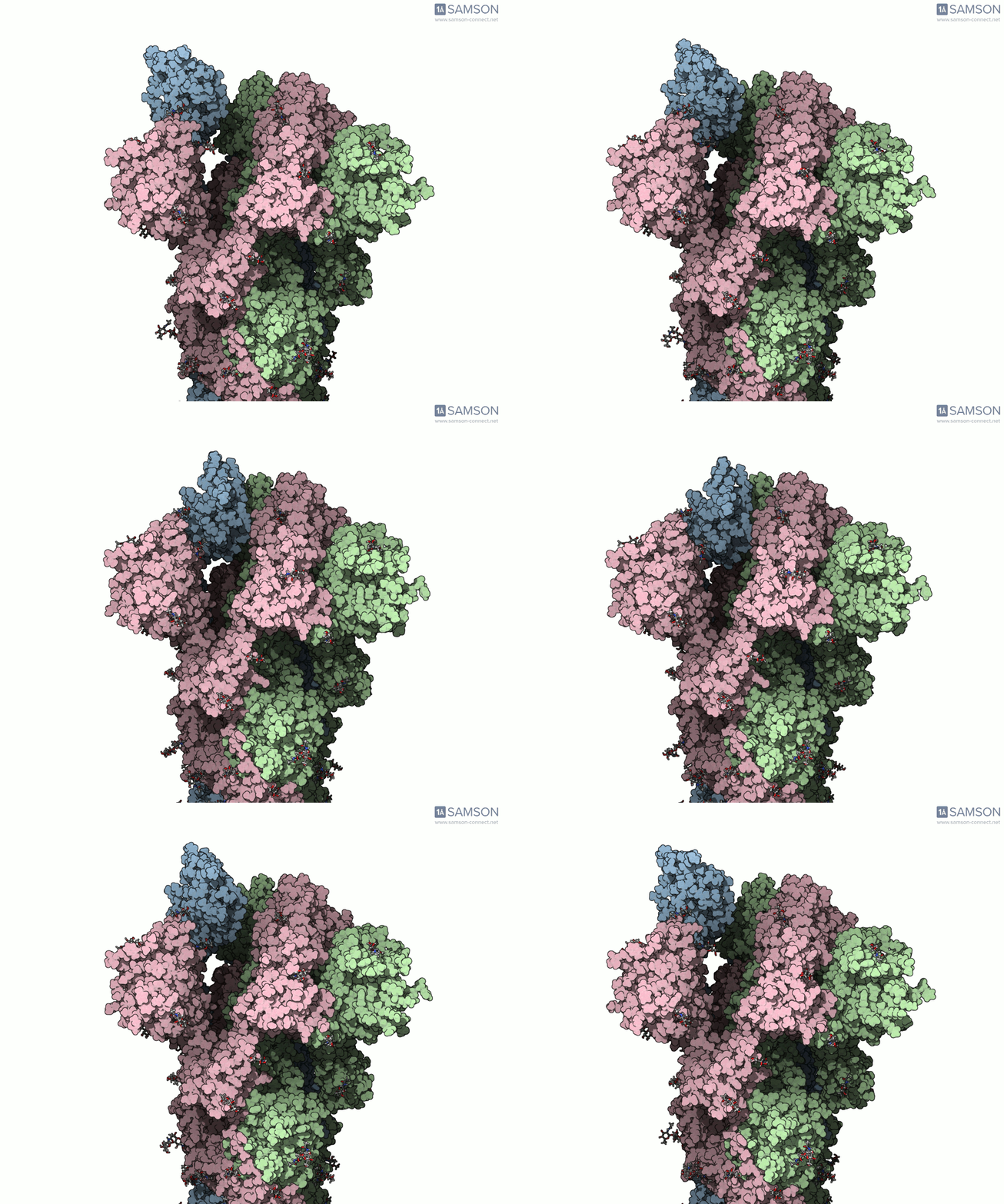
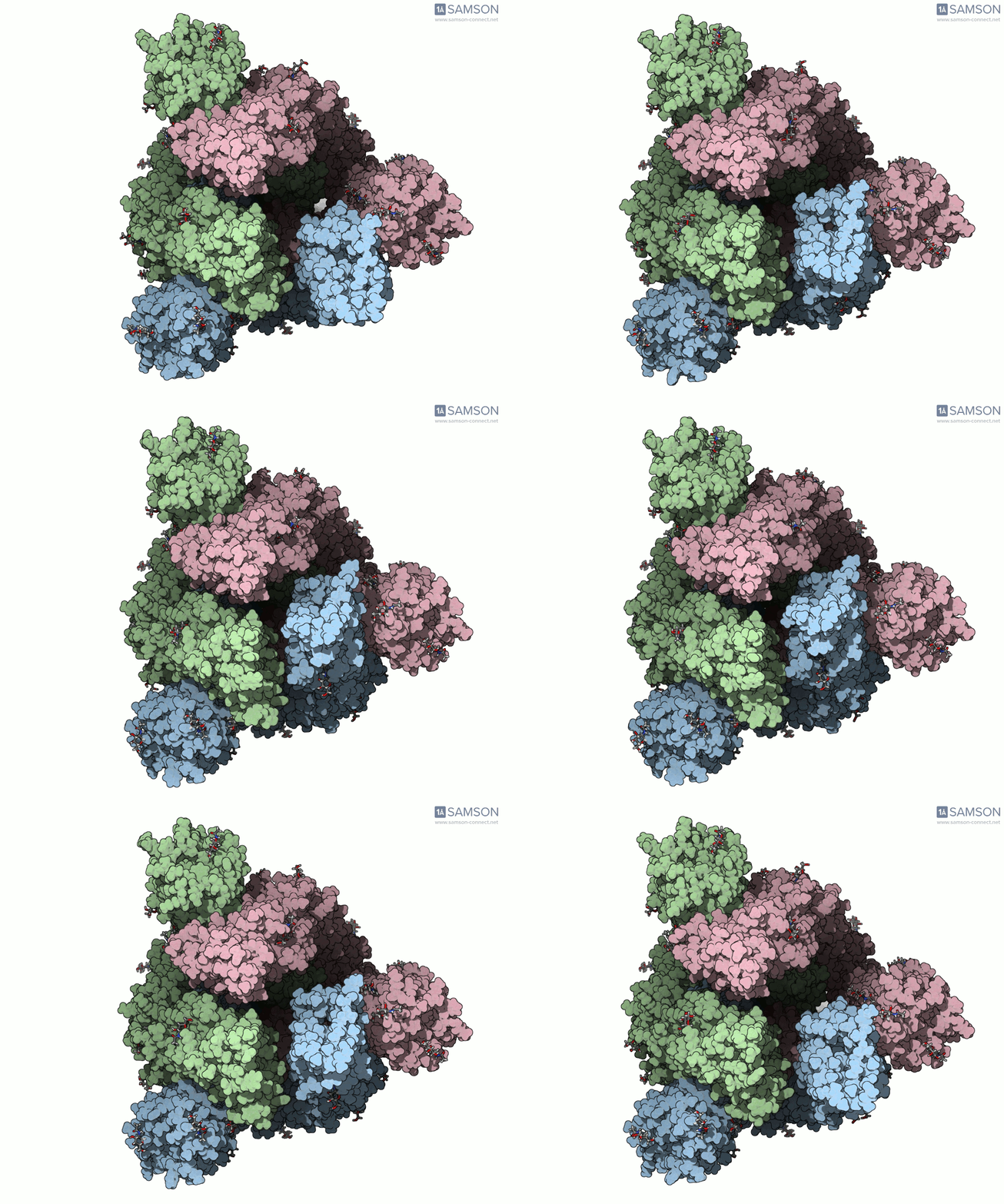
These visualizations highlight how the RBD opens to interact with ACE2, a process essential for SARS-CoV-2 to bind and transfer viral RNA to human cells. The exposed upper region of the spike makes it a prime target for neutralizing antibodies, while the glycan coating around the spike’s surface acts as camouflage from the immune system.
Computational Insights for Modelers
SAMSON provides tools to compute and analyze the opening motion of the spike. The platforms’ ARAP Interpolation Path module and P-NEB module are particularly useful for molecular dynamics workflows.
These modules allow users to:
- Generate interpolated pathways for protein conformational transitions.
- Refine motion paths using computational optimization.
- Inspect trajectory files to better understand structural changes.
Using known structures of the spike in closed (PDB 6VXX) and open (PDB 6VYB) states, SAMSON computes intermediary conformations. These trajectories provide valuable information to visualize how molecular interactions guide the spike’s motion.
Download and Explore
SAMSON offers downloadable trajectory files of the computed pathways, which can be used for further analysis:
These resources can be imported into SAMSON or other visualization tools, helping modelers study the trajectory, explore the dynamics, or use the pathway for predictive modeling projects.
Conclusion
Understanding the SARS-CoV-2 spike’s opening motion isn’t just an academic exercise—it’s a gateway to solving crucial biomedical challenges. By unraveling this conformational change, molecular modelers can better target this protein for therapeutic purposes or design inhibitors to block viral infection.
To dive deeper into this topic and access the complete details, visit the original documentation page at https://documentation.samson-connect.net/tutorials/sars-cov-2/coronavirus-computing-the-opening-motion-of-the-sars-cov-2-spike/.
SAMSON and all SAMSON Extensions are free for non-commercial use. You can download SAMSON for free at https://www.samson-connect.net.