



For molecular modelers and researchers exploring the mechanisms of viral infection, understanding the motion of the SARS-CoV-2 spike protein is crucial. This motion is key to how the virus recognizes and infects human cells, making it an essential factor in understanding therapeutic and vaccine design. This blog post provides an insightful walkthrough on observing, analyzing, and interpreting the transition of the SARS-CoV-2 spike protein from its closed conformation to its open, receptor-binding state.
Why Focus on the Spike Protein’s Motion?
The SARS-CoV-2 spike protein is responsible for recognizing and binding to the ACE2 receptor on human cells, an essential step for viral entry and infection. The spike undergoes a significant conformational shift when transitioning between the closed (inactive) and open (active) states. This means that its receptor-binding domain can either hide or expose itself to interact with ACE2. For molecular modelers, visualizing and simulating these states is the foundation for designs to block or inhibit this interaction.
How Can You Visualize the Spike Motion?
Visualizing the spike’s motion can seem challenging, given its complex structure and dynamics. However, in SAMSON, you can access precomputed trajectory files that show the transition pathway of the spike from its closed to open state. These visualizations provide a comprehensive understanding of the molecular details underpinning this shift.
Below are some resources directly available for download:
- A set of PDB trajectory files showing the intermediate states of the spike’s motion.
- A single PDB file with the entire trajectory, for easy handling in molecular modeling applications.
- A SAMSON format file that integrates the open and closed conformations with the computed path and animation capabilities.
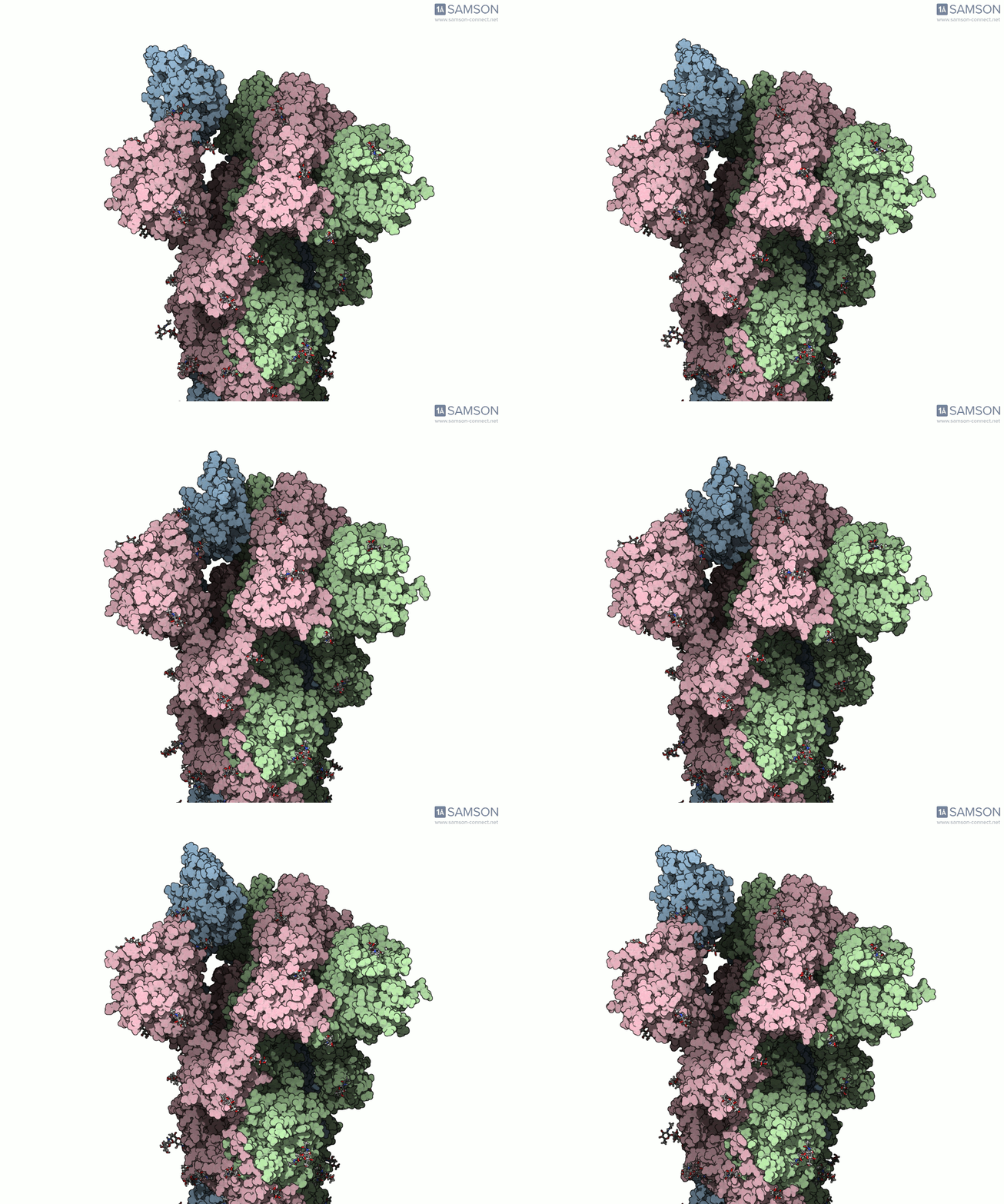
Computed Pathway: From Visualization to Validation
The trajectory was calculated using SAMSON’s As-Rigid-As-Possible (ARAP) Interpolation Path module and refined with the Parallel Nudged Elastic Band (P-NEB) module, ensuring biologically meaningful intermediates. While these pathways are not experimentally verified, they serve as a robust starting point for further computational studies, such as drug design or dynamics simulations.
By visualizing this transition in SAMSON, users can benefit from the dual perspective:
- Detailed insight into the structural changes that expose the spike’s receptor-binding domain.
- A clear workflow to systematically compute and refine motion pathways for other proteins.
Getting Started in SAMSON
To make the most of the provided resources, you can use SAMSON to inspect the files and reproduce the workflow used to compute the spike trajectory. Modules like ARAP and P-NEB are free during the outbreak for anyone studying SARS-CoV-2 or COVID-19.
See the motion for yourself and build on this example to inform your research. Access the complete documentation and download options at this page.
*Note: SAMSON and all SAMSON Extensions are free for non-commercial use. You can download SAMSON at SAMSON Connect.