



If you're working in molecular modeling or structural biology, you likely understand the importance of studying protein motions. One of the most fascinating yet complex motions to uncover is the SARS-CoV-2 spike's transition from a closed to an open state. This dynamic step is key to how the virus recognizes and attaches to human cells, opening the gateway for infection. In this article, we'll explore how you can investigate this critical biological process in an accessible and scientifically enriching way.
Why Should You Study the Spike Opening Motion?
The SARS-CoV-2 spike protein is the molecular mechanism behind the virus's entry into cells. Its functioning is akin to a mousetrap; part of it opens up and grabs the ACE2 receptor on human cells, initiating the infection process. Understanding this motion is not just academically interesting—it has real-world applications in vaccine and drug development.
Typical pain points molecular modelers face include obtaining meaningful transition paths between protein states, working with structures of varying residues, and producing illustrative, scientifically sound animations. This is where tools like SAMSON, the integrative molecular design platform, can help!
Visualizing the Transition Path
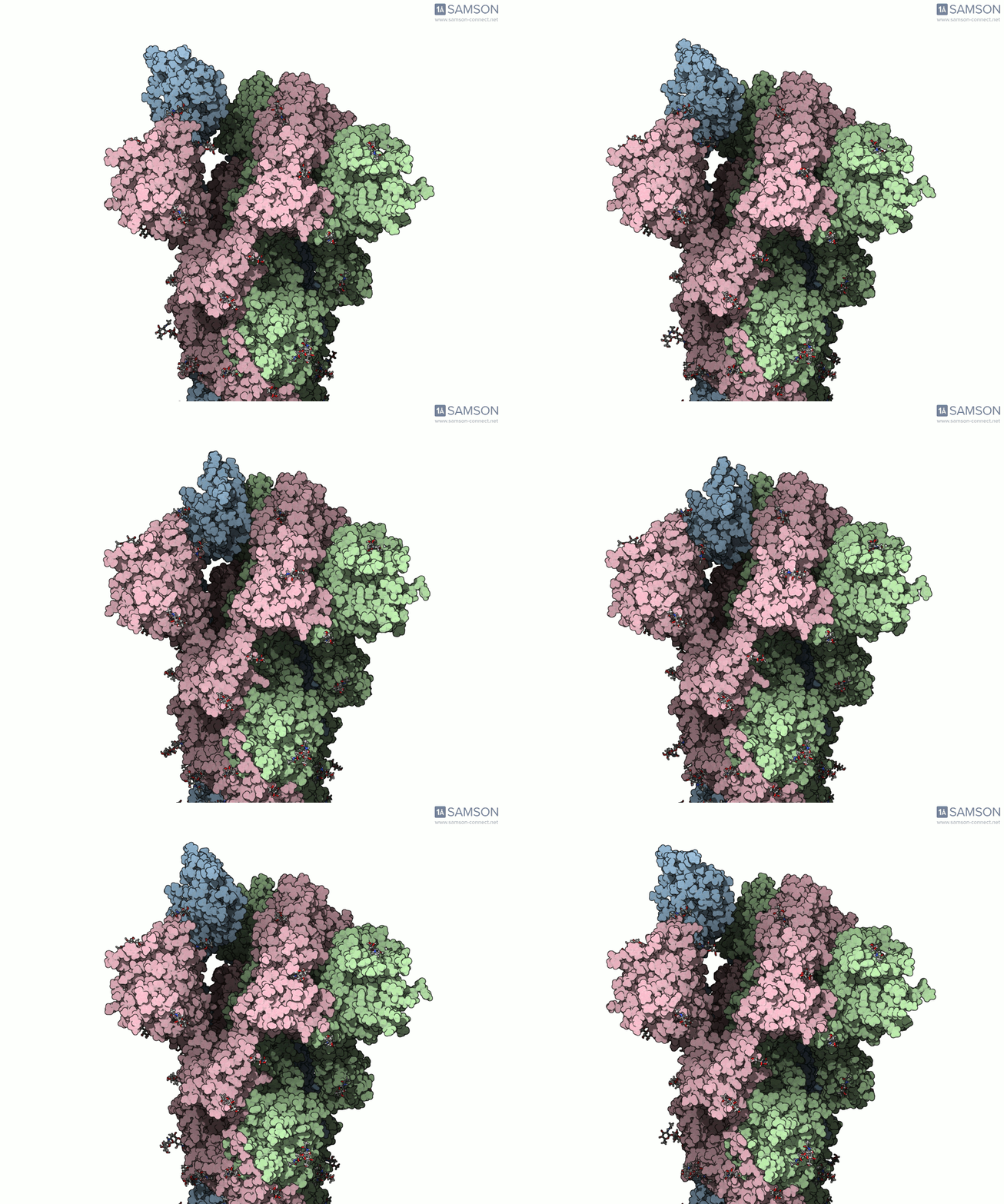
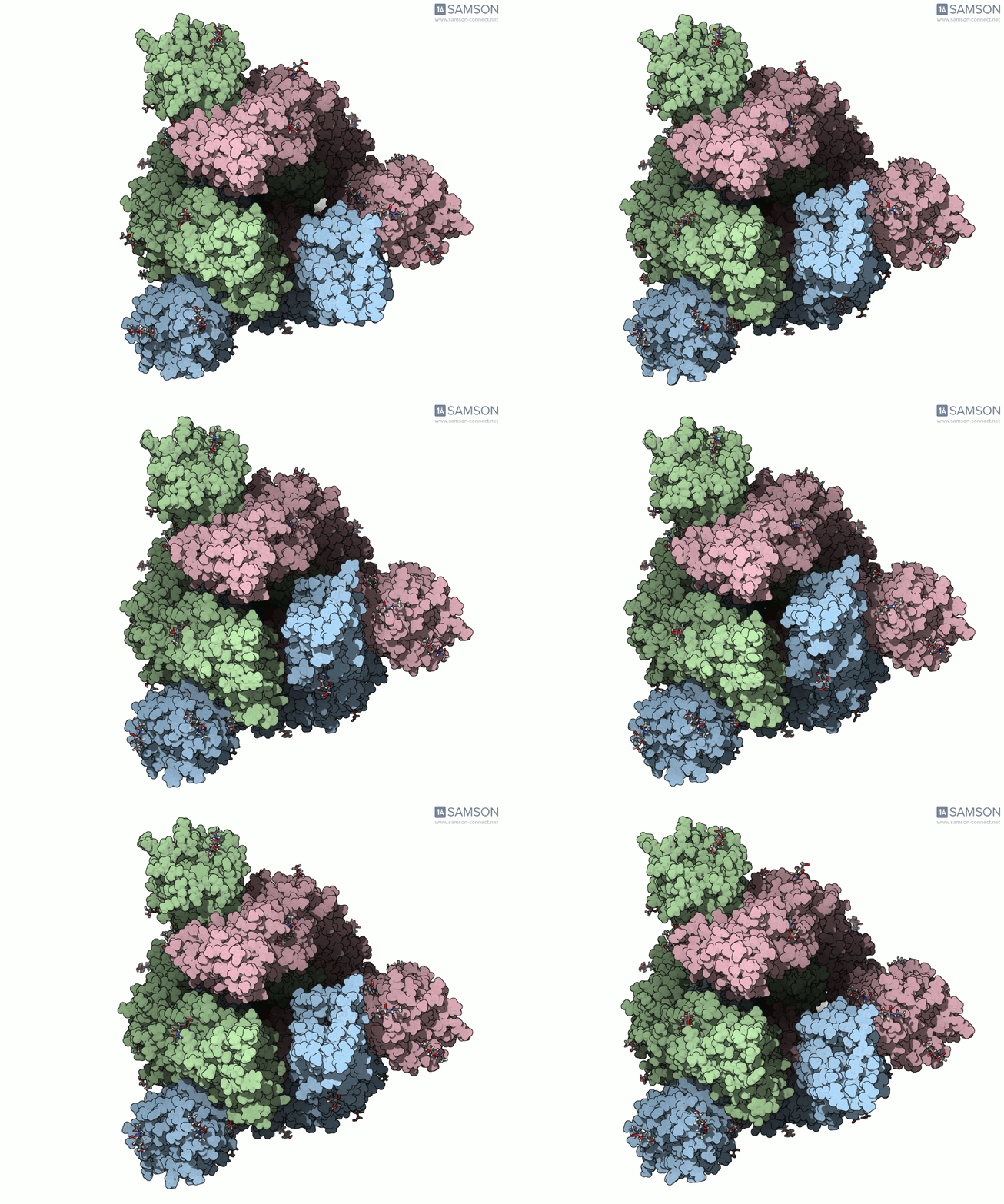
One might wonder: how do you visualize such intricate motions? In SAMSON, the spike transition path—from a closed state (PDB 6VXX) to an open state (PDB 6VYB)—can be computed using specific workflows. These include interpolation techniques like the As-Rigid-As-Possible (ARAP) module and optimization with the Parallel Nudged Elastic Band (P-NEB) module. Below are animations showcasing the spike dynamics:
How Was This Path Computed?
The process begins with taking the established structures of the closed and open states (PDB files 6VXX and 6VYB). In SAMSON, these structures required several preprocessing steps to prepare them for interpolation. For instance, bond orders were adjusted in sugar molecules, hydrogens were added, and minimization steps were conducted.
Post-preparation, tools like:
- ARAP: This module was used to interpolate an initial path between the two states.
- P-NEB: This enhanced the computed path, refining it for better accuracy.
These modules made it possible to reproduce this trajectory on a typical laptop efficiently, with times ranging between less than a minute to around 15 minutes per step.
Download and Reuse the Results
Want to use these paths for your own experiments or presentations? The computed trajectory is available to download in multiple formats:
These trajectories allow you to dive deeper into the spike's behavior and create animations or analyze their physical relevance. However, note that they serve as illustrations and have not been experimentally verified.
The Bigger Picture
Examining the SARS-CoV-2 spike’s motion not only broadens our understanding of viral mechanisms but can also inspire novel therapeutic approaches. With powerful tools like SAMSON, even complex workflows become reproducible and approachable.
To learn more about this workflow and access related resources, visit the full documentation page here.
Note: SAMSON and all SAMSON Extensions are free for non-commercial use. You can download SAMSON at https://www.samson-connect.net.