



One of the persistent challenges faced by molecular modelers is capturing and visualizing the intricate motions of biomolecules in action. The SARS-CoV-2 spike protein, which plays a central role in the virus’s ability to infect host cells, undergoes a critical transformation between its closed and open states. Understanding this motion can be crucial for advancing antiviral strategies and therapeutic designs. This blog post outlines a step-by-step process of computing and visualizing the opening motion of the SARS-CoV-2 spike protein using the integrative molecular modeling platform, SAMSON.
Why is the SARS-CoV-2 spike motion important?
The spike protein facilitates the virus’s entry into human cells by binding to the ACE2 receptor on the cell surface. Its opening motion exposes the receptor-binding domain (RBD), enabling interaction with ACE2 and the eventual fusion of the virus with its host. This makes the spike protein a critical target for neutralizing antibodies and antiviral drugs. By studying how the spike transitions between its closed and open states, scientists can better understand how to design inhibitors that interfere with this process.
Computing spike motion: A closer look with SAMSON
SAMSON provides tools to compute and visualize molecular transitions like the one the SARS-CoV-2 spike undergoes. Here is how you can compute the opening motion of the spike protein:
- Start with input structures: The states of the spike protein are represented by two PDB files: 6VXX (closed state) and 6VYB (open state). These structures differ in several residues, making transition path computation more complex.
- Preprocess the structures: Use a Python script in SAMSON to update bond orders for specific residues like N-acetylglucosamines (NAG). This step ensures proper hydrogen addition and structural minimization later in the workflow.
- Generate an initial motion path: Employ the As-Rigid-As-Possible (ARAP) Interpolation Path module to create an interpolated pathway between the open and closed states. You can start with the open state (6VYB) and compute the transition toward the closed state (6VXX). This step takes less than a minute on most laptops.
- Refine the path: Since the two states differ in their number of residues, the path may need adjustments. SAMSON provides tools for such modifications. For example, after generating an intermediate conformation with the ARAP module, the closed state conformation can be minimized and incorporated into the path for refinement.
- Finalize the motion pathway: Use the Parallel Nudged Elastic Band (P-NEB) module to optimize the motion path. This process improves the smoothness and accuracy of the trajectory and typically requires under 15 minutes on a standard laptop.
Visualizing the SARS-CoV-2 spike motion
SAMSON allows you to visualize the spike’s motion in vivid detail. The computed trajectory reveals how the spike transitions from its closed state, where the receptor-binding domain is shielded, to its open state, where the RBD is exposed and ready to interact with the ACE2 receptor. Here are some visual examples of the motion:
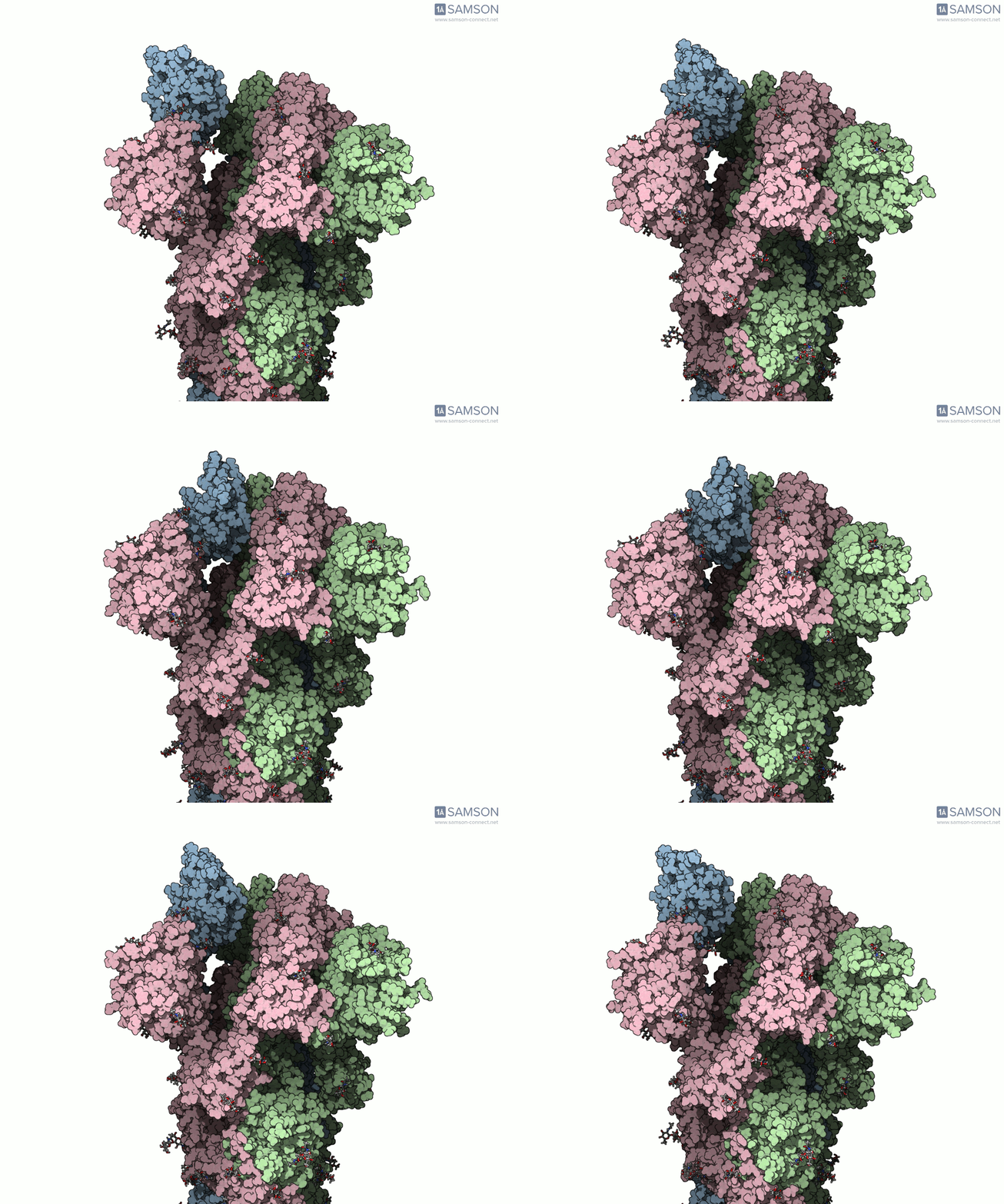
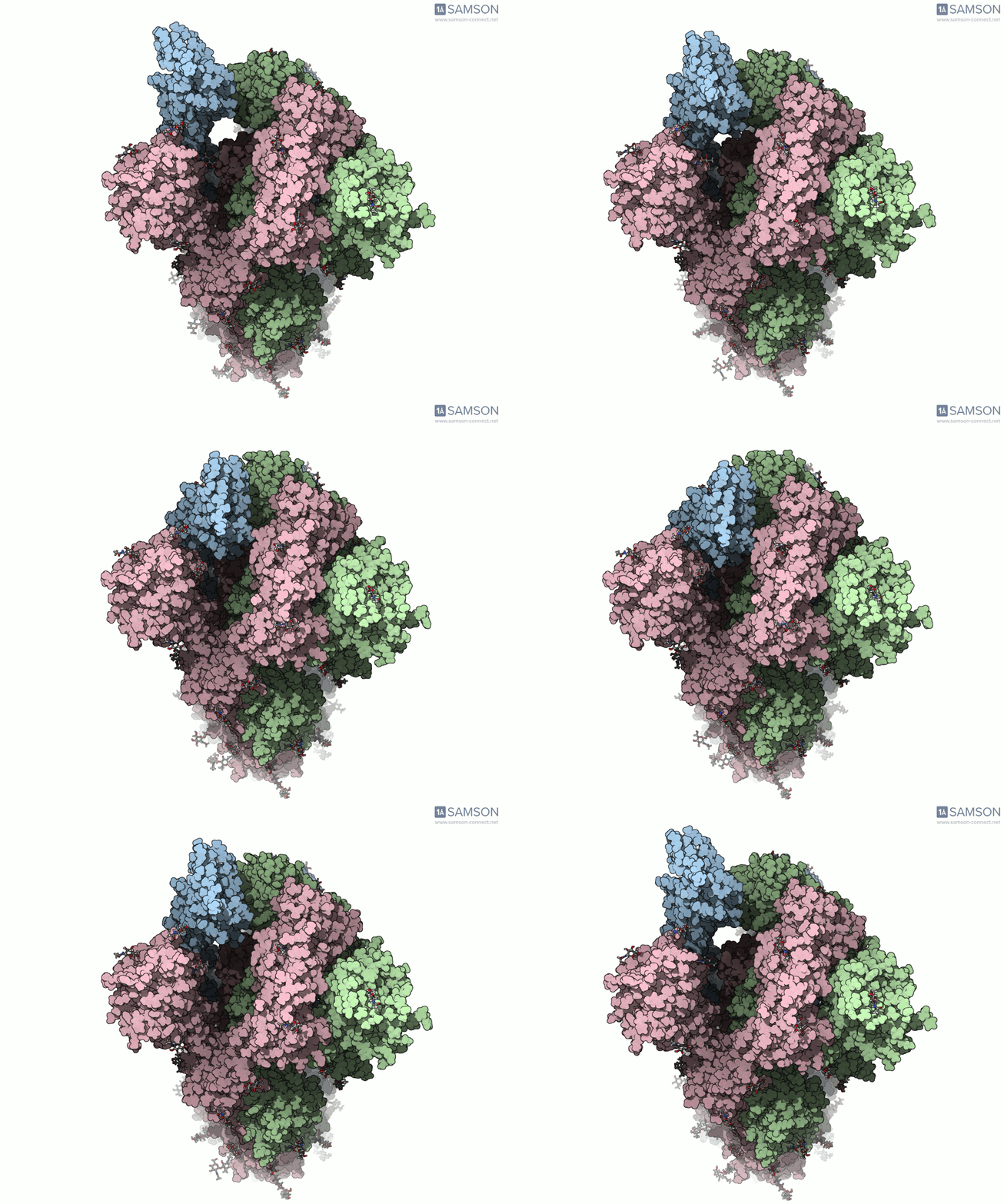
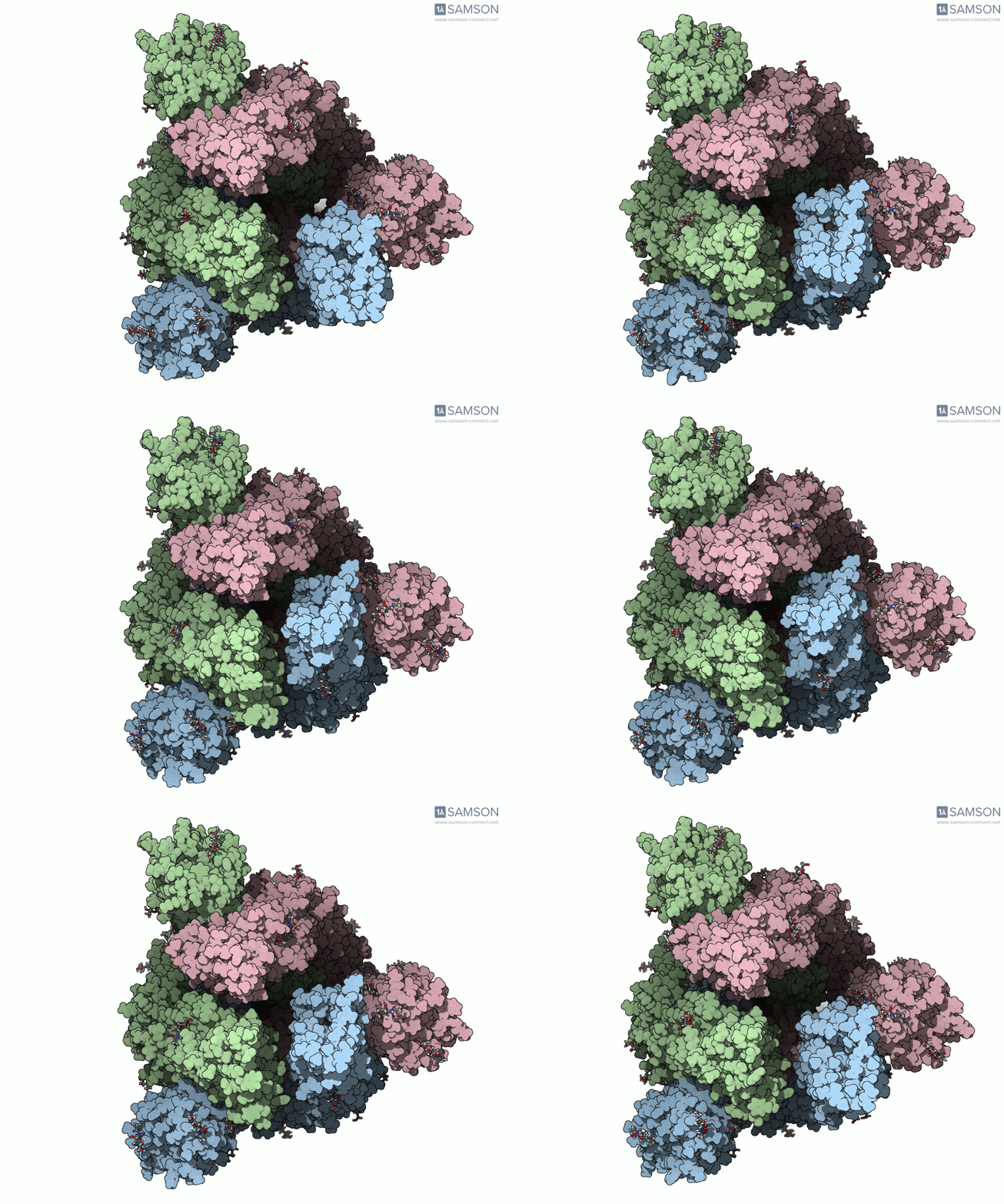
The results can be exported in several formats, including PDB files, to integrate with other modeling workflows. You can download these example trajectories here.
Getting started with SAMSON
SAMSON makes advanced computational modeling accessible to researchers. Modules like ARAP and P-NEB are available for free, reducing the entry barrier for molecular modelers interested in systems like the SARS-CoV-2 spike.
To learn more about the SARS-CoV-2 spike workflow, visit the original documentation page: https://documentation.samson-connect.net/tutorials/sars-cov-2/coronavirus-computing-the-opening-motion-of-the-sars-cov-2-spike/.
Note: SAMSON and all SAMSON Extensions are free for non-commercial use. You can download SAMSON at https://www.samson-connect.net.