



For many molecular modelers working on editing or designing molecular systems, a common challenge lies in how to dynamically change the structure of a molecule while maintaining computational stability and physical consistency. Actions as simple as dragging an atom to rearrange a molecule can become cumbersome if the tool doesn’t respond intuitively—bonds may either resist overly, or break in unrealistic ways.
This is where the Interactive Modeling Universal Force Field (IM-UFF) in SAMSON offers a thoughtful solution. IM-UFF builds upon the widely used Universal Force Field (UFF), but adds contributions specifically aimed at interactive tasks like bonding, breaking, and topological transitions—all without needing to stop your simulation.
Modeling in Motion: How It Works
Once you load a molecular system in SAMSON and activate IM-UFF (via Edit > Simulate > Add simulator and selecting “Interactive Modeling Universal Force Field”), you are free to manipulate atoms directly with your mouse. Start the simulation (Edit > Simulate > Start) and watch how atoms respond based on two key settings:
- Static topology (UFF only): When unchecked, you’re in fully interactive mode. Atoms and bonds will update according to proximity and underlying physical rules.
- Keep vdW for manipulated: When disabled, atoms you’re dragging aren’t subject to van der Waals repulsion—helpful when trying to force atoms near one another to form new bonds.
The IM-UFF engine is designed to help you edit aggressively without breaking the molecular modeling engine. Rather than snapping or freezing, gently dragging atoms allows the model to “flow” into new topologies. If you pull hard enough, bonds break; bring atoms close, and new bonds may form—without manual retyping or bond reassignment.
What Does This Look Like?
Here’s a short demonstration: dragging atoms and watching how the energy landscape and bond configuration adapt in real-time.
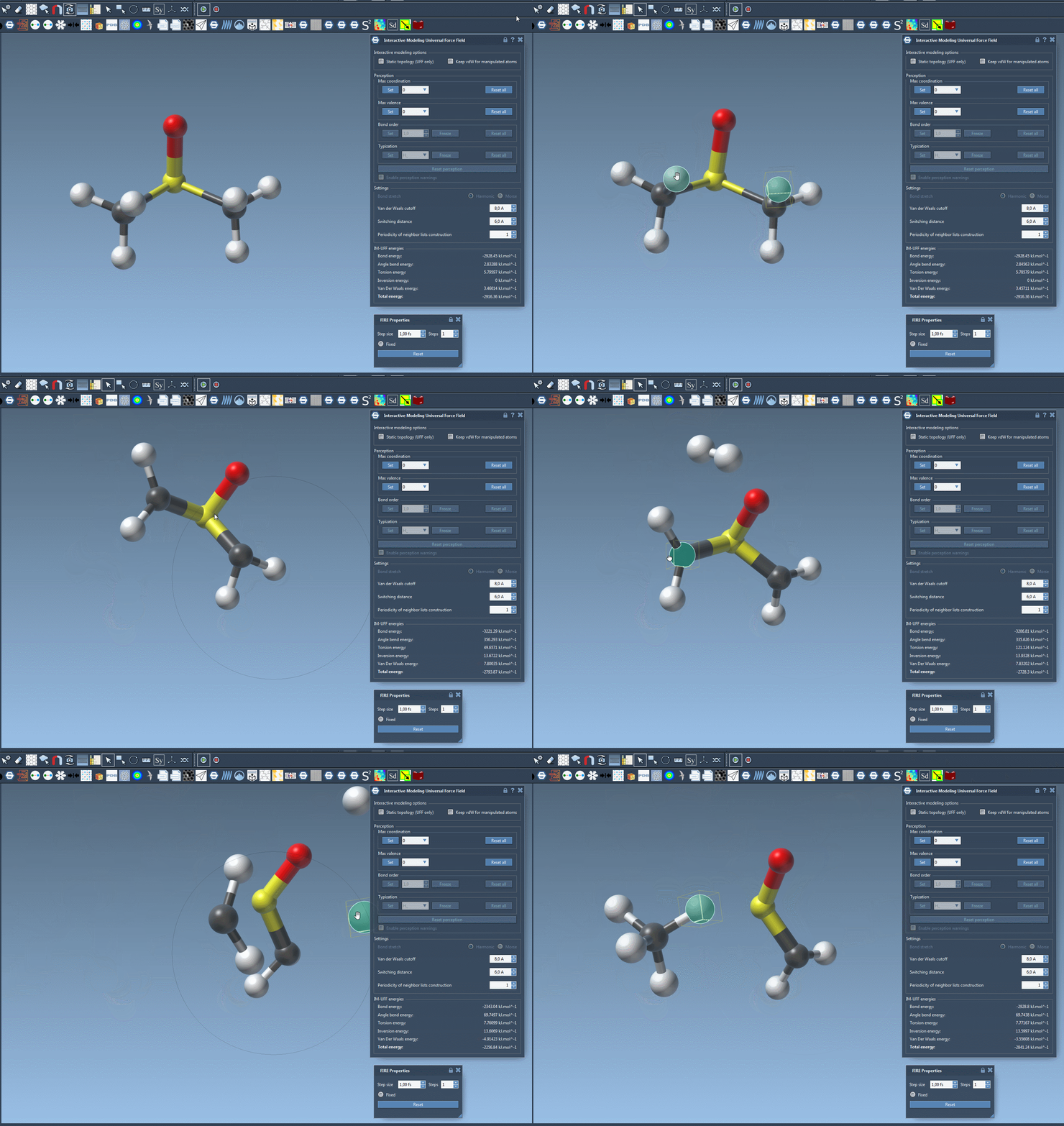
In the bottom panel of the interface, you’ll see real-time energy updates. This includes components such as bond stretching, angle bending, and van der Waals contributions, helping you understand how your manipulations affect the system’s stability.
Why It Matters
For researchers and educators, IM-UFF eliminates much of the friction typically associated with topological editing. You don’t need to stop your simulation to create or delete a bond. There’s no need to configure atom types manually—IM-UFF continuously estimates typization based on atomic positions. This freedom to focus on molecular design, without worrying about technical inconsistencies, makes iterative modeling more natural and productive.
Whether you’re building a new structure, demonstrating chemical behavior to students, or simply exploring how systems respond under stress, IM-UFF offers a seamless environment for practical interactive modeling.
To learn more about how to configure, customize, and get the most out of this feature, visit the full documentation page here.
SAMSON and all SAMSON Extensions are free for non-commercial use. You can download SAMSON at https://www.samson-connect.net.