



In molecular modeling, geometry optimization is fundamental—whether you’re prepping a structure for simulation, cleaning up PDB data, or simply hunting for a local energy minimum. Yet, many continue to rely on the steepest descent algorithm, even when faster, more suitable alternatives exist, especially for systems involving large-scale atomic movements.
That’s where the FIRE (Fast Inertial Relaxation Engine) minimizer can help. Integrated as a State Updater in SAMSON, FIRE offers faster convergence and avoids pitfalls that hamper traditional methods like steepest descent.
Why switch to FIRE?
Steepest descent minimizes energy by stepping against the gradient. It’s reliable but can be slow and inefficient for systems with subtle energy changes but large-scale geometric adjustments. FIRE, on the other hand, adds an inertial component inspired by physical motion. This can lead to much faster relaxation in common workflows like pre-equilibration.
A quick visual comparison
Let’s look at how FIRE performs compared to steepest descent when relaxing a molecular system:
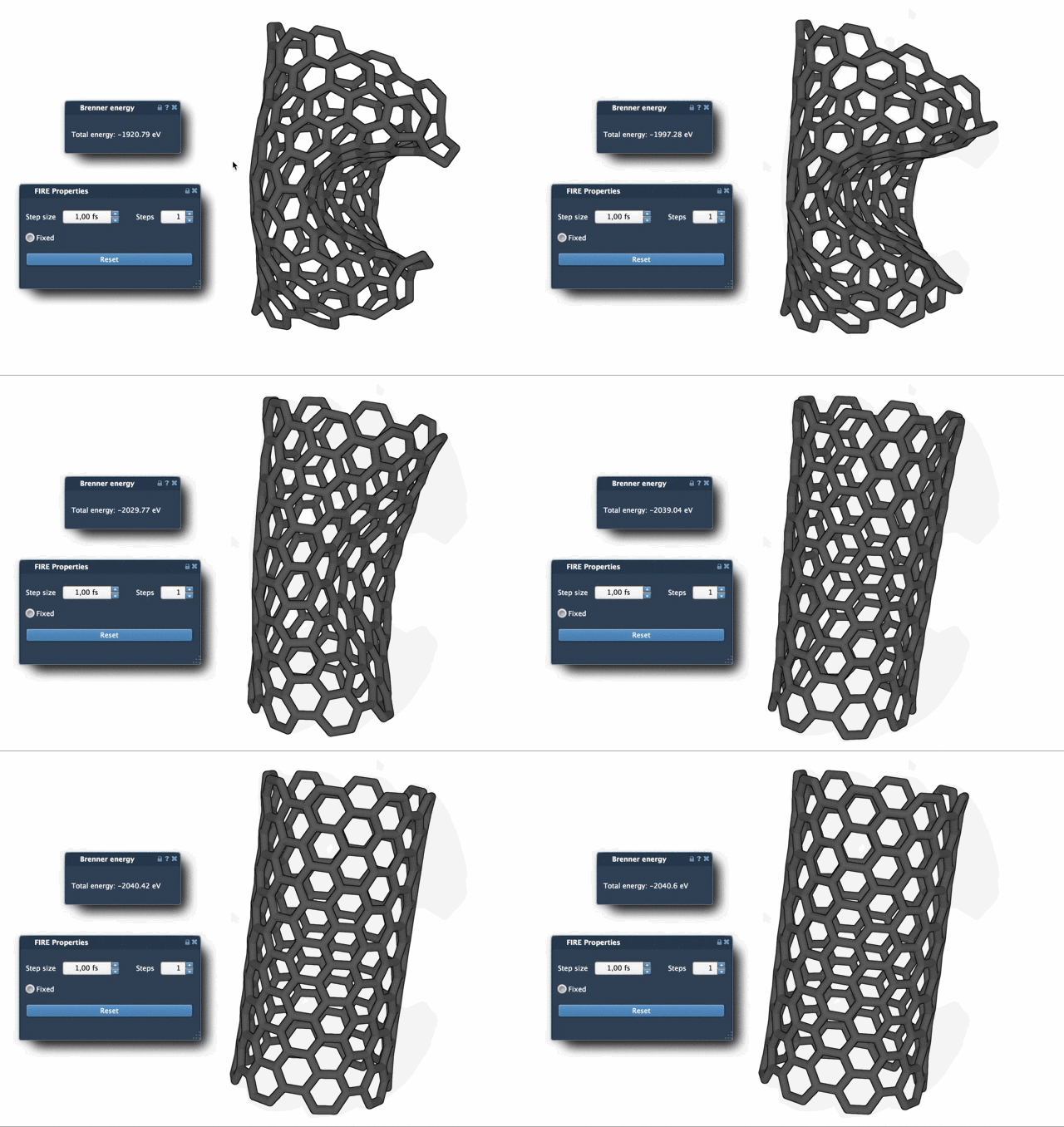
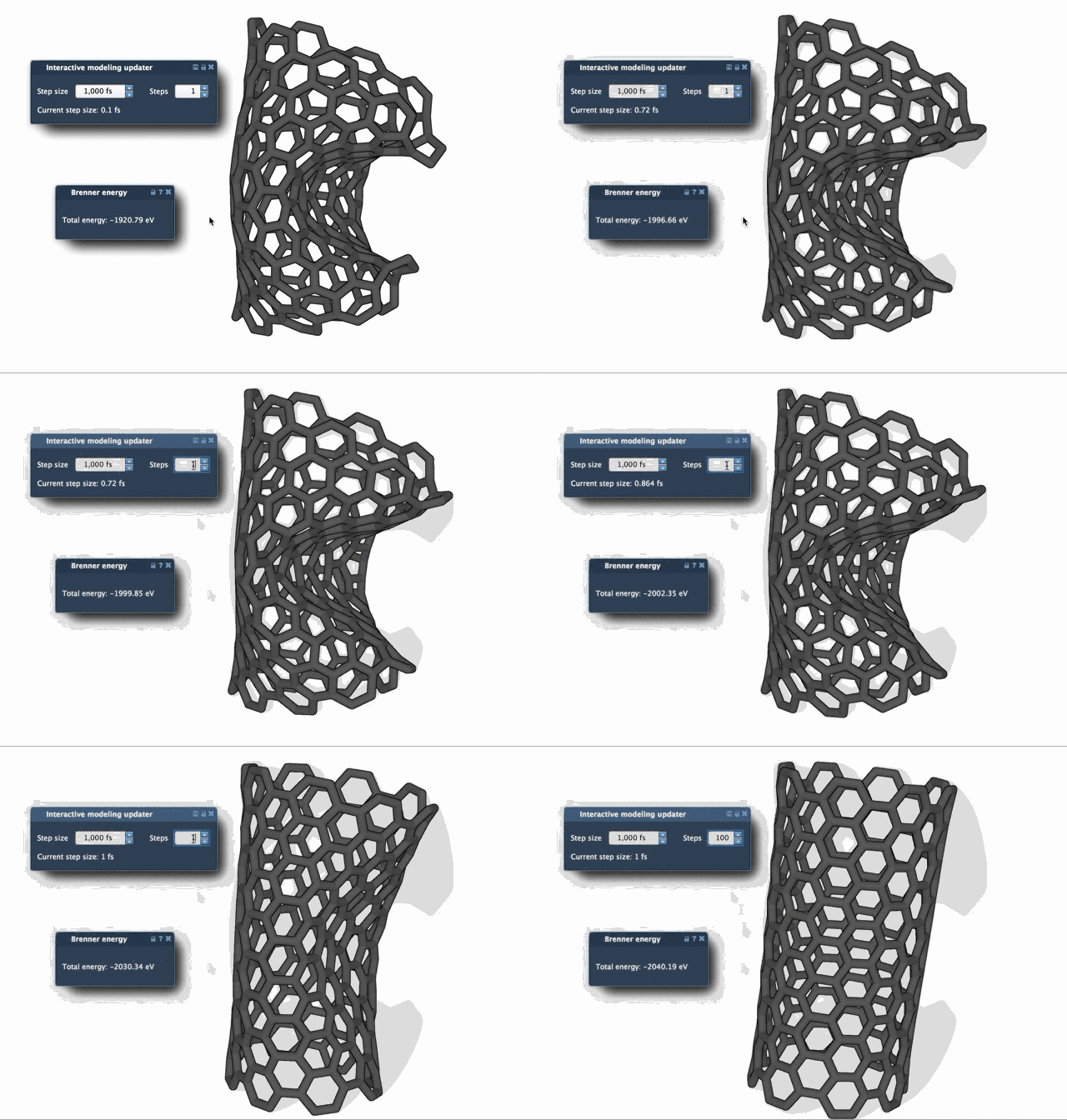
When FIRE makes a difference
- Simulating flexible systems: When dealing with biomolecules or other structures with many degrees of freedom.
- Pre-simulation cleanup: Remove steric clashes or quick-optimize before molecular dynamics runs.
- Working with experimental structures: NMR-derived conformations often benefit from fast relaxation.
Using the FIRE Minimizer in SAMSON
Getting started is straightforward:
- Install the FIRE Minimizer Extension from SAMSON Connect.
- Load a molecule (PDB, MOL2, or other supported formats).
- Add a simulator: Go to
Edit > Add Simulator, choose your interaction model, then select FIRE in the State Updaters list.
Tuning your settings
| Setting | Description |
|---|---|
| Step size | Controls the integration timestep. Start small; adjust as needed. |
| Steps | Number of minimization steps before updating the viewport (can be increased to get clearer visual info). |
| Fixed | Optional. Forces step size to be constant instead of adaptive. |
Integrated into your workflow
FIRE isn’t just for visualizing minimization. Since it’s implemented as a State Updater in SAMSON, it works in any supported app or extension. For example, it’s used in Molecular Restrainer to quickly relax NMR-derived conformations.
If you find yourself recalculating structures using slow minimization methods, it’s worth trying FIRE—it might save you both time and frustration.
To learn more, visit the full documentation: https://documentation.samson-connect.net/tutorials/fire/ready-set-fire/.
SAMSON and all SAMSON Extensions are free for non-commercial use. Get SAMSON at https://www.samson-connect.net.