



Geometry optimization is an essential step in molecular modeling workflows, whether you’re preparing initial configurations for simulations or cleaning up experimental structures. But if you’ve ever felt that your steepest descent minimizer just isn’t converging fast enough—especially in systems with complex, collective motions—you’re not alone.
This is where the FIRE Minimizer (Fast Inertial Relaxation Engine) in SAMSON comes in. Designed for efficiency, FIRE offers a robust alternative that outperforms traditional steepest descent methods in many typical modeling scenarios.
Why Optimization Speed Matters
Suppose you’re refining a large biomolecular system or working with a slightly noisy structure from NMR data. Even small geometry changes can lead to long minimization cycles with steepest descent, costing you time every step of the way. FIRE optimizes differently: it uses inertial dynamics to accelerate convergence, particularly when the system’s potential energy isn’t dropping much, but the structure is still evolving.
FIRE vs. Steepest Descent: A Visual Comparison
Let’s concretely compare the two methods. Below are snapshots showing how the FIRE minimizer and the steepest descent minimizer evolve over time for the same initial molecular structure.
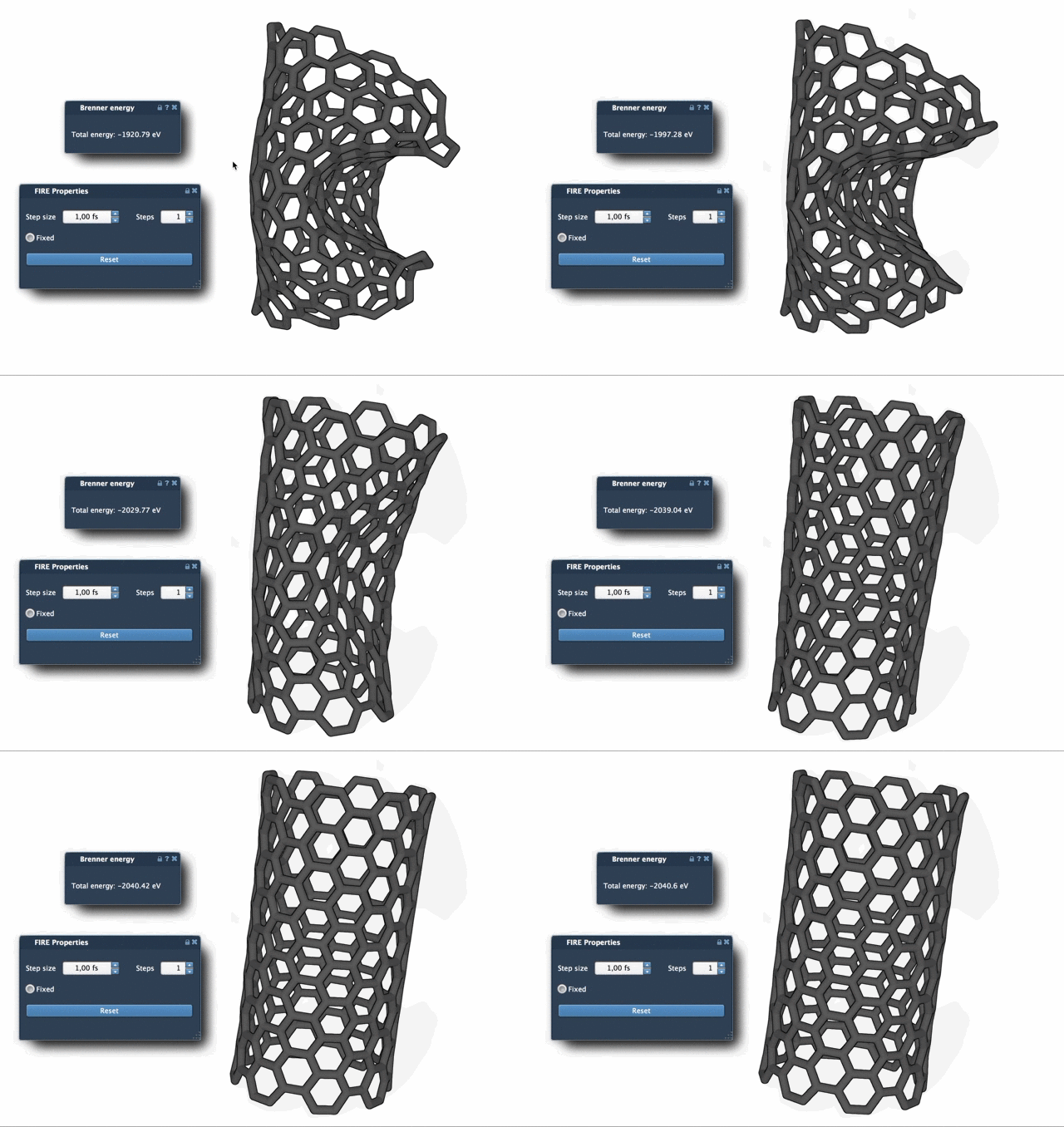
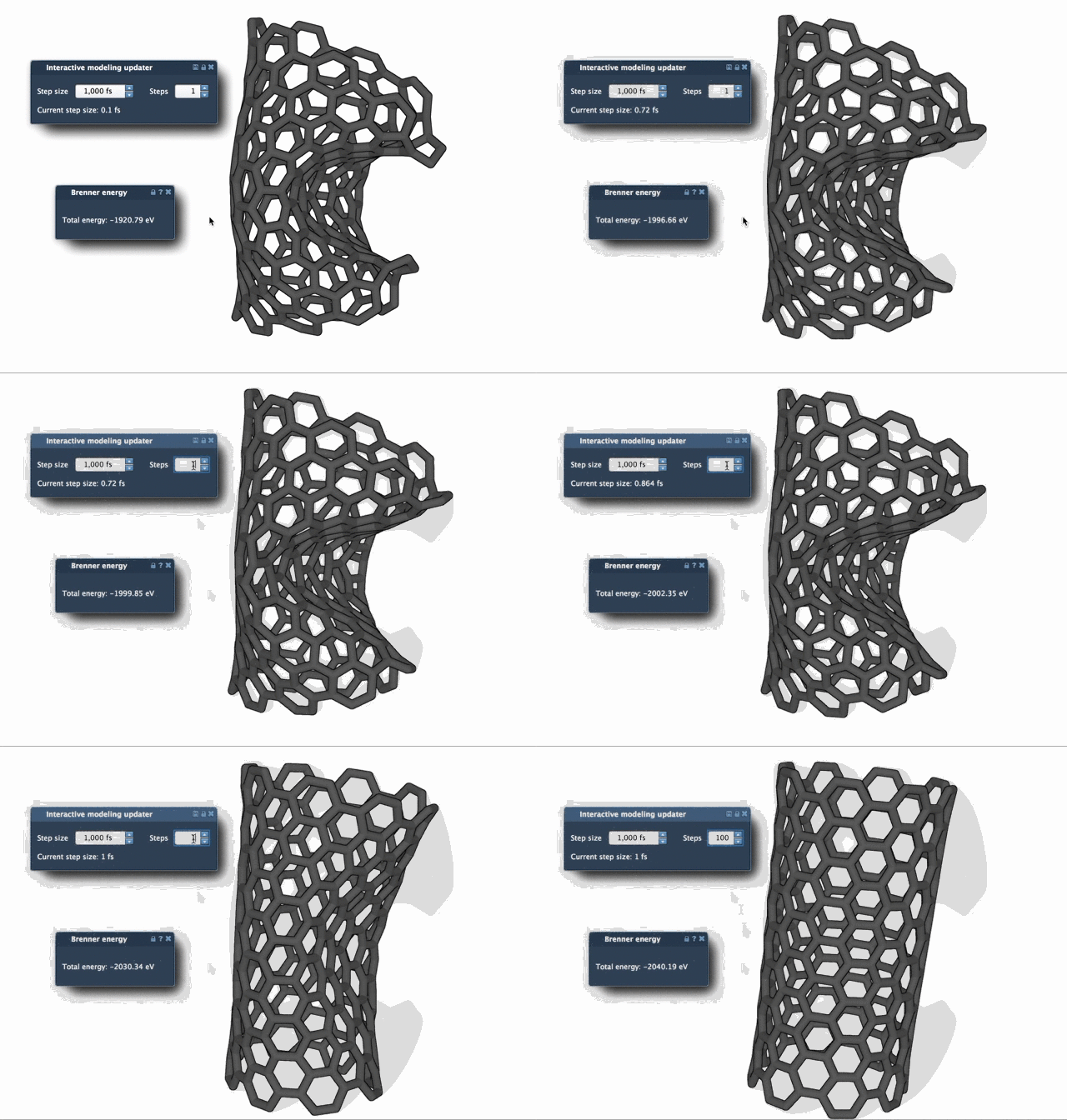
In the FIRE animation, you’ll notice a smoother yet faster evolution towards a stable structure. Meanwhile, the steepest descent version progresses with smaller, less coordinated steps, which leads to slower convergence overall.
When Should You Consider FIRE?
- When you’re preparing systems for molecular dynamics and need a quick pre-simulation cleanup.
- If your molecule has regions that undergo large-scale motion (e.g. flexible loops in proteins).
- When you’re working interactively and want a faster response with fewer laggy updates.
Tips for Better Use
To make the most of FIRE in your SAMSON setup:
- Increase the Steps parameter in FIRE settings to update the viewport less frequently. This will give a much clearer sense of structural evolution.
- Use it as part of modular workflows. Since FIRE is a SAMSON State Updater, it works inside simulations, extensions, or other apps like the Molecular Restrainer.
Conclusion
If you’re spending more time waiting for relaxations to finish than actually designing molecules, switching to FIRE might help. It’s easy to set up, integrates into most SAMSON workflows, and gives more control over optimization behavior.
Learn more about the FIRE Minimizer here.
SAMSON and all SAMSON Extensions are free for non-commercial use. Get SAMSON today at https://www.samson-connect.net.