



For molecular biophysicists and structural biologists, preparing lipid bilayers around membrane proteins can be an essential yet tedious task. Whether you’re setting up simulations of transmembrane channels, studying membrane-protein interactions, or exploring lipid dynamics, aligning lipids precisely around your protein structure often requires complex system preparation, tedious atom positioning, and frequent trial and error.
Molecular Box Builder, an extension of the SAMSON platform, offers a straightforward way to construct lipid monolayers and bilayers around membrane proteins. It removes many manual steps and lets you focus on the science.
Why this matters
Realistic membrane environments are critical for proper membrane protein function. However, building such environments is often a bottleneck in setting up molecular dynamics simulations. Researchers frequently face challenges in configuring lipids to match system sizes and avoid atom clashes, especially when placing thousands of lipids around proteins. The Molecular Box Builder automates molecule placement while allowing fine control over orientation and margins, making lipid system setup significantly more accessible.
Step-by-step: Adding a Lipid Layer Around a Protein
1. Aligning the Protein
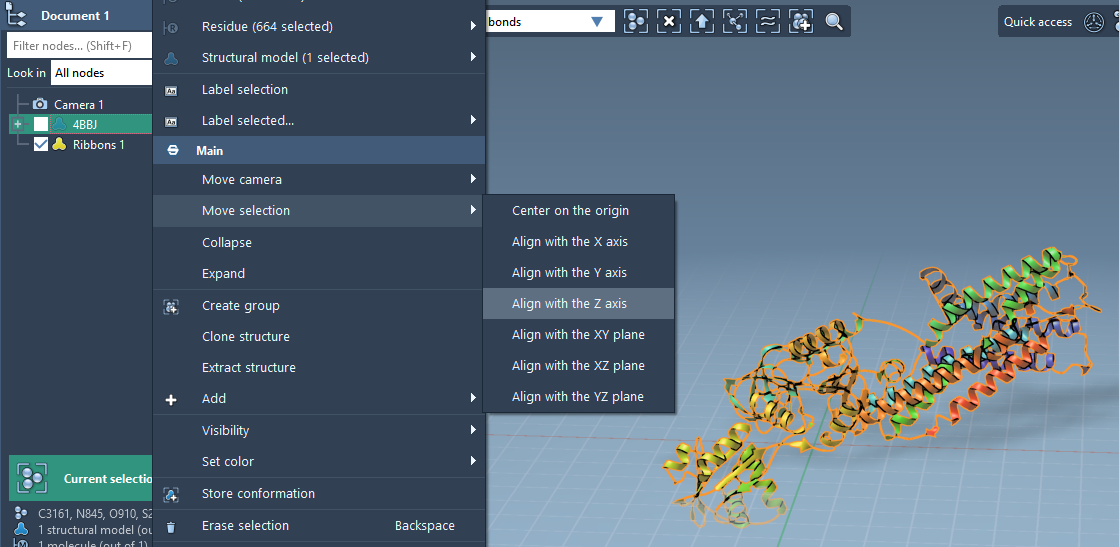
To create a realistic lipid membrane around a protein, you’ll want to orient the protein so that its transmembrane axis corresponds with the simulation’s z-axis:
- In the Document view, right-click the protein.
- Select Move selection > Align with Z axis.
- Then choose Move selection > Center on the origin.
2. Set the Lipid
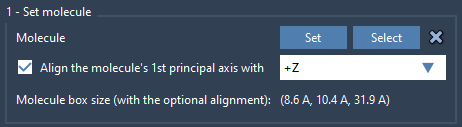
Import a lipid structure (e.g. POPC or another lipid type you use in simulations). Then:
- Select the lipid molecule.
- Click Set in the Molecular Box Builder interface.
- Align its main axis to the
+Zdirection.
3. Define the Box
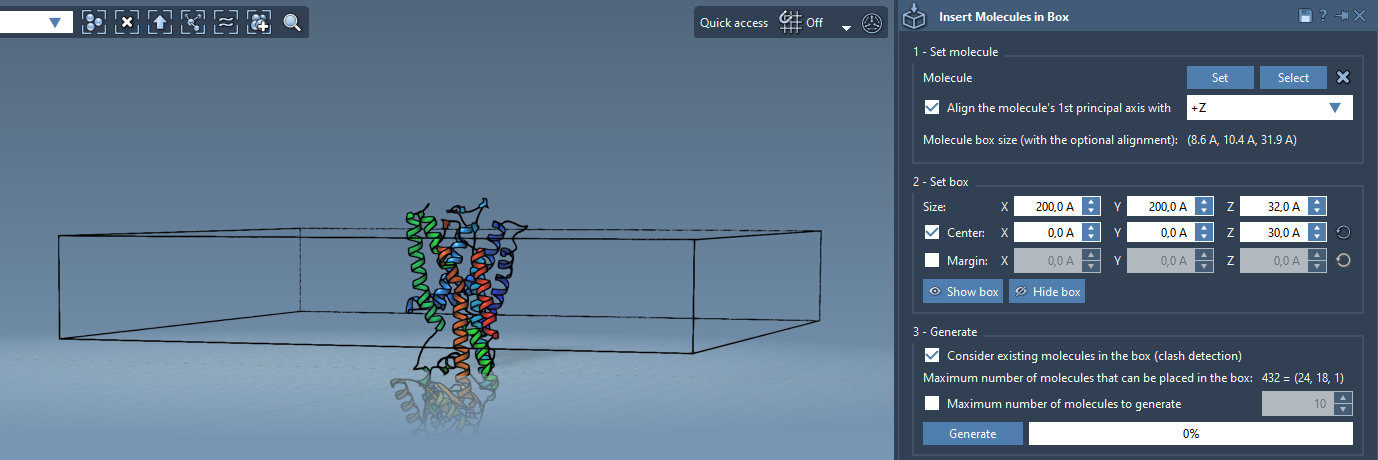
With the protein centered at the origin and the lipid set, it’s time to define a box where lipids will be placed:
- Adjust the box to surround the protein in the
XYplane with a small height inZ. - Center the box on the protein (you can use the Center option in the app).
- Specify the margin to control how closely the lipids are placed.
4. Generate the Layer
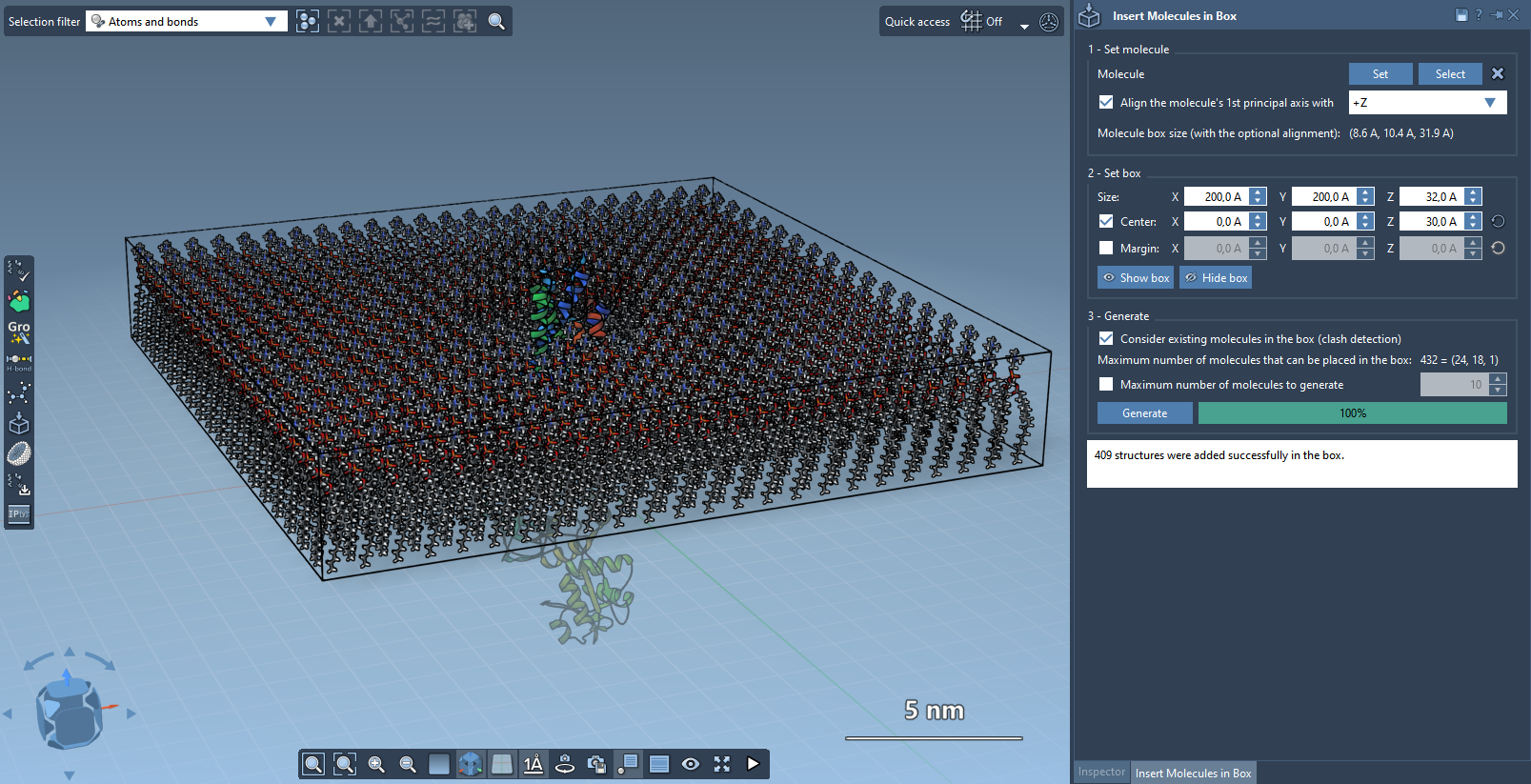
Finally, you can populate the box with lipid molecules:
- Enable Consider existing molecules in the box so the tool avoids overlapping with the protein.
- Click Generate.
You’ll now have lipids arranged in a monolayer around the protein, fully respecting spatial constraints.
Going Further: Building a Bilayer
You can easily extend the setup to a bilayer configuration:
- First, generate a layer with lipid molecules aligned to
+Z. - Then, shift the center of the box slightly in the negative
Zdirection. - Add another set of lipids, this time aligning them to
-Z.
This process gives you a proper bilayer sandwiching the protein.
From System Setup to Simulation
Once your lipid configuration is ready, you can proceed to solvation, ion placement, and minimization/simulation—including using extensions like GROMACS Wizard.
For more details and examples, visit the full tutorial: Molecular Box Builder documentation.
SAMSON and all SAMSON Extensions are free for non-commercial use. You can download SAMSON here.