



Protein structures are often available as snapshots: one file for a closed conformation, another for an open one. But when you are trying to understand a conformational change, two endpoints leave an important question unanswered: what might the movement between them look like? A transition path can help you inspect that change and communicate it—but generating one from two structures is not always a matter of pressing “interpolate.”
The SARS-CoV-2 spike is a useful example. In its closed, or down, state, the receptor-binding domain is less accessible. In an open, or up, state, it can engage the human receptor ACE2. The motion matters biologically, but the available structures are still snapshots, not a recording of the spike moving. A computed path offers a way to explore a possible structural transition, while keeping that distinction clear.
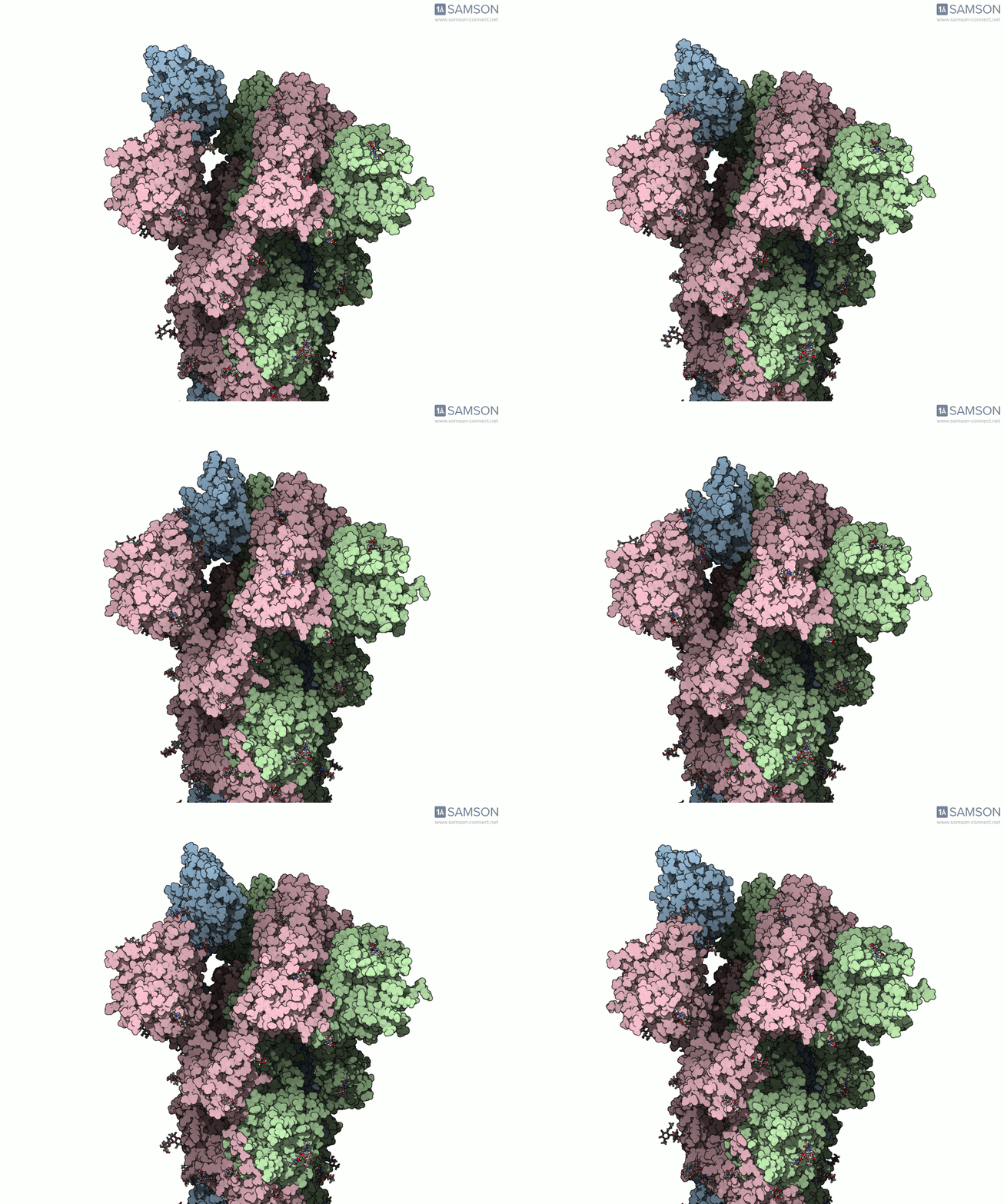
Why matching endpoints can be tricky
For the example, the closed spike structure is PDB 6VXX and the open structure is PDB 6VYB. One practical complication is that these structures differ in their number of residues. That matters because a path-generation method needs to work with corresponding atoms in its starting and goal conformations. If the structures do not describe the same set of atoms, the workflow needs an intermediate step rather than treating the two files as directly interchangeable.
This is a common modeling lesson: before asking how a protein moves, check what is actually being compared. Differences in residue coverage, missing regions, or atom correspondence can affect the setup and interpretation of a path. A visually smooth animation does not, by itself, establish that the structures were comparable or that the motion is physically verified.
A practical path-building sequence
The SAMSON example starts by preparing both endpoint structures. Bond orders in the sugars are adjusted with a Python script, then hydrogens are added and the structures are minimized. These preparation steps help make the structures suitable for the subsequent calculations.
Next, the ARAP Interpolation Path module generates an initial path between the open and closed states. In this workflow, the open structure is used as the starting conformation and the closed structure as the goal. Because the path corresponds to the starting structure, the residue-count difference requires extra care: a closed-like conformation is taken from the generated path and minimized, then used as a compatible goal for a new path calculation. The P-NEB module is used afterward to improve that path.
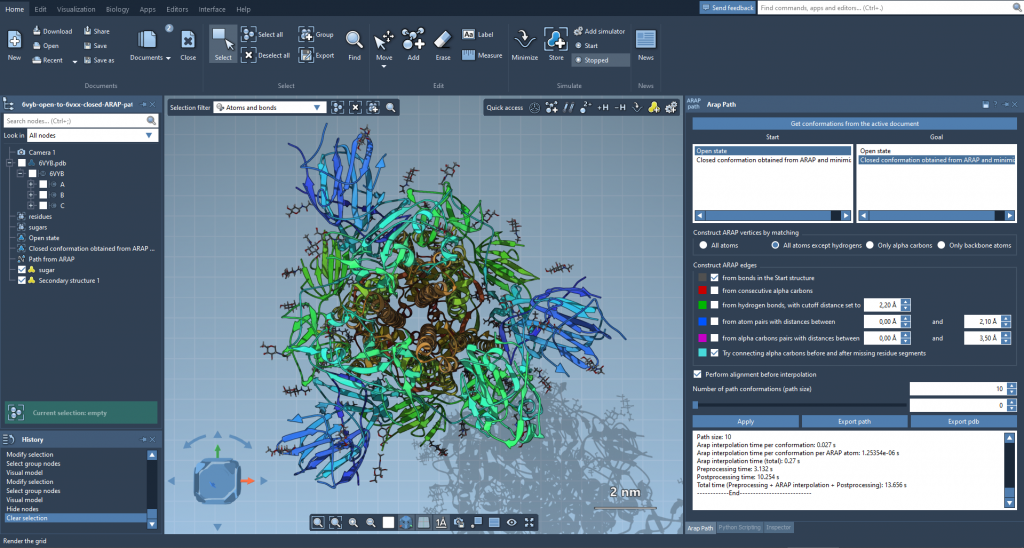
The reported computation times provide a sense of scale for this particular example: the initial ARAP path took less than half a minute on a laptop, and the P-NEB refinement took about 15 minutes. These are specific to the documented setup, not guarantees for other systems, structures, or hardware.
What the trajectory can—and cannot—tell you
A trajectory makes a structural change easier to inspect from different angles. The downloadable example includes separate PDB trajectory files, a single PDB trajectory file, and a SAMSON-format file. The SAMSON file contains the spike structure, its open and closed conformations, and paths produced by ARAP and P-NEB. You can use it to examine the structures and animate the path in SAMSON.
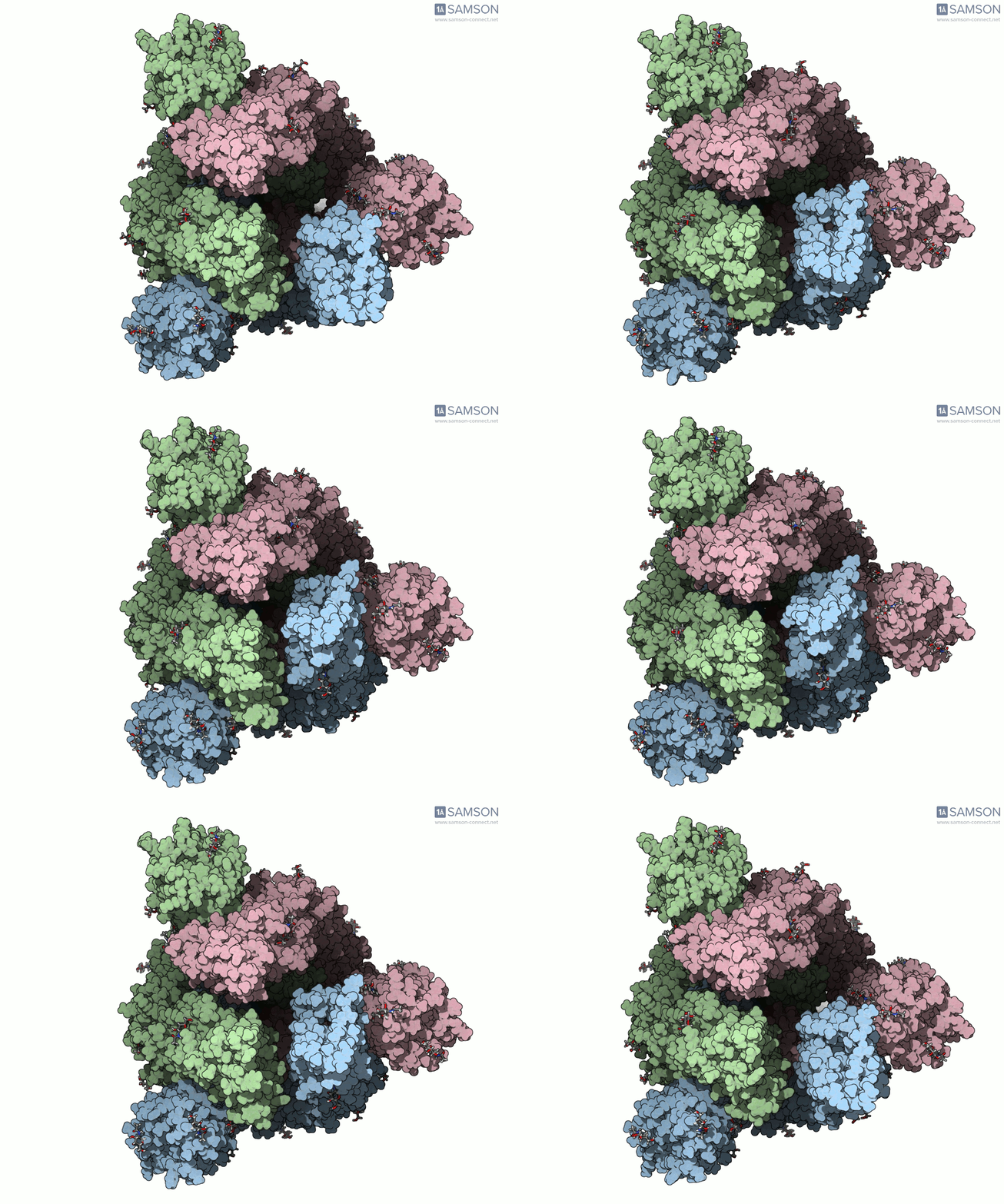
It is important to treat the supplied trajectory as an illustrative computed path, not as an experimentally observed movie or a validated account of the spike’s exact motion. The documentation notes that the trajectories are provided as is and have not been experimentally verified; further processing or validation may be needed before using them in other calculations. That caveat is useful whenever a modeled pathway is shared: make clear whether it is measured, simulated, or computed as an interpolation between known structures.
If you are building a transition path for another protein, the transferable workflow is to choose and inspect endpoint structures, prepare them consistently, check atom and residue correspondence, generate an initial path, and then refine or validate it for your research question. The method can help bridge the gap between static structures, but the biological interpretation still depends on the quality of the inputs and the limits of the calculation.
For the full example, downloads, and module details, learn more in the original documentation.
Note: SAMSON and all SAMSON Extensions are free for non-commercial use. Get SAMSON.