



When building or editing molecular systems, small tweaks often lead to unexpected results. Move an atom, and you might accidentally break a bond. Shift a structure, and suddenly your topology is no longer valid. This is especially painful when iteratively designing molecules, reacting atoms, or building from scratch — everything feels fragile, and it’s easy to make mistakes.
To solve this, SAMSON offers the Interactive Modeling – Universal Force Field (IM-UFF) interaction model. If you’ve ever wished for a more forgiving and intuitive interface during molecular design, this might be what you need.
Smooth Interactions, Smart Behavior
The IM-UFF interaction model extends the classic UFF model to allow interactive editing without constantly worrying about breaking your molecule beyond repair. It updates the topology on the fly, letting you drag atoms, connect fragments, or split structures, without needing to rebuild everything when something gets out of place.
This works because IM-UFF treats covalent bonds and atom types as continuously adaptable. When you slightly move atoms, bonds remain intact and the structure adapts locally. Move atoms further, and bonds break or form automatically, based on physics-inspired rules drawn from the underlying force field.
Ready to Try?
Here’s how to run an IM-UFF simulation:
- First, make sure you’ve installed the IM-UFF extension.
- Open a molecular document.
- Go to
Edit > Simulate > Add simulator(shortcut Ctrl+Shift+M or Cmd+Shift+M). - Select Interactive Modeling Universal Force Field as the interaction model.
- Choose your simulation engine (e.g., FIRE).
- Click OK to load the settings.
Start the simulation with Edit > Simulate > Start. Now drag atoms around with your mouse — you’ll notice that structures stay logically consistent. Stretching bonds doesn’t always snap them; compressing atoms doesn’t make them explode. And that’s the point: it behaves like a real molecule might.
Why It Matters
This seemingly simple improvement addresses a major frustration in molecular design workflows. Small modeling actions no longer require constant backtracking. IM-UFF helps you explore possibilities rather than fear mistakes.
Two specific options make this system even more robust during hands-on editing:
- Static topology: When checked, you constrain the topology to standard UFF behavior. Uncheck to enable full IM-UFF interaction.
- Keep vdW for manipulated: Activating this ensures van der Waals interactions are considered during mouse manipulations. Turning it off can make it easier to bring distant fragments together without unwanted repulsion.
These features make it far easier to create, test, and refine models interactively. Whether you’re crafting new compounds or working through reaction pathways, you get more flexibility — with fewer interruptions.
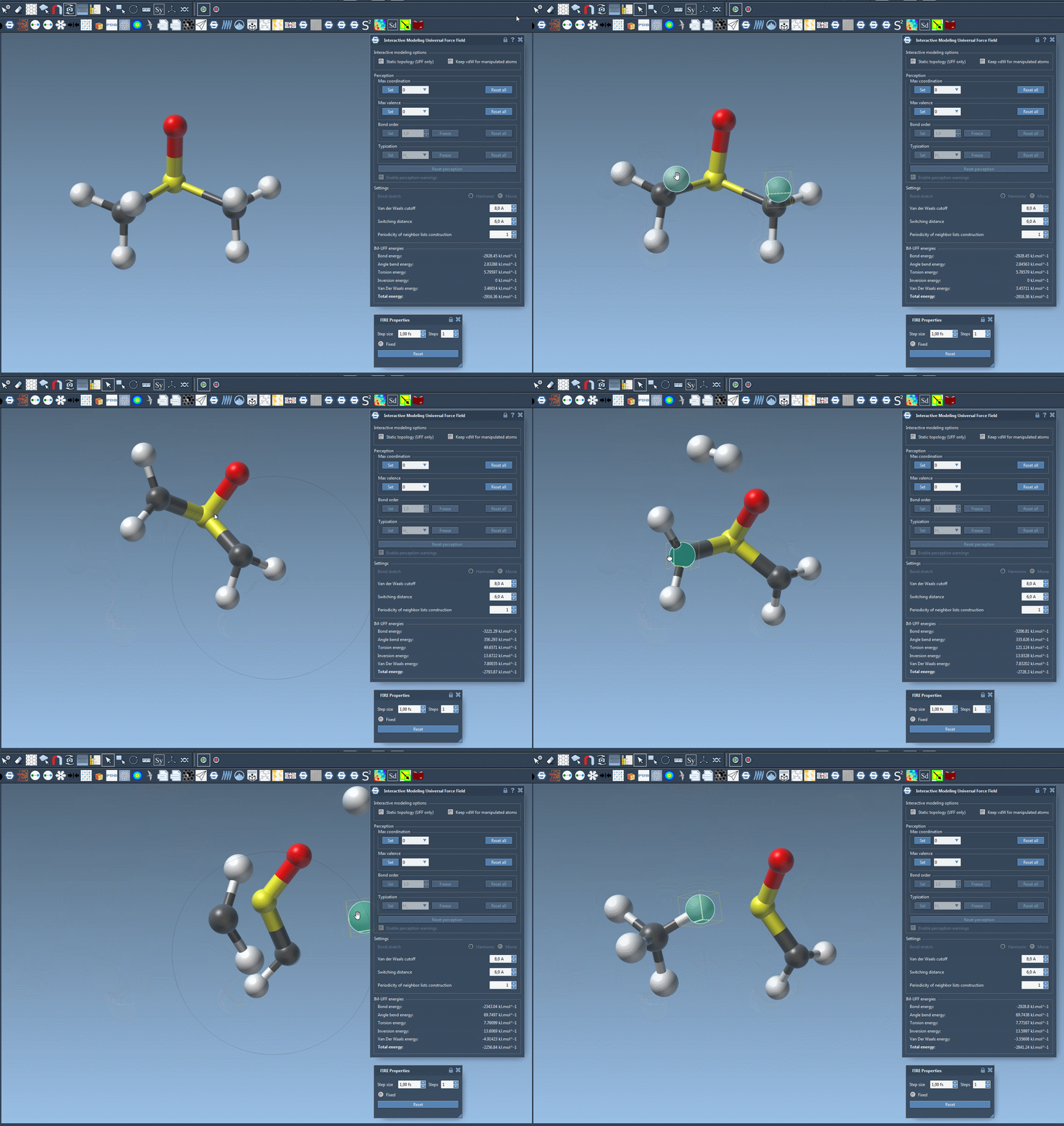
Want more customization? You can also adjust van der Waals parameters, periodic neighbor lists, and typization behavior. Check out the full documentation article for the details.
Learn more in the full tutorial.
SAMSON and all SAMSON Extensions are free for non-commercial use. Get SAMSON at www.samson-connect.net.