



For molecular modelers, ensuring that a protein structure is realistic and energetically favorable often involves handling local conformational tweaks. Spotting and correcting outliers among residues is a common pain point, especially when preparing for simulations or refining models. In this blog post, we explore the Interactive Residue Editing feature within SAMSON’s Interactive Ramachandran Plot. This tool offers an intuitive approach to visualize and directly adjust protein dihedral angles.
Why Interactive Editing Matters
The Ramachandran plot is a valuable tool for analyzing protein backbone conformations. It maps the sterically allowed regions for φ (phi) and ψ (psi) dihedral angles and highlights conformations that are energetically unfavorable. But what happens when your protein has outliers? Traditional approaches to correct those residues often lack interactivity and real-time feedback.
With SAMSON’s Interactive Ramachandran Plot, you can explore and edit these conformations interactively, bridging the gap between visualization and action.
Step 1: Editing Directly in the Ramachandran Plot
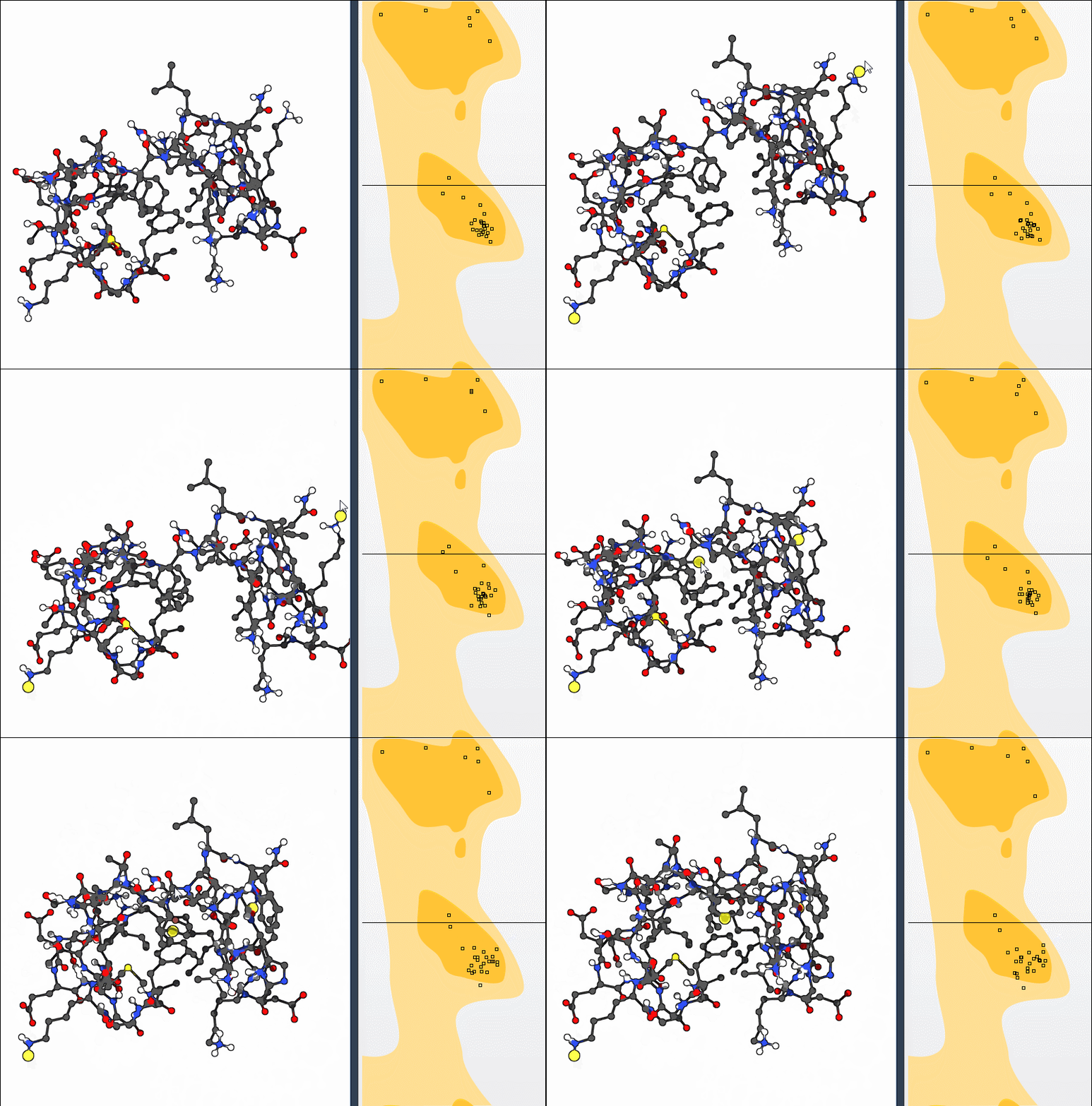
Drag Residues for Real-Time Updates
- Select any residue represented as a dot in the Ramachandran plot. For instance, you can focus on a residue like proline.
- Grab the dot and drag it to a desired position in the plot. This updates the dihedral angles (φ and ψ) in real time.
- The corresponding 3D structure of the protein is updated instantly, allowing you to correlate changes in the plot with structural modifications.
- If the result isn’t satisfactory, simply press Ctrl/Cmd + Z to undo, preventing irreversible adjustments.
This hands-on approach removes the guesswork and makes it easier to bring residues into energetically favorable zones while maintaining full control.
Step 2: Twisting with the Twister Editor
If you’d like a 3D perspective while refining your model, the Twister Editor offers an alternative way to manipulate your protein:
- Select the Twister Editor from the left-hand menu in the SAMSON viewport. Its icon looks like this:
- Interact with the protein structure directly by twisting and manipulating its conformation in 3D.
- Similar to the first method, the updates are reflected live in the Ramachandran plot.

With live feedback, this seamlessly integrates global visualization with local conformation refinement.
Enhancing Molecular Design Readiness
Protein modeling is more than just creating structures; it involves fine-tuning dihedral angles to achieve realistic and stable conformations. The capability to visualize outliers, tweak them interactively, and undo if needed ensures not just accuracy but also efficiency.
These tools empower modelers to refine homology models, study active sites, and prepare realistic protein structures for tasks like docking or dynamics simulation. Whether you’re an expert or a student exploring protein modeling, this workflow bridges analysis with action for direct problem-solving.
Learn More
For detailed instructions and additional tips about the Interactive Ramachandran Plot, explore the full documentation page. Discover how this tool integrates into your molecular design workflows.
Note: SAMSON and all SAMSON Extensions are free for non-commercial use. Get SAMSON at www.samson-connect.net.