Save Time with Custom Visual Presets in Molecular Modeling

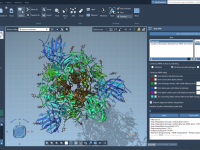
One of the most time-consuming tasks in molecular modeling is consistently producing clear and accurate representations of complex molecular systems. Switching representations, tweaking visibility, adjusting colors, labeling atoms — these repetitive steps can quickly stack up, especially when working on…

Filtering Molecular Backbones by Atomic Composition in SAMSON

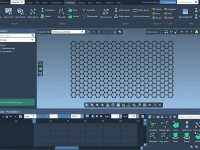
Molecular modelers often need to filter structural elements based on their atomic composition. Whether you’re studying peptides, coarse-grained models, or large macromolecular complexes, being able to select parts of molecules that meet specific atom count criteria can save time and…

Revealing Protein Interfaces with Symmetry Mates in SAMSON

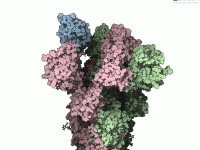
When working with protein structures from the Protein Data Bank (PDB), researchers commonly analyze individual asymmetric units. However, much of the biological function and structural insight lies beyond the asymmetric unit — in the full biological assembly. These complete assemblies…

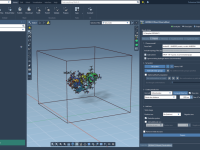
Choosing the Best Unit Cell Shape in GROMACS Simulations

When setting up molecular dynamics simulations using GROMACS, one common but often confusing step is defining your system’s boundary conditions. Molecular modelers frequently ask: Which unit cell shape is best for my system?. This blog post explores this issue and…