



Category: Uncategorized
Avoiding Common Pitfalls When Setting Ligand Atoms in Unbinding Pathway Simulations
Effortlessly Track Atomic Motion in Your Presentations
Clean Dozens of Protein Files in Seconds with Batch Protein Prepare
Efficiently Target Residues in Molecular Models with Smart Tagging
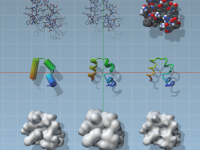
Understanding Visual Models in SAMSON: What They Are and How to Use Them
Visualizing Molecular Trajectories with the Record Path Animation in SAMSON
Preview and Create Symmetric Protein Replicas with Ease
Creating Coarse-Grained Models for Multiple Protein Replicas in SAMSON

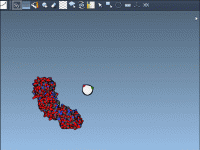
In many molecular simulations, especially when studying aggregation, crowding, or system size effects, researchers need to work with several replicas of the same protein. However, preparing these multi-replica systems for coarse-grained (CG) simulations can be a tedious and error-prone process—especially…
Saving Molecular Snapshots Made Easy: A Look at Capture Preferences in SAMSON
Avoiding Common Pitfalls When Setting Ligand Atoms in Unbinding Pathway Simulations

Effortlessly Track Atomic Motion in Your Presentations
Clean Dozens of Protein Files in Seconds with Batch Protein Prepare

Efficiently Target Residues in Molecular Models with Smart Tagging
Understanding Visual Models in SAMSON: What They Are and How to Use Them
Visualizing Molecular Trajectories with the Record Path Animation in SAMSON
Preview and Create Symmetric Protein Replicas with Ease
Creating Coarse-Grained Models for Multiple Protein Replicas in SAMSON
In many molecular simulations, especially when studying aggregation, crowding, or system size effects, researchers need to work with several replicas of the same protein. However, preparing these multi-replica systems for coarse-grained (CG) simulations can be a tedious and error-prone process—especially…
