Category: Uncategorized
Keeping Track of Molecular Movement: How to Record Atom Trajectories in Your Animation
Avoid Common Pitfalls When Creating Multiple Protein Replicas for Coarse-Grained Models
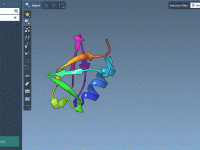
Creating coarse-grained (CG) models helps reduce simulation time and computational cost by simplifying atomistic structures. But what if you’re working on systems with multiple protein replicas—for example, repeated units in biological assemblies or membrane-embedded protein clusters? This scenario is common…
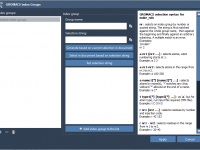
Custom index groups in GROMACS: add structure-aware selections in SAMSON
How to Minimize Just Part of a Molecule in SAMSON Without Affecting the Rest
Easily Duplicate Molecular Structures with SAMSON’s Pattern Editors
When You Need Your Own GROMACS: Using Custom Versions in GROMACS Wizard
Make It Breathe: How Pause Animations Improve Molecular Storytelling
Why Your Molecular Files Might Not Open — And What You Can Do About It
Troubleshooting Invisible Lights: A Quick Guide for Molecular Modelers
Keeping Track of Molecular Movement: How to Record Atom Trajectories in Your Animation
Avoid Common Pitfalls When Creating Multiple Protein Replicas for Coarse-Grained Models
Creating coarse-grained (CG) models helps reduce simulation time and computational cost by simplifying atomistic structures. But what if you’re working on systems with multiple protein replicas—for example, repeated units in biological assemblies or membrane-embedded protein clusters? This scenario is common…