



For molecular modelers involved in studying membrane proteins or simulating lipid-protein interactions, creating lipid bilayers around proteins can be a labor-intensive task. This process often involves multiple tools, some guesswork, and significant manual intervention. However, with SAMSON’s Molecular Box Builder, this can be done easily and efficiently, allowing you to focus on your research. Let’s explore how you can use this extension to generate a single lipid layer or even a bilayer around a protein, step by step.
Why Build Lipid Layers?
Proteins embedded in lipid bilayers (membranes) perform critical biological functions, such as enzyme activity, signaling, and molecular transport. To study their behavior, molecular modelers need realistic models of lipid-protein complexes. Building those often represents a bottleneck due to the level of detail required. Molecular Box Builder offers a clean and structured approach to simplify the process dramatically.
Step 1: Align the Protein
The key to generating a proper lipid layer is to correctly position and orient your protein first. Here’s how you can do this in SAMSON:
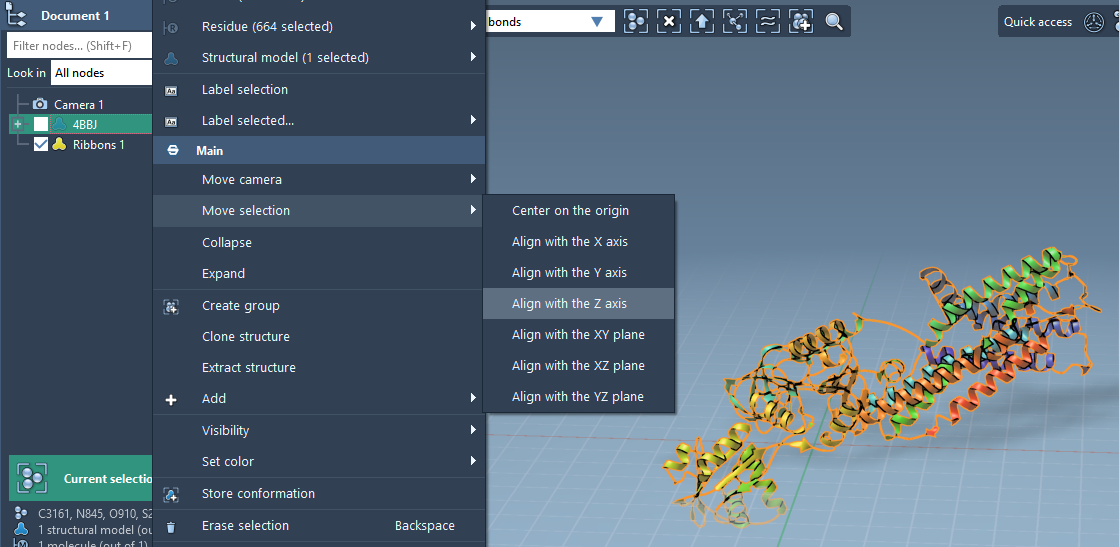
- Navigate to the Document view in SAMSON and right-click on the protein you want to align.
- From the context menu, choose: Move selection > Align with Z axis. This will align the protein along the vertical Z-axis.
- Then, select: Move selection > Center on the origin. Your protein will now be centered in the workspace.
Step 2: Set the Lipid Molecule
Once the protein is ready, it’s time to bring in the lipid molecule:
- Import the lipid molecule of your choice into the workspace (for example, using SAMSON’s database).
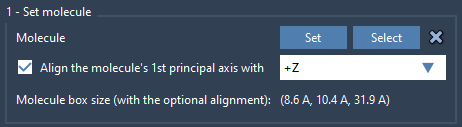
- Highlight the lipid molecule and click Set in the Molecular Box Builder app to register it as the molecule to insert.
- Orient the lipid by aligning its principal axis to the
+Zdirection. This ensures that the lipids will form a uniform layer.
Step 3: Define the Box
The next step is to create a box around the protein where the lipid layer will be formed:
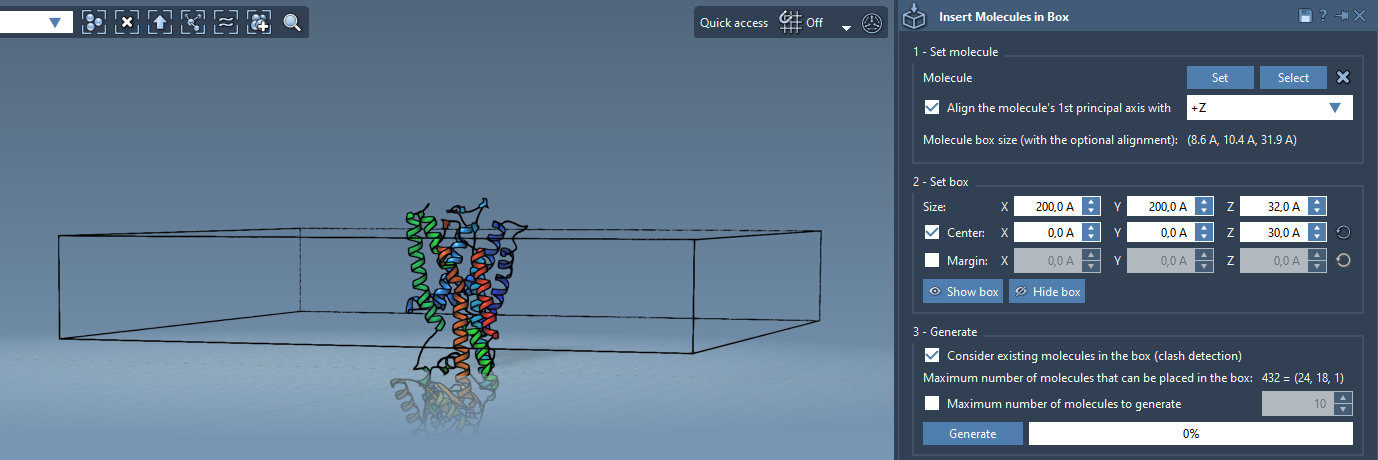
- Center the box around the protein by checking the Center option and adjusting the coordinates if needed.
- Modify the dimensions of the box to ensure it fits a single layer of lipids encompassing the protein.
- If necessary, add a margin between the inserted lipids to control spacing and avoid overlaps.
Step 4: Generate the Lipid Layer
With the box and lipid molecule defined, you’re ready to generate the layer:
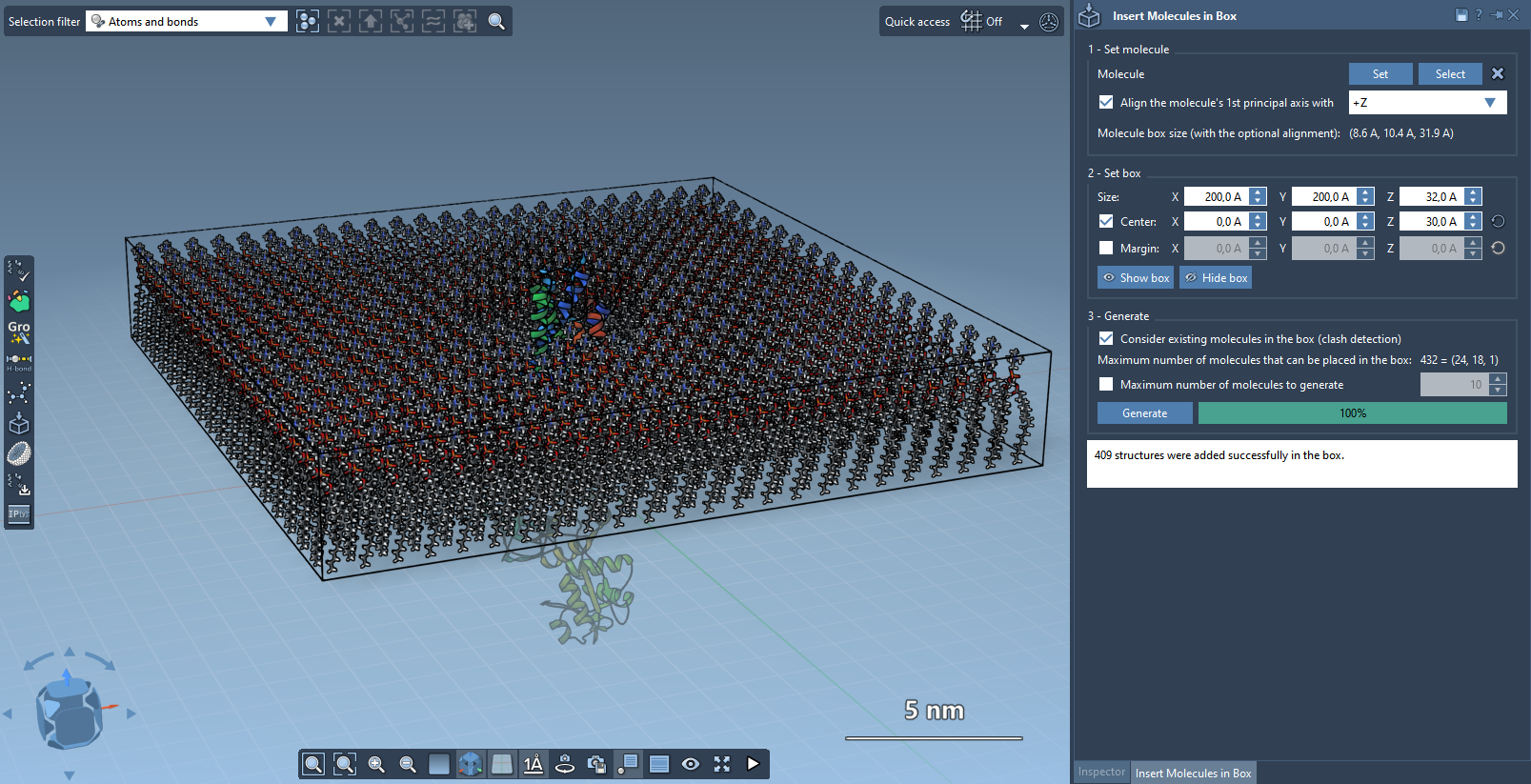
- Enable the option Consider existing molecules in the box, which ensures lipids are placed only in available spaces, avoiding clashes with the protein.
- Click Generate in the app, and in just a few seconds, your lipid layer will form around the protein.
Your result should resemble the following:
Optional: Build a Lipid Bilayer
If you’re studying membrane proteins in their native environments, you may need a lipid bilayer. This can also be achieved in SAMSON:
- Generate the first layer of lipids aligned to the
+Zaxis. - Shift the
Z-coordinate of the box center to prepare space for a second layer. - Generate the second layer, this time aligned to the
-Zaxis.
With both layers, you now have a realistic lipid bilayer around your protein, ready for further simulation and analysis.
Conclusion
The Molecular Box Builder extension in SAMSON simplifies the process of modeling lipid-protein interactions by automating tedious setup steps. Whether you need a single lipid layer or a bilayer, this tool allows you to create your systems quickly and reliably. To explore more about the Molecular Box Builder, click here.
Note: SAMSON and all SAMSON Extensions are free for non-commercial use. Click here to get started with SAMSON.