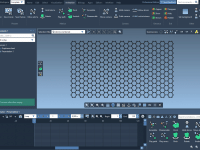
A molecular modeling task often starts as a sequence of small actions: prepare a model, adjust settings, run an operation, inspect the result, and save the work. Doing that once is manageable. Repeating it across many structures—or trying to reproduce…
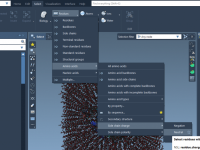
A molecular simulation can be perfectly prepared and still stall when a later step needs a group that does not exist. Maybe you need to pull on a particular region, analyze only selected residues, or separate atoms for a downstream…
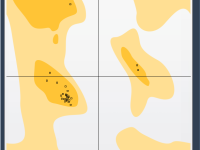
A protein model can look convincing in 3D and still contain backbone conformations worth checking. That is a frustrating problem for molecular modelers: a strained residue may be hard to spot in a crowded structure, and changing its geometry by…
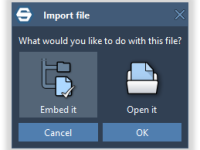
A molecular project rarely consists of a structure alone. You may also need scripts, images, research papers, data files, or folders that explain how you built or analyzed the model. When those materials live elsewhere on your computer, sharing the…
A molecular modeling task rarely fits neatly into one tool. You may need to connect an external program, use a web service, or bring existing code into your working environment. The challenge is not only finding a tool—it is knowing…
A dense molecular structure can be difficult to explain all at once. When every atom is visible from the beginning, viewers may struggle to follow which part matters or how the structure is being introduced. A progressive reveal can make…
In a molecular model, the hard part is not always finding an atom or residue. Sometimes the challenge is locating the group that organizes the part of the model you want to inspect. A query aimed at the wrong kind…
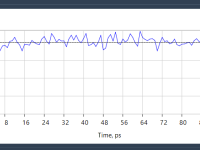
A molecular dynamics run can be perfectly configured and still be frustrating to interpret: the temperature moves around, and it is not always clear whether the system is ready for the next step. NVT equilibration is where you bring the…
A molecular model can be hard to inspect when visual models have different visibility or selection states. The first challenge is often not changing anything—it is finding the right nodes to examine. In SAMSON, the Node Specification Language (NSL) provides…
A crowded molecular view can be hard to read even when every atom and chain is visible. Color can help separate parts of a structure or reveal a changing value—but the wrong palette can make categories look related, hide differences,…