Why Only One Editor Can Be Active at a Time in SAMSON

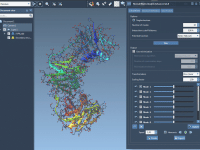
When working with complex molecular models, it’s easy to get pulled in many directions—building structures, editing geometries, running analyses, visualizing data. With so many tools available in SAMSON, some users wonder why the platform restricts them to using only one…

Making Atoms Appear When You Want Them To

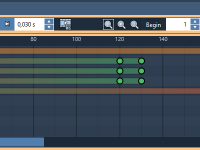
Molecular animations are a powerful way to explain complex ideas—especially when presenting dynamic molecular processes such as docking, conformational changes, or molecular interactions. However, many researchers and educators struggle with getting things to appear exactly when they want during a…

A Faster Way to Refine Molecular Transition Paths in SAMSON

When modeling molecular systems, capturing the transition between two stable states can be crucial—whether you’re studying ligand unbinding, protein conformational changes, or reactions at the atomic level. Molecular modelers often face the challenge of refining the rough paths generated from…

Cleaning Up Protein Structures for Smooth Transitions

If you’ve ever tried to interpolate between two protein structures for applications like conformational analysis or pathway generation, you know that things can go wrong quickly if the input isn’t just right. One common frustration? Getting errors during structure alignment…

Quickly Filter Molecular Animations with NSL Attributes in SAMSON

When working on molecular animations, molecular modelers often need to selectively visualize or analyze specific animation nodes based on their properties. However, navigating large molecular systems with multiple overlapping animations can get time-consuming and error-prone. This is where the Node…