
Skip to content
YouTube Twitter RSS AboutMe Mail
SAMSON Blog
Skip to content
  • Latest posts
  • Get SAMSON

When Defaults Aren’t Enough: Customizing MDP Parameters in SAMSON’s GROMACS Wizard

OneAngstrom

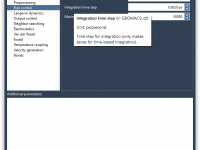
Molecular dynamics simulations are rarely one-size-fits-all. If you’ve ever needed to tweak temperature coupling, adjust time steps, or fine-tune constraints for your system, you’re not alone. Default settings are great for getting started, but real science often calls for customization.…

Building Your Own Tools in SAMSON Without Reinventing the Wheel
OneAngstrom

One of the more time-consuming challenges in molecular modeling is having to constantly switch between different tools or manually write scripts to bridge gaps between specific needs and the capabilities of existing software. Whether you’re trying to customize a simulation…

Avoiding Simulation Pitfalls: How to Set the Right Box Size for Pulling Simulations
OneAngstrom

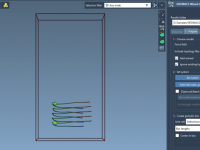
When preparing a molecular dynamics simulation involving pulling—such as center-of-mass (COM) pulling—one of the most overlooked yet critical steps is correctly defining the simulation box size. A common pitfall for modelers is encountering artifacts due to improper box dimensions, especially…

Docking Accuracy Starts Here: Setting Your Search Domain in SAMSON
OneAngstrom

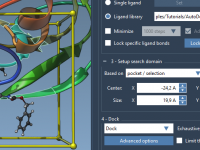
One of the most common questions molecular modelers have when setting up docking experiments is: “Where should I define the search space?” Whether you’re targeting a known binding pocket or screening broadly across the protein, defining the search domain correctly…

Quickly Separate Molecular Components for Clear Presentations in SAMSON

OneAngstrom

Presenting complex molecular models can be a challenge when important parts of the structure overlap or obscure one another. Whether you’re preparing a presentation, recording a molecular animation, or just trying to better understand your system, being able to temporarily…

Moving the Camera, Not the Molecule: A Simple Way to Enhance Molecular Presentations

OneAngstrom

When preparing molecular animations for presentations or scientific communication, molecular modelers often face a recurring challenge: how to present the structure dynamically without altering its real position? Sometimes, rotating or moving the molecule can be misleading or distracting—especially when showing…

From SMILES to 3D Structures in Seconds: A Practical Guide
OneAngstrom

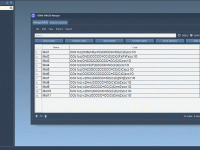
Going from a list of SMILES strings to functional 3D molecular structures can still feel like a chore, especially when you need to process multiple molecules quickly and visualize them in appropriate software. If you’re working in drug discovery, molecular…

Matching Chains: How to Align Protein Sequences by Chain for Better Comparative Modeling
OneAngstrom

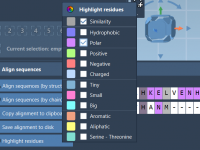
Accurately comparing proteins is a cornerstone of molecular modeling, whether you’re examining point mutations, comparing homologs across species, or preparing a structure for homology modeling. But when working with multi-chain proteins or oligomeric complexes, sequence alignment at the chain level…

Adding and Removing SAMSON Extensions: What Molecular Modelers Need to Know
OneAngstrom

Managing tools in a molecular modeling platform can often be time-consuming. Whether you’re trying to test a new analysis method or need to streamline your modeling interface, the ability to easily add or remove functionality matters. In SAMSON, these tools…

Why You Don’t Have to Code Everything From Scratch in Molecular Modeling
OneAngstrom

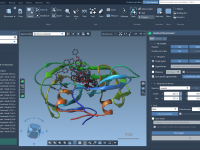
One of the recurring challenges in molecular modeling is that integrating external tools and scripts often disrupts your workflow. Whether you rely on docking programs, simulation pipelines, or visualization utilities, switching between environments—coupled with writing tedious wrapper code—can slow down…

«‹874875876877878›»
  • Subscribe for tips and news

    Check your inbox or spam folder to confirm your subscription.

  • About
  • Privacy Policy
  • Terms of use
  • Contact us
  • Twitter
  • Facebook
  • Back to Top
Powered by Nirvana & WordPress.